




Victorian Desk Mirror
A victorian desk mirror brings distinct timber grain and period glass to a workspace, offering functional reflection with nineteenth-century character.
Victorian Desk Mirror
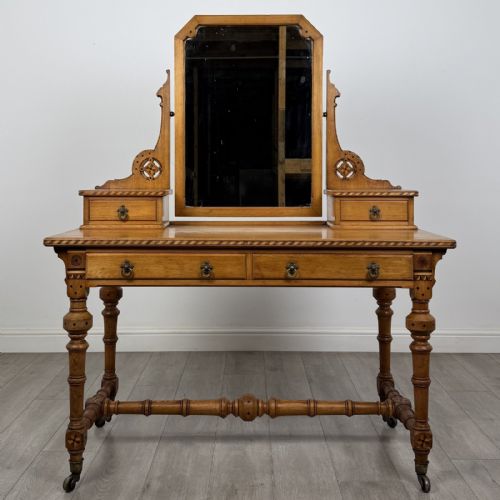
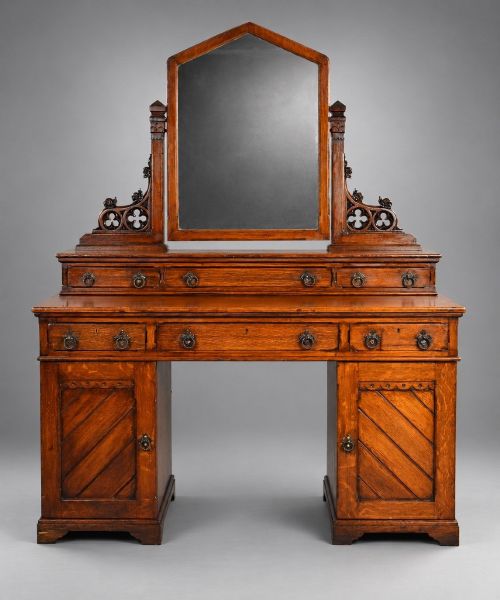
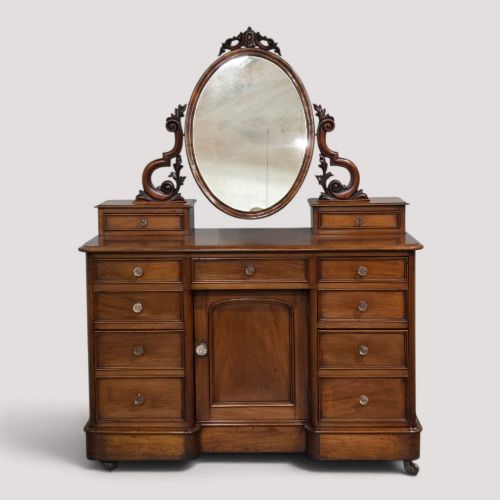
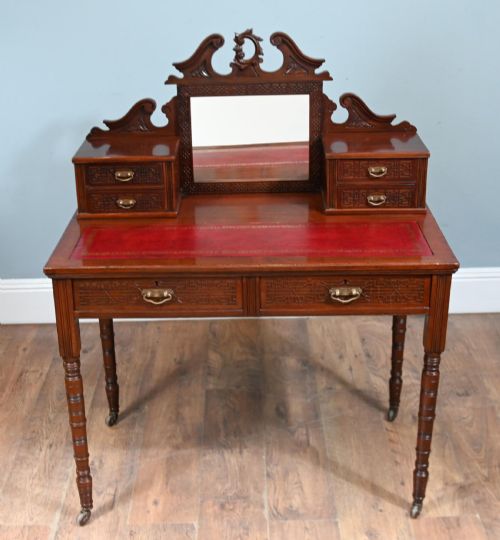
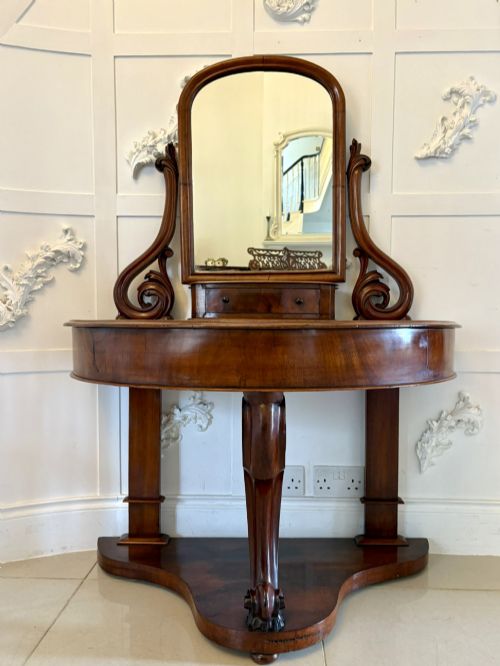
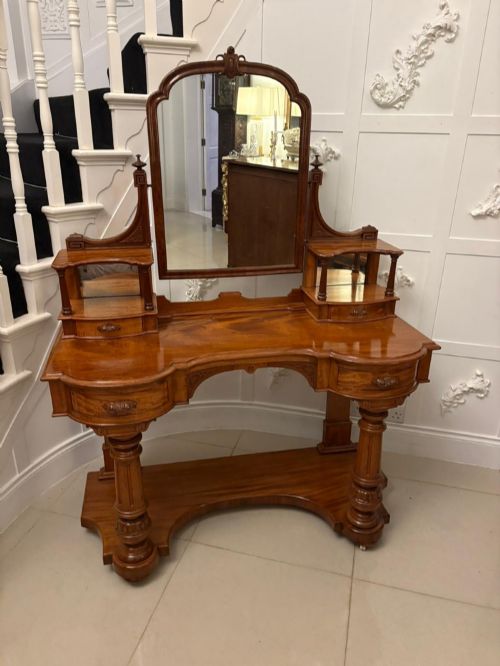
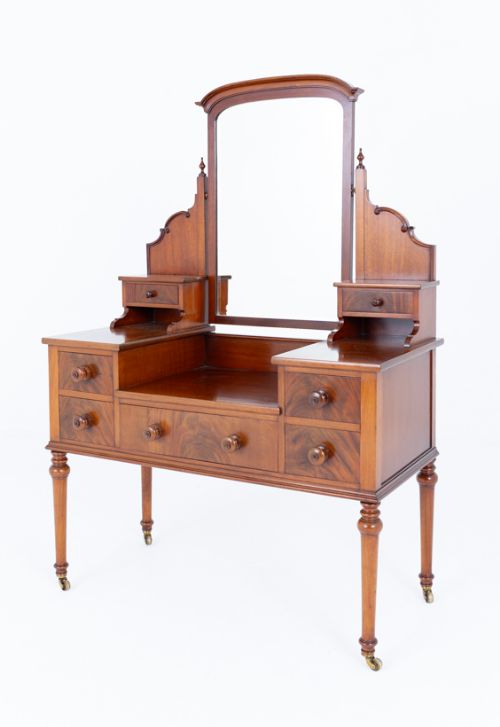
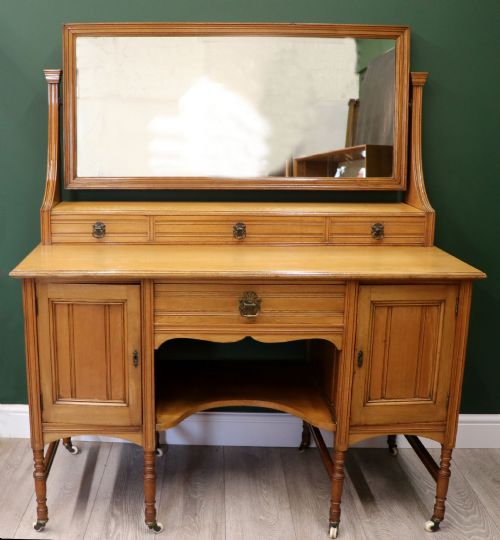
When you search for a victorian desk mirror, you encounter pieces spanning from the early nineteenth century through to nineteen hundred, encompassing dressing tables, writing desks, and dedicated table mirrors. The selection includes mahogany and walnut dressing tables featuring integrated mirrors alongside smaller table-top bureau fitments and easel mirrors.
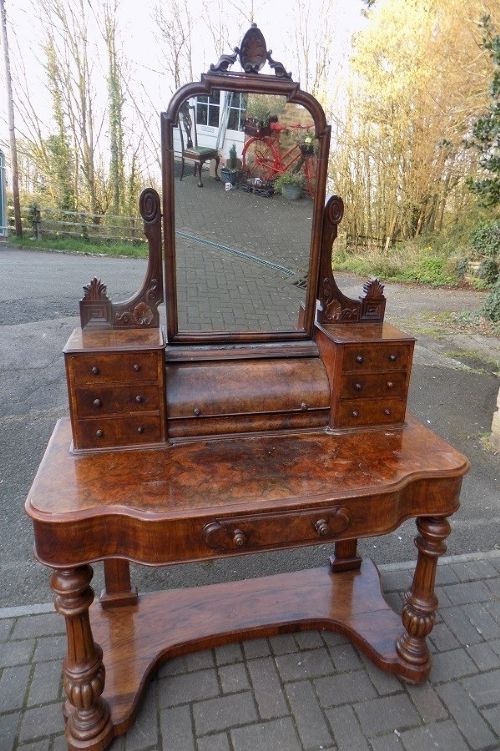
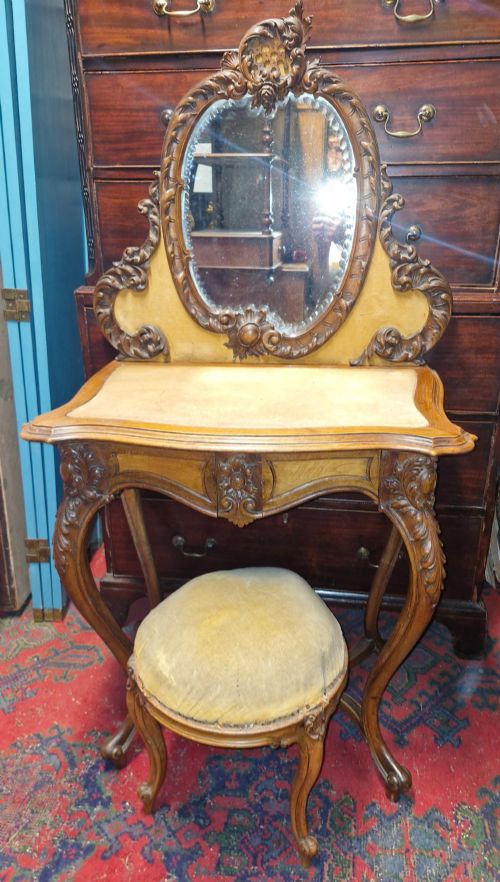
The prevailing forms on this page range from substantial pedestal dressing tables in mahogany and burr walnut to lighter satinwood and rosewood examples. Makers applied revival styles such as Rococo, Renaissance, and Gothic alongside Aesthetic Movement and Arts and Crafts designs to these everyday furnishings.
Originating largely from the nineteenth century, these objects served domestic writing and grooming needs in bedrooms and studies. Many incorporate small drawers, bureau fitments, or adjustable mirror frames designed for practical daily use.
Materials and Construction
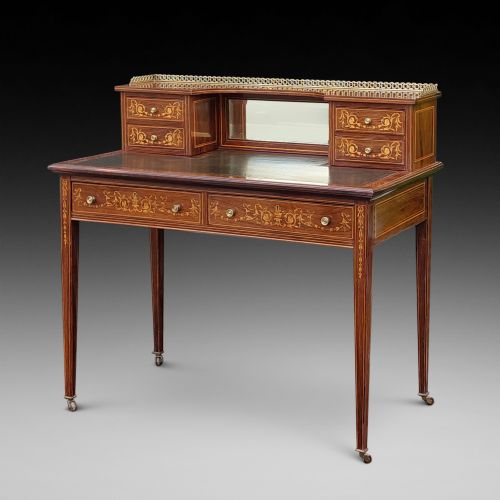
Cabinet makers utilised dense hardwoods such as mahogany, walnut, rosewood, and satinwood, frequently selecting figured veneers and burr walnut for decorative visual effect. Inlaid details in contrasting timbers and marquetry ornamentation appear alongside carved mahogany and moulded giltwood frames.
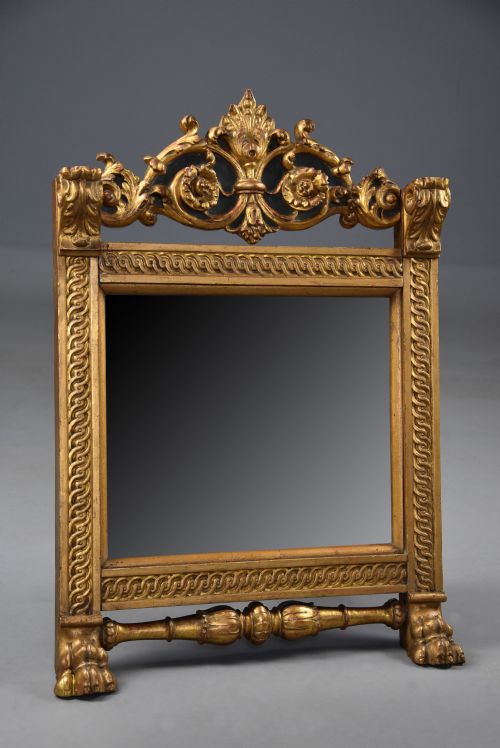
Glass plates provide the reflective surface, mounted within adjustable wooden or cast bronze frames often supported by scrolling arms or easel backs. Secondary elements include leather writing surfaces, ormolu mounts, and ceramic porcelain plaques.
Construction techniques combine traditional joinery with specialised fittings such as brass hinges, screw brackets, and fitted interior compartments for correspondence and grooming implements.
Victorian Desk Mirror Retail Price Guide 2026
Typical asking prices for victorian desk mirror among the pieces listed under this phrase on Sellingantiques today, from the lower quarter to the upper quarter. They describe what is for sale here now, not the wider market.
Some Victorian mirrors hide secret compartments behind miniature drawers for concealing love letters and small trinkets.
Distinctions in Quality
The grade of a piece rests upon the selection of timber veneers, where highly figured burr walnut, rich mahogany, and intricate marquetry inlay distinguish superior examples from plain utility items. Carved ornamentation executed with crisp depth separates master cabinet work from simpler mouldings.
Makers' signatures and stamps from known firms impart documented provenance and structural refinement to individual pieces. The integrity of the original glass, brass hardware, and fitted interior compartments further defines the standing of an item within its period.
Edwards and Roberts·Maple and Co·Thomas Rubergall·Wright and Hunter·Gillows·Jas Shoolbred
The Victorian Desk Mirror Glossary
- Bonheur du jour
- A light ladies writing desk featuring a small cabinet or tiered superstructure above the main writing surface. This form gained popularity during the nineteenth century for informal correspondence.
- Burr walnut
- Timber taken from the gnarled growths of a walnut tree, producing swirling, highly decorative grain patterns. Cabinet makers prized this wood for veneering prominent drawer fronts and mirror surrounds.
- Easel mirror
- A table mirror supported by a hinged prop or leg at the rear, allowing the glass angle to adjust. These pieces often feature frames carved in Renaissance or Rococo revival styles.
- Marquetry
- The art of applying thin slices of various coloured woods to a structural panel to form pictorial or geometric designs. Artisans used this technique extensively on Victorian tabletops and desk facades.
- Duchess dressing table
- A large nineteenth-century dressing table featuring a large central mirror flanked by small drawers or trinket boxes. They frequently incorporate a low shelf between the pedestals.
Victorian Desk Mirror: Frequently Asked Questions
How do I date a desk mirror?
Dating relies on identifying timber choices, construction methods, and stylistic cues such as Renaissance revival carving or Aesthetic Movement inlay. Nineteenth-century pieces often display hand-cut dovetails and specific plate glass qualities.
Pinned dates and maker stamps from firms like Edwards and Roberts or Gillows provide precise manufacture periods.
Were these mirrors used for writing?
Many examples integrate a writing surface, bureau fitment, or small drawers alongside the mirror plate. These dual-purpose pieces allowed individuals to write letters and manage correspondence in the same space used for grooming.
Some items function purely as table mirrors with stationary compartments, while others form part of larger pedestal dressing tables.
How do I care for period wood?
Maintain nineteenth-century timbers by keeping them away from direct sunlight and sudden temperature shifts that can dry out veneers. Gentle dusting with a dry cloth preserves the polished finish and natural grain.
Avoid liquid polishes containing harsh chemicals, relying instead on traditional beeswax applied sparingly to nourish the antique surface.