

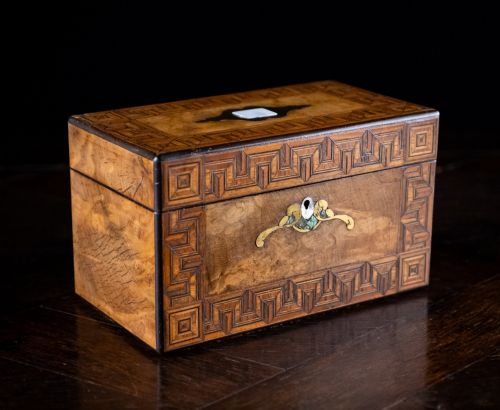
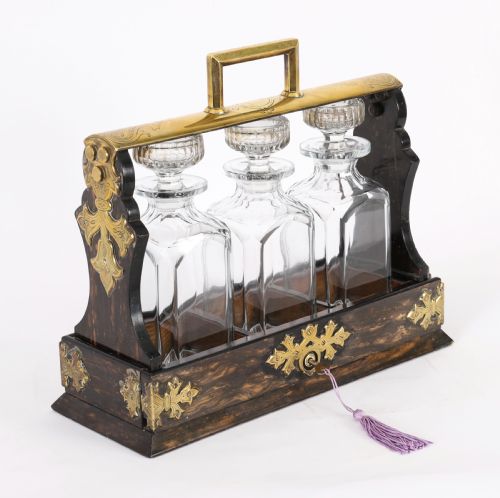


Victorian Decorative Wooden Caddy
These Victorian decorative wooden caddy examples are finely crafted containers that bring nineteenth-century warmth and tactile elegance to any interior.
Victorian Decorative Wooden Caddy
When searching for a victorian decorative wooden caddy, buyers encounter a rich assortment of nineteenth-century boxes designed for tea, spirits, and keepsakes. The selections span tea caddies, tantalus sets, sewing boxes, and keepsake caskets originating from periods like the 1850s, 1860s, 1870s, and 1880s.
Rosewood, walnut, and coromandel dominate the offerings, often complemented by oak and exotic timbers such as partridge wood and burr maple. Form varies from classic domed lids and sarcophagus shapes to robust brass-bound trunks and intricate parquetry cases.
English and continental workshops produced these pieces, incorporating distinct regional styles including French Second Empire, Italian Rococo Revival, and Sheraton Revival. Buyers frequently find tea caddies alongside decanter boxes and table caskets dating across the Victorian era.
Materials and construction methods
Cabinetmakers utilised dense hardwoods like rosewood, walnut, and coromandel as foundational timbers for their rich grain patterns and durability. These woods were expertly shaped into box structures, supported by solid oak or fruitwood carcases.
Surface decoration relied on meticulous inlay techniques, incorporating brass, boxwood, and mother-of-pearl to create geometric parquetry, marquetry, and delicate Tunbridge Ware bands. Metal mounts, brass banding, and fitted crystal decanters completed the construction of the finer utilitarian boxes.
Victorian Decorative Wooden Caddy Retail Price Guide 2026
Typical asking prices for victorian decorative wooden caddy among the pieces listed under this phrase on Sellingantiques today, from the lower quarter to the upper quarter. They describe what is for sale here now, not the wider market.
The collection includes diverse forms spanning tea caddies, decanter tantalus sets, sewing baskets, and keepsake boxes.
Distinguishing quality in nineteenth-century boxes
The sophistication of the timber selection largely dictates the standing of a piece, with figured burr veneers, rich coromandel, and patterned parquetry commanding attention. Finer examples display seamless integration of contrasting inlays such as mother-of-pearl, boxwood, and engraved brass.
Execution of the internal fittings and hardware further separates standard containers from superior works. Original compartments, functioning locks with keys, and high-grade crystal inserts demonstrate the maker's commitment to utility and aesthetic refinement.
Tahan of Paris
The Victorian Decorative Wooden Caddy Glossary
- Tea Caddy
- A specialised container originally built for storing precious loose tea leaves. Many feature internal lidded compartments to separate different varieties.
- Coromandel Wood
- A dense, heavily figured exotic timber from Asia with dark brown and black grain patterns. Cabinetmakers prized it for luxury Victorian boxes.
- Tunbridge Ware
- Woodworking craftsmanship characterised by mosaic pictures or geometric borders built from tiny tinted wood prisms. It originated in the Kent town of Tunbridge Wells.
- Parquetry
- Geometric mosaic woodwork formed by fitting small wooden tiles together on a surface. It creates striking patterned designs on box lids.
- Tantalus
- A locking beverage cabinet holding decanters visible yet secured from unauthorized access. The mechanism typically prevents removal of the bottles until the frame is unlocked.
Victorian Decorative Wooden Caddy: Frequently Asked Questions
What were tea caddies used for?
Tea caddies served as secure storage containers for expensive tea leaves during an era when tea was a luxury commodity. They typically featured internal lidded compartments to keep green and black teas fresh.
Wealthy households kept these boxes in the parlour or dining room, often locking them to protect the contents from servants or guests.
How do I date a wooden caddy?
Dating relies on examining the timber species, construction methods, hardware styles, and decorative motifs present on the piece. The use of coromandel, specific brass mount designs, and inlay types help narrow down the decade.
Stylistic influences, such as Sheraton Revival or Italian Rococo Revival, also provide valuable chronological clues for nineteenth-century boxes.
How should I care for a Victorian wooden box?
Maintain stable humidity and temperature levels in the room to prevent the delicate wood veneers and inlaid elements from warping or cracking. Keep the timber nourished with appropriate wax polishes suited for antique furniture.
Avoid placing the box in direct sunlight, which can fade exotic timbers like rosewood and discolour mother-of-pearl inlay over time.
What is the difference between a caddy and a tantalus?
A tea caddy is designed specifically to hold dry leaf tea within compartmentalised interior spaces. A tantalus functions as a lockable frame securing visible decanters of spirits.
While both belong to the broader category of Victorian decorative wooden boxes, their internal architecture serves entirely different domestic purposes.