



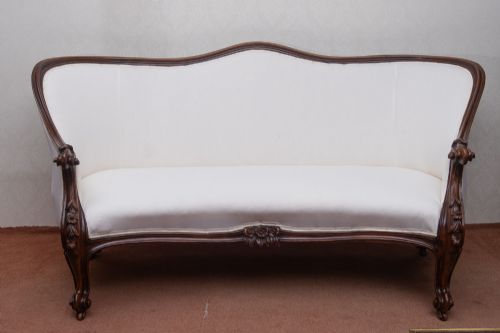


Victorian Curved Settee
A victorian curved settee brings a sweeping architectural line to a room, offering deep cushioned comfort wrapped in rich timber frames.
Victorian Curved Settee
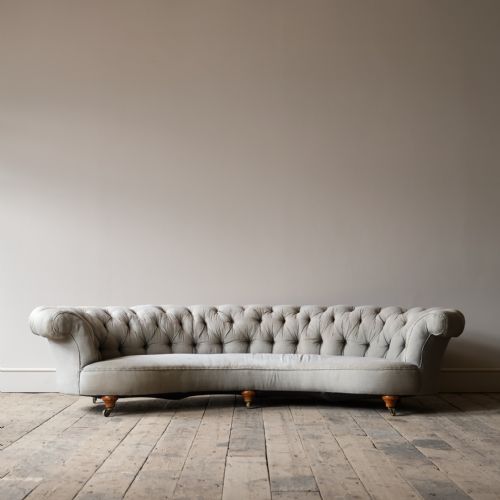
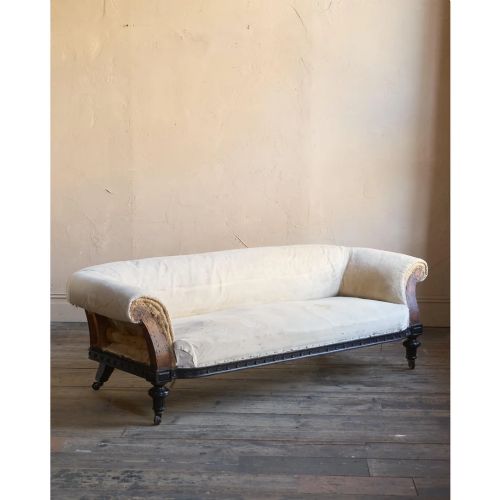
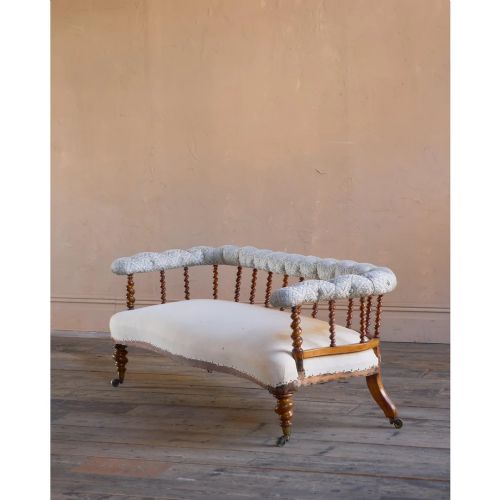
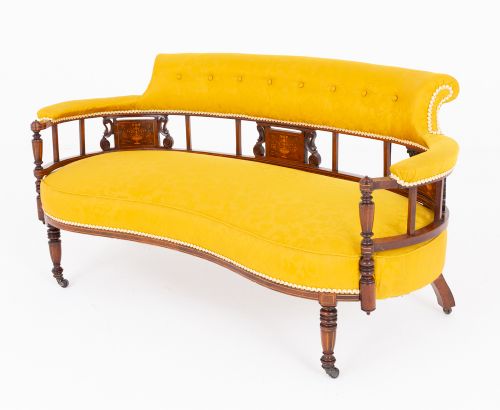
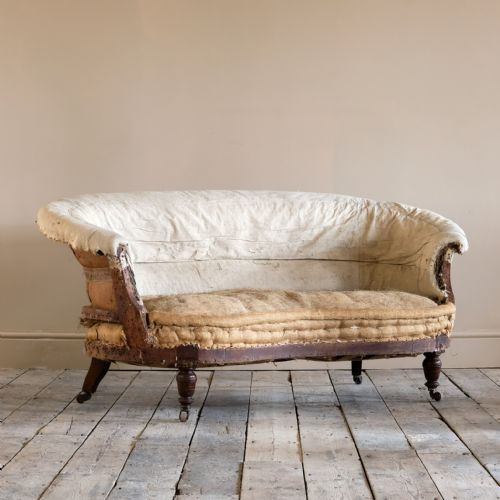
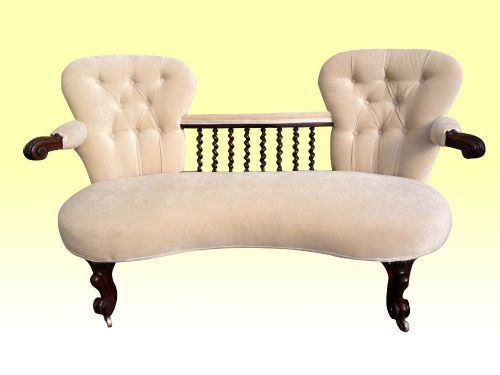
A victorian curved settee takes several distinct forms across the nineteenth century, ranging from button-backed salon seats to crescent Chesterfields and corner sofas. These pieces are designed to soften room layouts with sweeping contours rather than rigid right angles.
The materials span from rich rosewood and walnut to mahogany and ebonised hardwood, often paired with brass castors and buttoned upholstery fabric, leather, or velvet. They originate from British workshops and continental makers, reflecting periods from the mid-nineteenth century through to nineteen hundred.
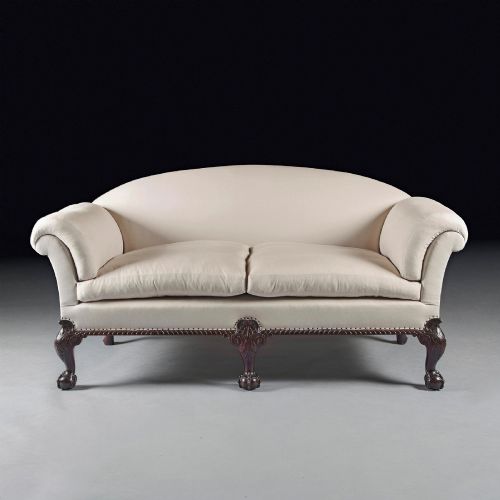
Buyers will encounter intimate love seats alongside larger salon settees and couches, each utilising curved timber frames to shape the seating area. The forms bridge formal reception rooms and more relaxed domestic spaces.
Materials and Construction
Makers shaped solid hardwoods like rosewood, walnut, and mahogany into flowing structural curves, often steaming bentwood or carving supportive frames by hand. Exposed timber elements showcase polished grain finishes alongside concealed joinery that ensures structural rigidity.
Upholstery techniques involved deep buttoning, horsehair stuffing, and heavy sprung bases covered in leather, velvet, or woven fabrics. Brass components such as castors finish the lower framework, allowing these substantial pieces to move smoothly across floor coverings.
Victorian Curved Settee Retail Price Guide 2026
Typical asking prices for victorian curved settee among the pieces listed under this phrase on Sellingantiques today, from the lower quarter to the upper quarter. They describe what is for sale here now, not the wider market.
Raspberry pink velvet makes occasional unexpected appearances among the traditional leather and dark wood.
Indicators of Quality
The distinction between tiers rests upon the fluidity of the timber framing and the integrity of the underlying sprung upholstery. Superior examples demonstrate seamless joinery along complex curves and maintain firm, responsive padding without sagging.
Material selection and maker attribution elevate certain pieces, particularly those utilising dense rosewood or bearing workshop stamps. Detail work, from hand-carved ornament to precise buttoning, separates standard production items from distinguished commissions.
Thonet Bentwood·Howard & Sons·C. Hindley & Sons·Hampton & Sons
The Victorian Curved Settee Glossary
- Crescent Chesterfield
- A deep-buttoned sofa built on a curved or crescent-shaped plan designed to wrap around a conversation area. This form offers generous seating within a unified structural sweep.
- Button Back
- An upholstery method where deep buttons are pulled through the padding to create a grid of diamond-shaped puffs. This technique provides both visual texture and structural support.
- Bentwood
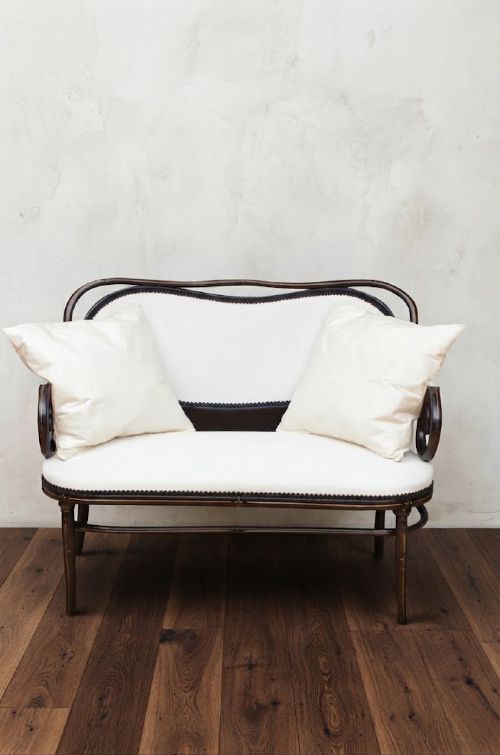
- Wood that has been rendered pliable through steam or heat and then bent into curved forms. Thonet famously utilised this method for lightweight structural framing.
- Salon Settee
- A decorative upholstered seat intended for formal reception rooms rather than heavy everyday lounging. These pieces typically feature exposed carved timber frames and elegant fabric coverings.
- Canapé
- A French-style upholstered sofa with an exposed wooden frame and an elongated seat. The design bridges formal chairs and larger nineteenth-century couches.
Victorian Curved Settee: Frequently Asked Questions
How do I clean antique leather upholstery?
Maintenance requires gentle dusting with a soft cloth followed by occasional application of specialist leather balms to prevent drying and cracking.
Harsh chemical detergents and excessive moisture must be avoided to preserve the original surface finish and natural patina.
Where should I place a curved settee?
These pieces suit conversational groupings in drawing rooms or libraries, where their sweeping lines can be appreciated from multiple angles. Placing them away from direct sunlight protects vulnerable fabrics and polished timber.
Positioning them centrally or in large bay windows allows the curved silhouette to define the surrounding floor space.
How do I identify nineteenth century styles?
Dating relies on examining the timber species, joinery methods, and upholstery techniques visible beneath the frame. Aesthetic Movement and Victorian revival pieces often display distinct decorative motifs and ebonised finishes.
Maker stamps or labels tucked beneath the upholstery provide the most reliable evidence of origin and date.
Can these settees be used daily?
Robust frames and solid hardwood construction make many nineteenth-century models suitable for regular domestic seating. The condition of the internal springs and webbing dictates the level of daily support.
Professional assessment ensures the internal structure remains stable under frequent use.