



Victorian Curio Table
These Victorian curio table pieces are glazed vitrines built to display private collections, prized for how they lift small treasures into clear sight.
Victorian Curio Table
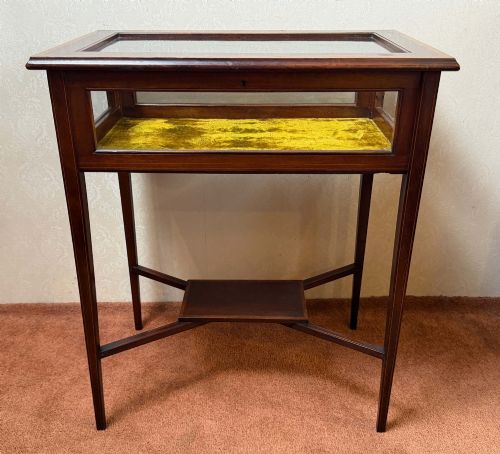
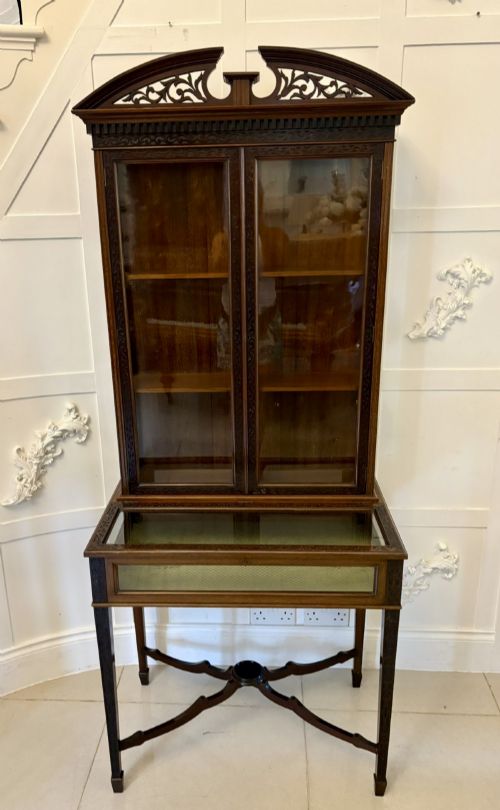
A victorian curio table combines the height of a conventional occasional table with a glazed display compartment beneath the top surface. These pieces range from oval vitrines and mahogany display cabinets to bijouterie tables and table top display cabinets.
The materials span mahogany, burr walnut, rosewood and brass, with interiors frequently lined in velvet or fabric. Most examples date from the nineteenth century, including late Victorian and Edwardian periods as well as revival styles.
Buyers encounter forms that sit on slender legs or rest upon larger bases, designed specifically to house jewellery, medals and cabinet objects. The configuration typically involves a hinged or lift-off glass lid held within a timber frame.
Materials and construction
Cabinetmakers constructed these tables using dense timbers like mahogany, rosewood and burr walnut, often applying marquetry inlay or brass stringing to the surfaces. Ormolu mounts in gilded bronze frequently accent the corners, legs and glass frames of finer examples.
The glazing requires sturdy timber joinery to support the bevelled or flat glass panels safely above the lined compartment. Interior bases are traditionally padded with velvet or fabric to cushion delicate collectors' items.
Victorian Curio Table Retail Price Guide 2026
Typical asking prices for victorian curio table among the pieces listed under this phrase on Sellingantiques today, from the lower quarter to the upper quarter. They describe what is for sale here now, not the wider market.
The timber palette documented here includes mahogany, rosewood and burr walnut, paired with brass, ormolu, glass, velvet and fabric.
Judging quality
Quality reveals itself in the selection of timber veneers, such as richly figured burr walnut or carefully matched mahogany, alongside the crispness of any marquetry inlay. The weight and chasing of ormolu bronze mounts further distinguish standard production from superior workshops.
Structural refinement shows in the proportion of the legs and the smoothness of the glass-to-frame fit. Tables that incorporate complex curved glazing or robust brass hinges demonstrate a higher grade of original execution.
The Victorian Curio Table Glossary
- Bijouterie table
- A glass-topped display table specifically designed for small ornaments, jewellery and precious curiosities. These pieces elevate small objects to eye level while keeping them enclosed.
- Vitrine
- A glass-fronted or glass-topped cabinet used for exhibiting objects of art or collections. The term encompasses both standing display cases and table-height compartments.
- Ormolu
- Gilded bronze mounts applied to furniture for decorative effect. This technique was widely utilised during the nineteenth century to accent rosewood and mahogany.
- Marquetry
- Decorative woodwork where thin pieces of veneer are fitted together to form geometric or floral patterns. It appears frequently on nineteenth-century table tops.
- Burr walnut
- Timber taken from the warted growths of walnut trees, yielding highly figured grain patterns. Cabinetmakers prized this wood for high-status table tops and cabinets.
Victorian Curio Table: Frequently Asked Questions
What is a victorian curio table used for?
These tables served primarily as display furniture for private collections of small valuables, coins, cameos and jewellery. The glazed top allowed guests to inspect fragile items without handling them directly.
Today, they function in domestic spaces to showcase small collections while serving the practical surface requirements of an occasional table.
How do I date a victorian curio table?
Dating relies on identifying timber choices, construction methods and stylistic revival motifs recorded across the nineteenth century. Pieces range from mid-Victorian rosewood examples to late-century marquetry-inlaid mahogany.
Examining the hinges, locks and interior fabric linings often provides additional clues to the exact decade of manufacture.
Are these tables sturdy enough for daily use?
Most examples utilise robust hardwoods like mahogany and rosewood, but their slender legs and glazed compartments require considerate placement. They function best away from heavy traffic and direct heat sources that might dry the timber.
The glass lids and delicate velvet interiors also mean they suit gentle everyday interaction rather than heavy loading.
What styles exist within these listings?
The selection includes plain mahogany display pieces alongside ornate French Louis XV style, Rococo Revival and Edwardian Chippendale Revival variations. Regional differences also appear, such as Victorian Dutch formats.
Inlay work, ormolu mounts and brass detailing further divide the designs into distinct aesthetic groups.