


Victorian Curio Display
These victorian curio display pieces range from mahogany vitrines to glass domes, designed to hold small treasures and curiosities.
Victorian Curio Display
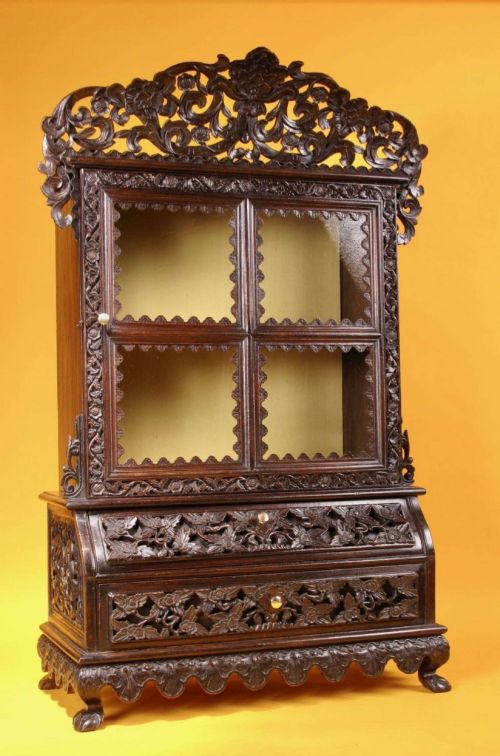
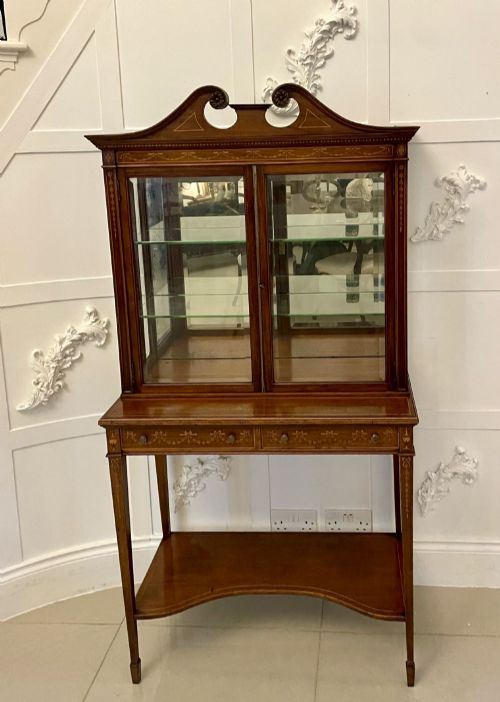
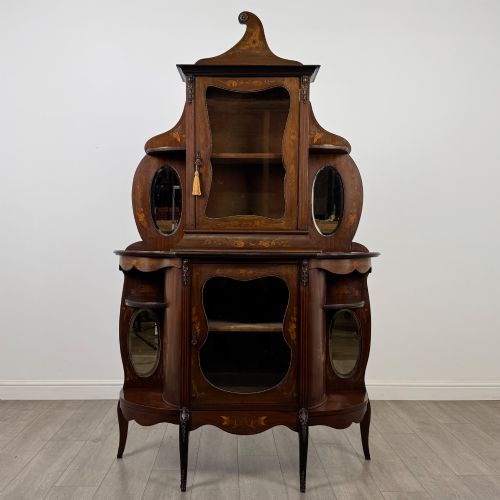
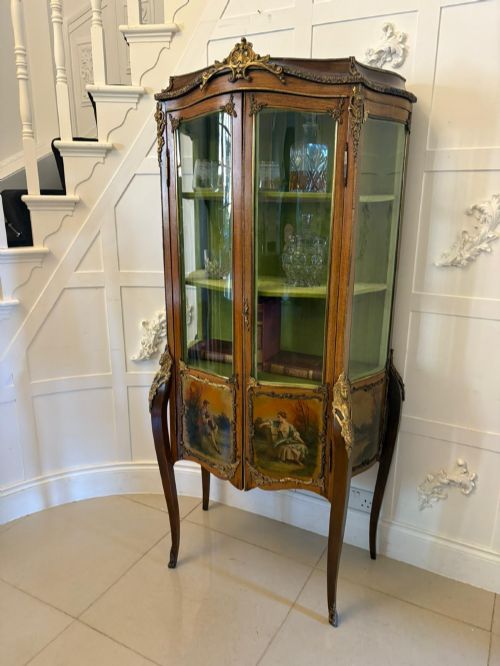
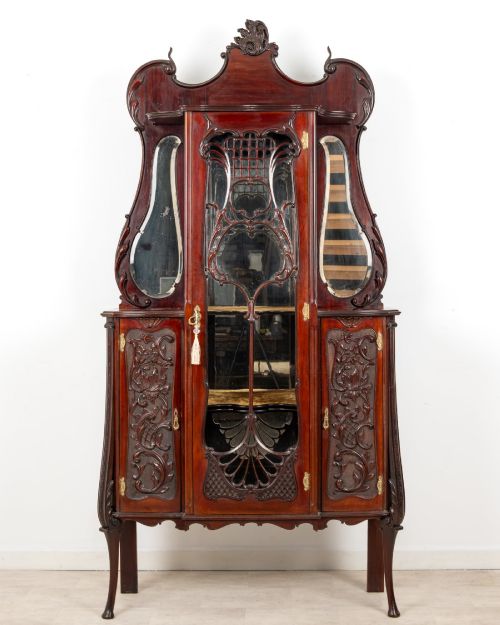
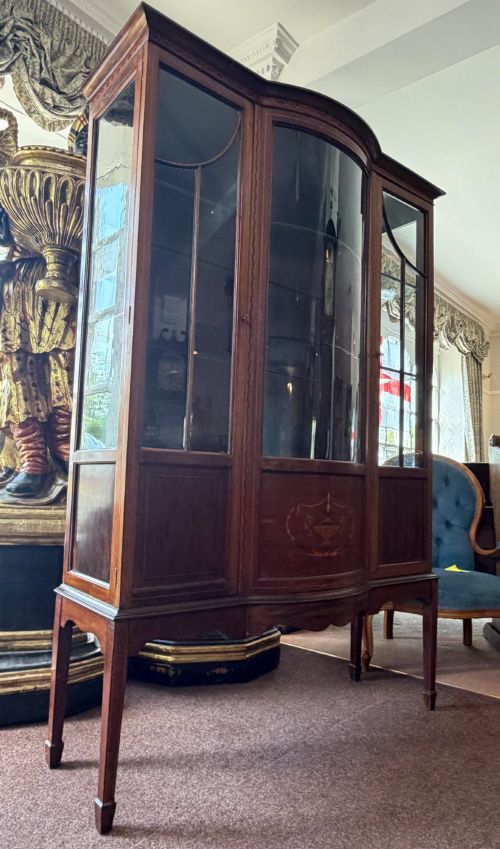
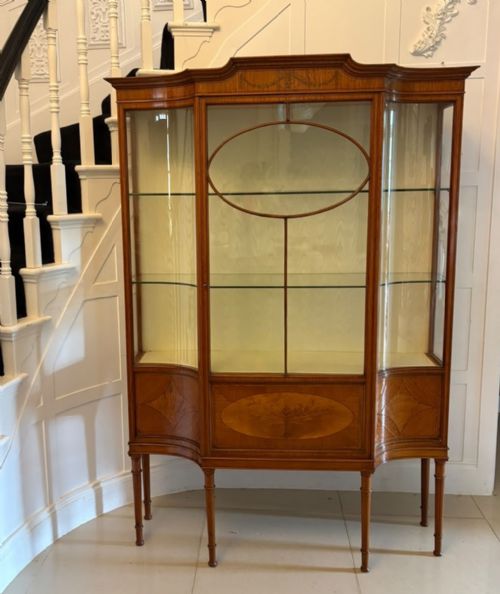
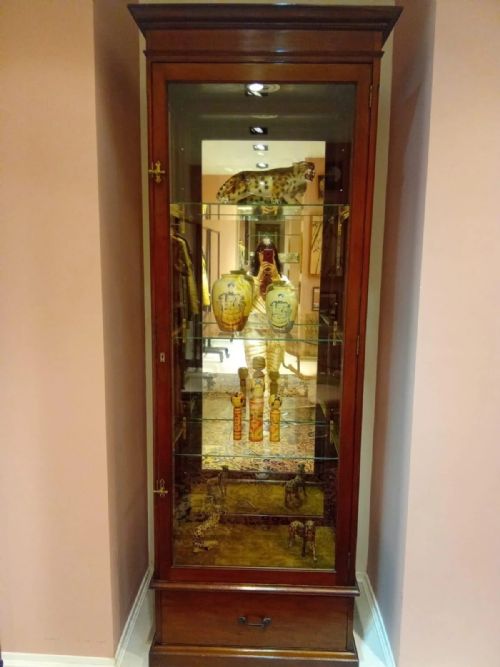
A victorian curio display takes the form of cabinets, vitrines, and table-top cases built to showcase collected objects and personal treasures. Mahogany, walnut, and satinwood dominate the domestic examples found on this page, often featuring glass panels for all-round visibility.
Makers and workshops adapted French and domestic revival styles during the nineteenth century, producing bow-front cabinets, tall pier cabinets, and glazed tables. These furnishings filled Victorian drawing rooms where natural specimens, medals, and small artefacts required protection and proper presentation.
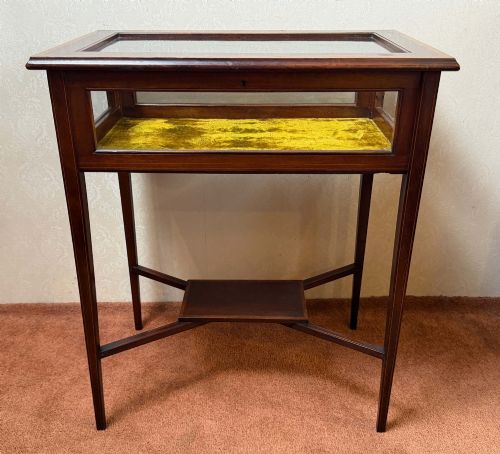
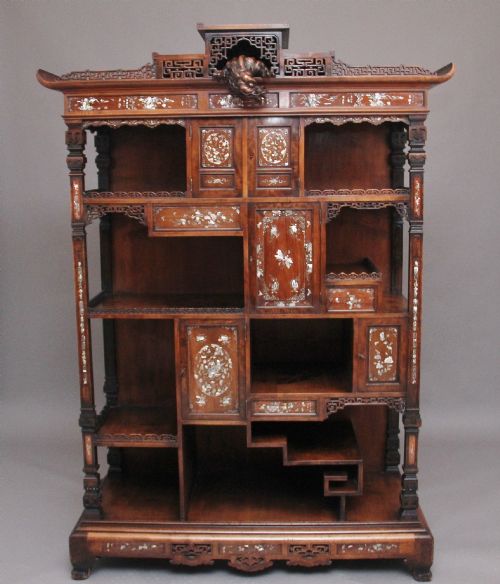
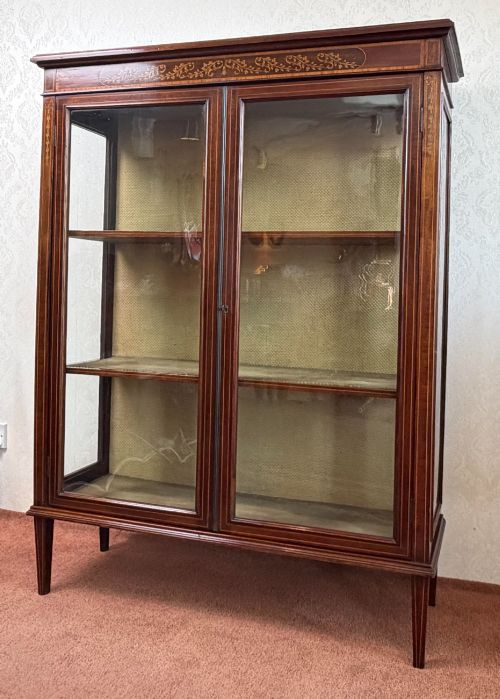
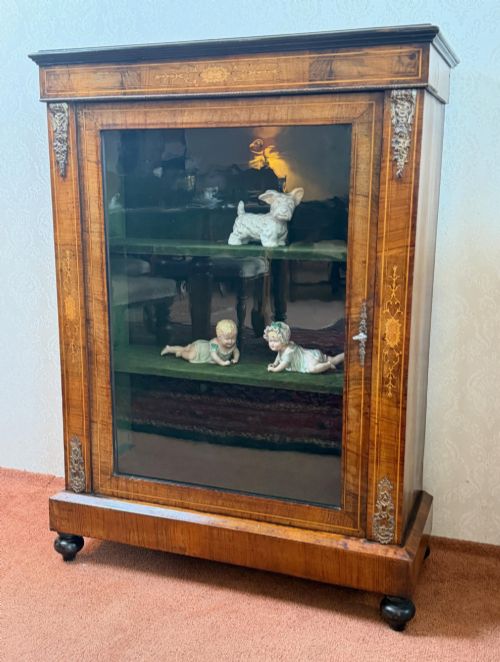
The selection ranges from wall-hanging display shelves to large floor-standing cabinets inlaid with marquetry or mounted in ormolu. Bijouterie tables lift their glazed lids to show medals and jewellery at table height, whilst enclosed vitrines preserve delicate specimens behind glass.
Materials and construction
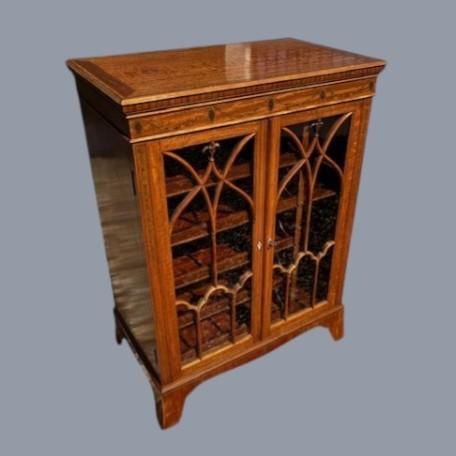
Cabinet makers utilised dense hardwoods such as mahogany, rosewood, and satinwood, constructing carcases to hold glazed doors and internal glass shelves. Marquetry inlay, fruitwood banding, and brass mounts embellished the surfaces of better pieces.
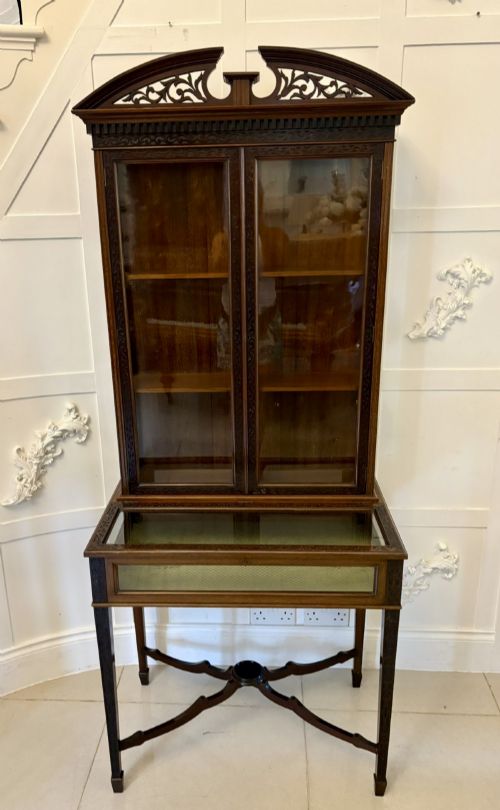
Glazing techniques required panes of clear glass set into wooden frames or held by ormolu mounts on French-influenced vitrines. Silk and velvet linings often padded the interior bases of bijouterie tables and cabinet shelves to cushion displayed items.
Victorian Curio Display Retail Price Guide 2026
Typical asking prices for victorian curio display among the pieces listed under this phrase on Sellingantiques today, from the lower quarter to the upper quarter. They describe what is for sale here now, not the wider market.
Listings feature 19th Century and Edwardian pieces, utilising mahogany, satinwood, glass, ormolu, and velvet across various display forms.
Distinctions in quality
The standard of timber selection and the precision of marquetry inlay dictate the tier of a piece. Finer cabinets employ figured burr veneers and crisp hand-carved mouldings rather than simple stamped decoration.
Internal joinery, the clarity of the glass, and the weight of ormolu mounts separate standard workshop production from pieces bearing maker attributions. Superior hardware, such as functioning brass locks and heavy hinges, marks the better examples.
Edwards & Roberts
The Victorian Curio Display Glossary
- Vitrine
- A glass-fronted cabinet or display case designed specifically for showing porcelain, curiosities, and small decorative objects. They frequently stand on slender legs or form part of a larger salon suite.
- Bijouterie table
- A glass-topped display table with a hinged lid, built to hold jewellery, medals, and small collectables at a comfortable viewing height. They often feature fabric-lined interiors.
- Marquetry
- The art of applying decorative veneer pieces in wood, shell, or ivory to a structural carcase to form geometric or floral patterns. It appears across late nineteenth-century cabinet doors and friezes.
- Ormolu
- Gilded bronze mounts applied to furniture, particularly popular on French-influenced Victorian cabinets and vitrines. The metal adds decorative weight and highlights the corners and feet.
- Pier cabinet
- A narrow cabinet designed to stand against the wall space between windows. These pieces make use of limited floor areas while offering glass-enclosed display space.
Victorian Curio Display: Frequently Asked Questions
What fits inside a bijouterie table?
Bijouterie tables suit small flat objects like coins, medals, miniatures, and pocket watches. Their glass tops and shallow, fabric-lined interior trays protect these items from dust while keeping them visible.
Larger items belong in upright cabinets or wall vitrines where vertical space accommodates taller curiosities.
How do I clean display glass safely?
Clean glass panels with a mild solution on a cloth, avoiding harsh chemicals that might damage surrounding wood veneers or aged brass mounts. Wipe gently around ormolu mounts and inlaid stringing to prevent moisture seeping into joints.
Take care with antique glass, as older panes can be thin or loose within their wooden rebates.
Where should I place a glass vitrine?
Position glass cabinets away from direct sunlight to protect interior fabrics and prevent timber warping. Stable room temperatures keep wood and veneer from expanding or cracking.
Ensure the floor surface is level so the doors swing true and close properly against their frames.
Are shelves in these cabinets adjustable?
Some shop display cabinets and later pieces include adjustable glass shelves on metal brackets. Many domestic Victorian cabinets feature fixed wooden or glass supports set into the carcase.
Check the individual listing details to confirm shelf mobility before planning what to display.