



Victorian Cufflinks
These Victorian cufflinks are finely wrought gentleman's accessories in gold, silver, and banded agate, sought after for their distinct period craftsmanship.
Victorian Cufflinks
Victorian cufflinks are gentleman's sleeve fastenings appearing in forms like double-sided engraved links and cabochon stone settings. The pieces found here span the nineteenth century into the early twentieth century, taking in both strict Victorian examples and related Edwardian or later styles.
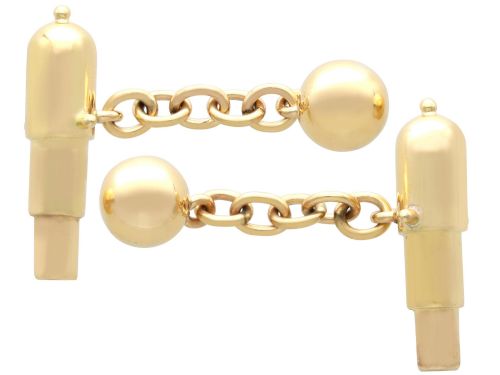
Makers utilised high-karat yellows alongside rose gold and sterling silver, often incorporating toggle mechanisms or chain links. Alongside standard cuff fastenings, related items such as silver toggle buttons and tortoiseshell boxes occasionally surface within these groups.
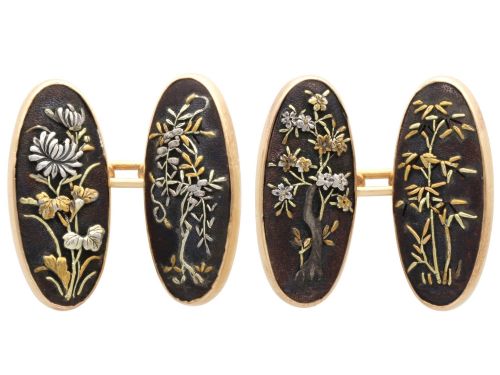
The aesthetic reaches from restrained belt motif engravings to decorative Japanese-inspired motifs and rich mineral cabochons. Buyers frequently encounter regional variations, including Maltese silver work alongside standard British hallmarked pieces.
How they were made
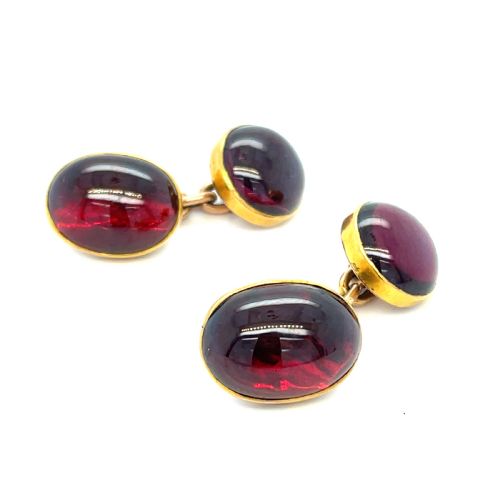
Craftsmen built these items using nine-carat, fifteen-carat, and eighteen-carat gold alongside sterling silver, shaping the metal to hold hardstones such as banded agate and garnet. Surface decoration often relied on hand engraving, enamel work, and specialised metal alloys like shakudo.
Links were joined by delicate chains or rigid double-sided bars, requiring precise soldering and hinge work to endure daily wear on a gentleman's cuffs. Many designs featured intricate bezel settings that secured cabochon gems firmly within the solid gold framework.
Victorian Cufflinks Retail Price Guide 2026
Typical asking prices for victorian cufflinks among the pieces listed under this phrase on Sellingantiques today, from the lower quarter to the upper quarter. They describe what is for sale here now, not the wider market.
Several items come paired with dedicated tortoiseshell boxes designed to keep stray buttons safe from vanishing into the depths of a gentleman's dressing table.
What varies in quality
The distinction between standard pairs and superior examples lies in the weight of the gold and the crispness of the hand-engraved motifs. Heavier metal gauge ensures that structural elements like chains and toggles retain their integrity over generations of use.
Material selection also dictates the standing of a piece, with finely polished banded agate or deep red garnets elevating the overall execution above simpler metal-only designs. Maker marks and legible hallmarks provide definitive proof of origin and material standard.
The Victorian Cufflinks Glossary
- Shakudo
- A Japanese decorative alloy of copper and gold treated to produce a dark blue-black patina. It appears on nineteenth-century pieces influenced by Japonisme.
- Banded Agate
- A form of quartz showing distinct natural parallel stripes of colour. It was frequently cut as a smooth cabochon for gentleman's jewellery.
- Cabochon
- A gem polished to a smooth convex dome rather than faceted with flat planes. This style highlights the natural patterns within stones like garnet and agate.
- Toggle
- A transverse bar or fastening attached by a short chain to the main cufflink face. It pivots to slip easily through a buttonhole before securing the cuff.
- Hallmark
- An official stamp struck into precious metals to guarantee the purity of the gold or silver. British pieces often display maker initials alongside assay office symbols.
Victorian Cufflinks: Frequently Asked Questions
How do I fasten double-sided cufflinks?
Double-sided cufflinks feature two decorative faces joined by a rigid bar or short chain rather than a swivel toggle. You tilt one face sideways to thread it through both layers of the shirt cuff.
Once passed through, the faces rest flat against the fabric to display the engraved gold or gemstone on both the outer and inner cuff.
Can I wear antique cufflinks every day?
These pieces were built for regular gentleman's wear in the nineteenth century using solid gold and silver. Solid construction allows them to handle sensible daily use without issue.
However, delicate elements like chains or soft stones such as tortoiseshell require careful handling when putting on or removing shirts.
What does shakudo mean on a listing?
Shakudo is a traditional Japanese alloy primarily composed of copper with a small percentage of gold. Chemical treatment gives the metal a deep dark patina that contrasts sharply with applied gold highlights.
This technique arrived in Western jewellery during periods of intense interest in Japanese art and craftsmanship.
How do I know if gold cufflinks are solid?
Solid gold pieces carry clear hallmarks indicating metal purity such as nine carat, fifteen carat, or eighteen carat gold. Weight is another strong indicator, as solid links feel substantial in the hand compared to hollow or plated alternatives.
Assay marks and maker stamps provide official confirmation of the exact precious metal standard used.