

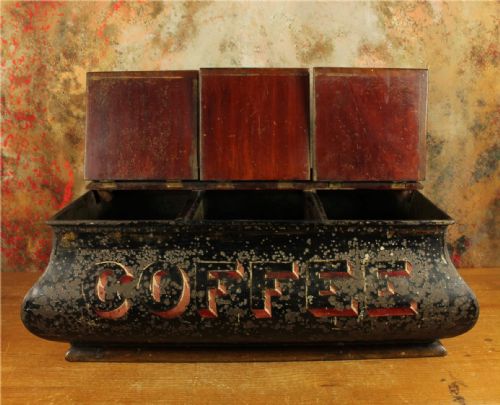


Victorian Counter Chest
These victorian counter chest examples are utilitarian storage pieces built for trade, offering sturdy pine and multiple drawers to organise your space.
Victorian Counter Chest
A victorian counter chest typically takes the form of a multi-drawer shop fitting, haberdashery cabinet, or apothecary box designed for commercial trade. These functional pieces range from large banks of drawers originating in Hungary to smaller desktop display cases and toleware triple compartment boxes.
The objects span the nineteenth century and into the early twentieth century, incorporating styles such as rustic country, industrial commercial, and maritime industrial. You are most likely to encounter pine shop fittings with numerous small drawers alongside specialised display boxes built for sewing cottons or apothecary items.
Forms include chests of drawers, watchmaker cabinets, log boxes, and brass and glass display cases fitted with locks. Their original commercial utility dictates their robust proportions and straightforward construction.
Materials and construction
Pine serves as the primary structural wood for the larger shop fittings and artists chests, often finished with original painted surfaces in cream, white, light green, or indigo. Polished wood and robust timber form the bodies of specialised apothecary boxes and watchmaker cabinets.
Metal components such as brass pulls, iron fixtures, and glass panels provide secure closures and viewing windows for display items. Toleware and tin construction appear in specific compartment boxes intended for retail or cafe use.
Victorian Counter Chest Retail Price Guide 2026
Typical asking prices for victorian counter chest among the pieces listed under this phrase on Sellingantiques today, from the lower quarter to the upper quarter. They describe what is for sale here now, not the wider market.
Listings feature multiple pine shop fittings and multi-drawer banks alongside specialised apothecary boxes and maritime brass and glass cases.
Assessing quality in trade furniture
The distinction between standard utility items and finer examples rests upon the survival of original painted finishes and the complexity of the drawer configuration. Multi-drawer shop fittings with dozens of uniform compartments demonstrate greater joinery effort than simple storage boxes.
Hardware integrity, such as original brass locks and intact glass panes on display cases, elevates the standing of a piece. The presence of maker details or specific trade association markings also distinguishes commercial pieces intended for prominent display from back-room storage.
Chadwick’s Sewing Cottons·Manoah Rhodes & Sons Ltd·Ermen & Roby
The Victorian Counter Chest Glossary
- Shop Fitting
- Commercial furniture designed specifically for retail display and stock organisation in nineteenth-century stores. These fixtures often feature large banks of small drawers.
- Haberdashery Cabinet
- A glazed or multi-drawer display case utilised by drapers to store and exhibit sewing notions, cottons, and small garments. They provide clear visibility of small merchandise.
- Apothecary Box
- A lidded or drawer-fitted wooden container used for holding medicinal ingredients, vials, and compounding tools. They frequently incorporate secure locks and internal partitions.
- Toleware
- Lacquered or painted metalware, typically sheet steel or iron, formed into domestic or commercial storage boxes. The technique involves distinctive painted surface decoration.
- Admiralty Pattern
- Manufactured goods produced to official naval specifications for durability and standardisation. These items often feature heavy brass and glass construction.
Victorian Counter Chest: Frequently Asked Questions
What is a victorian counter chest used for?
These pieces served as functional trade furniture in nineteenth-century shops, pharmacies, and offices to sort small goods, threads, and apothecary supplies.
Today, collectors use them in domestic settings to organise small items, stationery, or collections while displaying period utility.
How do I identify a shop fitting?
Shop fittings are characterised by numerous small drawers, bank formations, and robust pine construction built to withstand heavy daily commercial use.
Many retain original painted finishes or specific trade labelling on the drawer fronts for inventory management.
Are these pieces made of solid pine?
The majority of the larger cabinets and shop fittings utilise solid pine timbers for their frames and drawer construction.
Some specialised display boxes incorporate polished hardwoods alongside glass panels and brass hardware.
How do I care for painted wooden surfaces?
Protect original painted finishes by avoiding harsh chemical cleaners, abrasive cloths, and excessive moisture during routine maintenance.
Keep the timber away from direct heat sources and dramatic humidity shifts to preserve the integrity of the antique paint.