





Victorian Corbel Bookcase
These Victorian corbel bookcase pieces are substantial architectural library furniture designed to hold heavy volumes while anchoring a formal room.
Victorian Corbel Bookcase
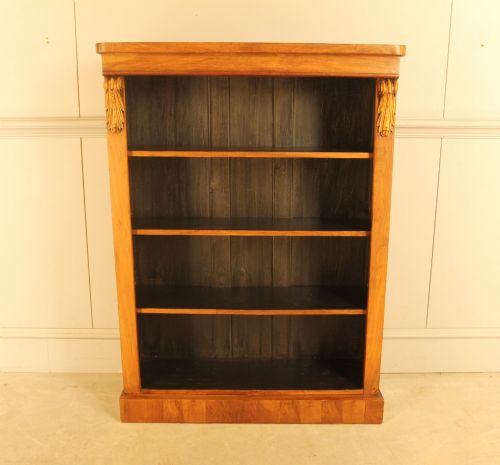
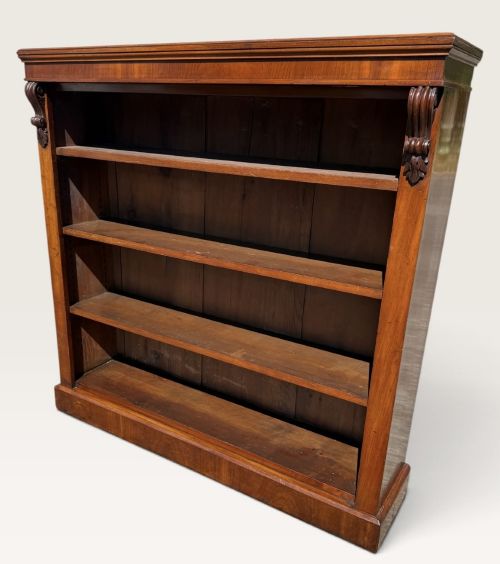
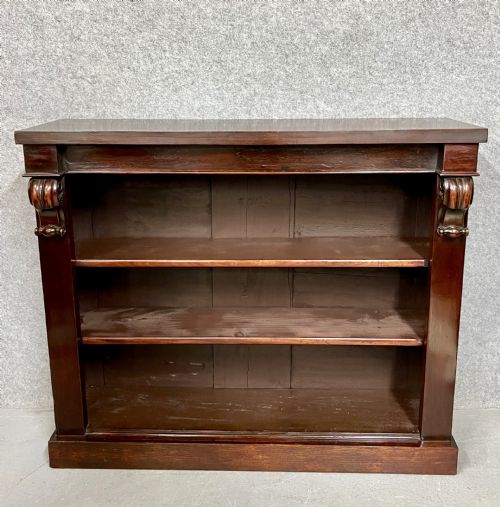
A Victorian corbel bookcase typically presents as an open fronted shelf unit or a glazed cabinet defined by heavy carved supporting brackets under the cornice or shelf overhang. The pieces seen on this page span the nineteenth century, utilising periods ranging from the Regency era through to eighteen eighty.
Most examples take the form of open bookshelves or low dwarf cases, though larger double cases and two part library cupboards also appear in the records. Mahogany, walnut, and rosewood dominate the material palette, alongside occasional oak and goncalo alves.
The architectural character of a Victorian corbel bookcase comes from carved wooden brackets derived from classical stone masonry. These projections visually support the upper structure and provide the primary decorative flourish on otherwise utilitarian storage.
Materials and construction
Cabinet makers built these pieces using dense hardwoods such as mahogany and walnut, frequently applying fine rosewood veneer over secondary timbers to achieve rich grain patterns. Structural elements rely on sturdy joinery to bear the weight of heavy book collections.
Carved corbels demand skilled hand woodworking, rendered in solid timber and applied beneath projecting cornices or shelf tiers. Glass doors on glazed variants feature timber framing designed to protect contents while maintaining visibility.
Victorian Corbel Bookcase Retail Price Guide 2026
Typical asking prices for victorian corbel bookcase among the pieces listed under this phrase on Sellingantiques today, from the lower quarter to the upper quarter. They describe what is for sale here now, not the wider market.
Listings on this site feature nineteenth century pieces spanning walnut, mahogany, and rosewood veneer.
Distinguishing finer examples
Quality in a Victorian corbel bookcase rests upon the selection of timber veneers and the depth and crispness of the hand carving on the corbels. Superior pieces display carefully matched wood grains across large surfaces rather than uniform commercial finishes.
The architectural proportions dictate the visual success of the piece, where heavier cornices and well executed bracket supports elevate standard library storage into formal reception furniture.
The Victorian Corbel Bookcase Glossary
- Corbel
- A structural bracket projecting from a wall or upright to support a weight above. In these bookcases, they provide the defining carved architectural detail.
- Breakfront
- A cabinet front where the central section projects forward from the side sections. This layout creates depth and shadow across the facade.
- Veneer
- A thin layer of superior wood glued to a base timber of lesser quality. Rosewood veneer is common among these nineteenth century pieces.
- Dwarf bookcase
- A low shelving unit designed to sit below window height. These compact versions keep wall space open above.
- Goncalo alves
- A dense exotic hardwood with striking contrasting grain patterns. It appears in high status nineteenth century cabinet work.
Victorian Corbel Bookcase: Frequently Asked Questions
What rooms suit a Victorian corbel bookcase?
These bookcases work best in studies, libraries, or formal living rooms where their architectural presence grounds the interior design.
Their substantial timber construction and open shelving also function well in large hallways or dining rooms for display.
How do open and glazed bookcases differ?
Open versions offer immediate access to book collections and display the interior timber backing alongside the volumes.
Glazed variants include glass doors that protect delicate or older bindings from dust and ambient moisture in the room.
Which woods are most common?
Rosewood and mahogany appear frequently across the nineteenth century listings, often selected for their deep colour and fine grain.
Walnut and oak also feature regularly, providing different tonal variations from rich dark browns to lighter golden hues.
How do you date these bookcases?
Dating relies on stylistic shifts from Regency influence through the height of the Victorian period up to eighteen eighty.
Construction methods, timber choices, and the specific style of the carved corbels help establish the approximate decade of manufacture.