

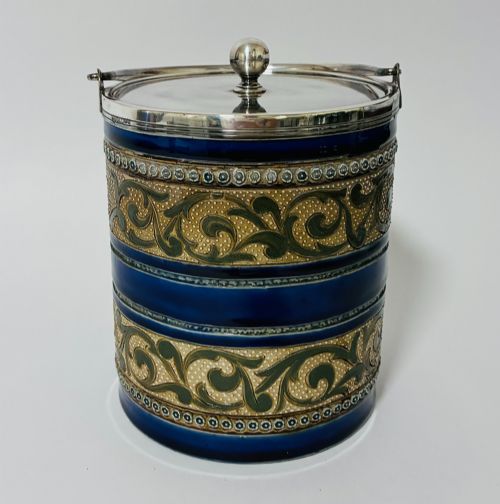
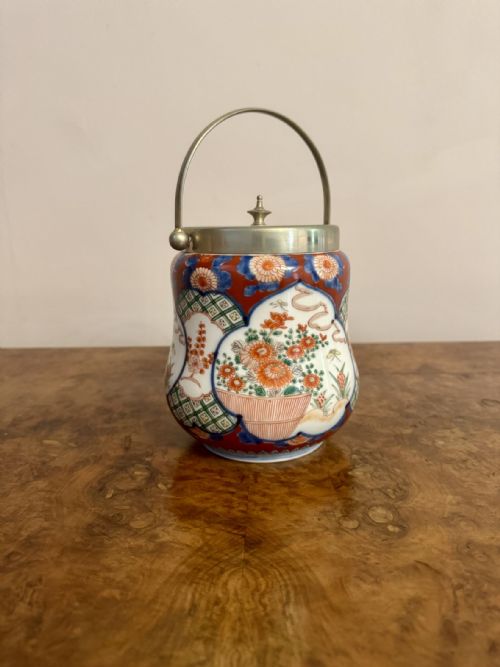


Victorian Ceramic Biscuit Jar
These victorian ceramic biscuit jar examples are sturdy domestic containers built to grace the drawing-room sideboard, offering both utility and charm.
Victorian Ceramic Biscuit Jar
A victorian ceramic biscuit jar is a domestic container designed for holding dry foodstuffs in the parlour or dining room. The form usually comprises a cylindrical body with a fitted lid, frequently mounted with a metal bale handle.
You are most likely to meet examples produced by notable potteries during the Victorian era, spanning several decades of the nineteenth century. These vessels combine functional storage with decorative presence, reflecting the domestic habits of the period.
How they were made
Potters shaped the bodies from clay bodies such as stoneware, earthenware, and porcelain, sometimes utilising specialised moulding techniques to achieve the desired silhouette. These ceramic bodies then received glazes, transfers, or applied relief decoration before firing in kilns.
Metal components, predominantly silver plate and occasionally brass, were fabricated separately to form the mounts, lids, and swing handles. Artisans secured these metal collars and fittings to the ceramic vessels to complete the functional hardware.
Victorian Ceramic Biscuit Jar Retail Price Guide 2026
Typical asking prices for victorian ceramic biscuit jar among the pieces listed under this phrase on Sellingantiques today, from the lower quarter to the upper quarter. They describe what is for sale here now, not the wider market.
What varies in quality
The sophistication of the ceramic body and the crispness of any applied decoration dictate the standing of a piece. Fine mouldings, distinct relief work, and meticulous hand-painting separate standard utilitarian vessels from superior examples.
The quality and condition of the silver-plated metal mounts also influence the overall character. Substantial metalwork, secure fitting, and intact plating demonstrate superior manufacturing standards.
Doulton Lambeth·Carlton Ware·Wedgwood
The Victorian Ceramic Biscuit Jar Glossary
- Jasperware
- A fine-grained, unglazed stoneware developed by Josiah Wedgwood featuring applied white relief figures against a coloured ground. It remains one of the most distinctive ceramic styles of the period.
- Silver plate
- A thin layer of silver fused to a base metal such as copper or brass. This technique provided the bright appearance of solid silver for hardware and mounts at a lower cost.
- Stoneware
- A robust, vitrified pottery fired at high temperatures until impervious to liquid. It offers high durability for domestic storage vessels.
- Imari
- A style of Japanese porcelain decorated in underglaze blue and iron red, supplemented by gold. British potteries frequently drew inspiration from these distinct aesthetic patterns.
Victorian Ceramic Biscuit Jar: Frequently Asked Questions
How were these jars used?
These jars served as the container from which hostesses offered afternoon tea guests biscuits or dry cakes. They kept the contents dry while remaining attractive enough to sit out on the sideboard.
The inclusion of a lid protected the biscuits from moisture and staleness between social gatherings.
How do I clean a ceramic biscuit jar?
Cleaning requires gentle handling, particularly regarding the silver-plated mounts and delicate ceramic surfaces. Warm water and mild soap suffice for the interior, avoiding harsh abrasives that might damage the glaze.
Silver-plated hardware benefits from minimal, careful polishing to preserve the finish without wearing through to the base metal.
How do I tell different periods apart?
Distinguishing periods relies on observing stylistic details, ceramic bodies, and manufacturing marks. Victorian pieces often display classical relief work or floral transfers characteristic of nineteenth-century taste.
Comparing the specific glaze types and metal mount styles helps place an item within the broader Victorian timeline.