



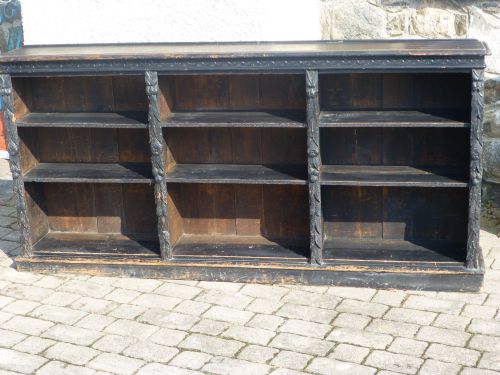
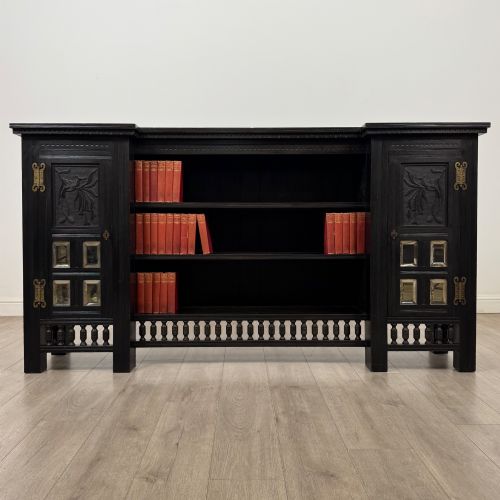
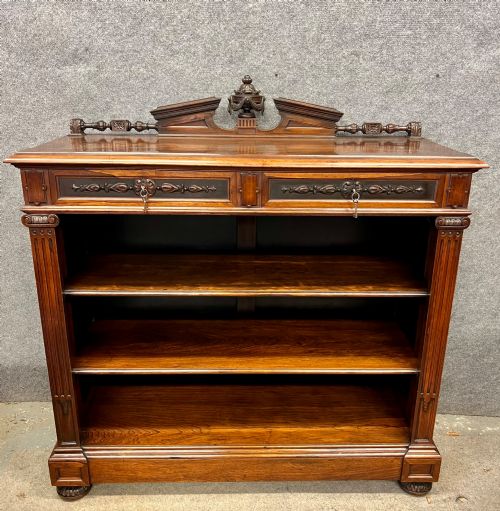
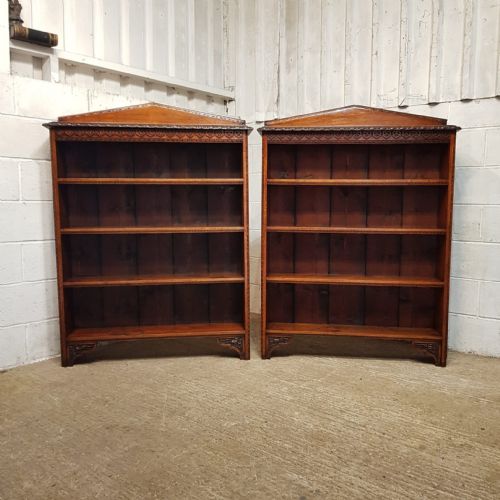
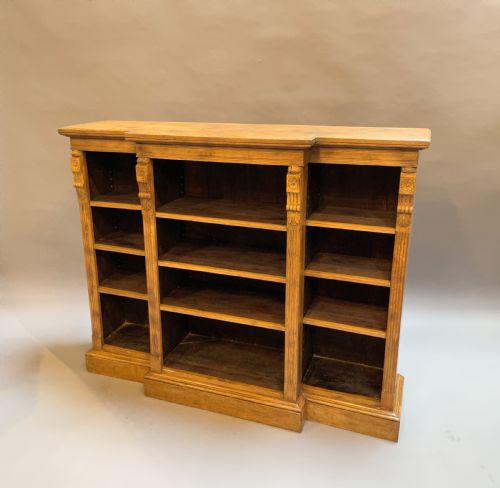

Victorian Carved Oak Open Bookcase
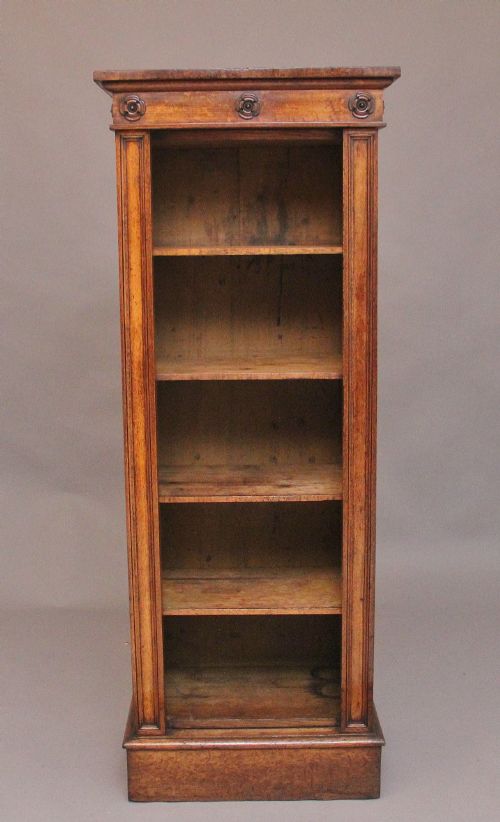
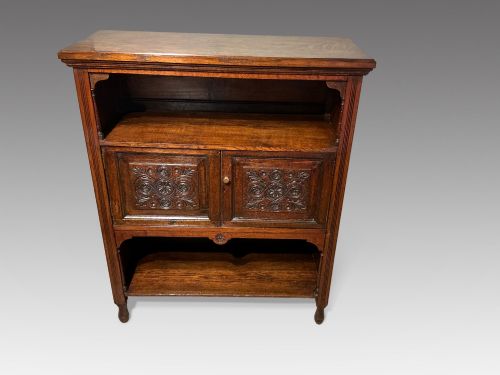
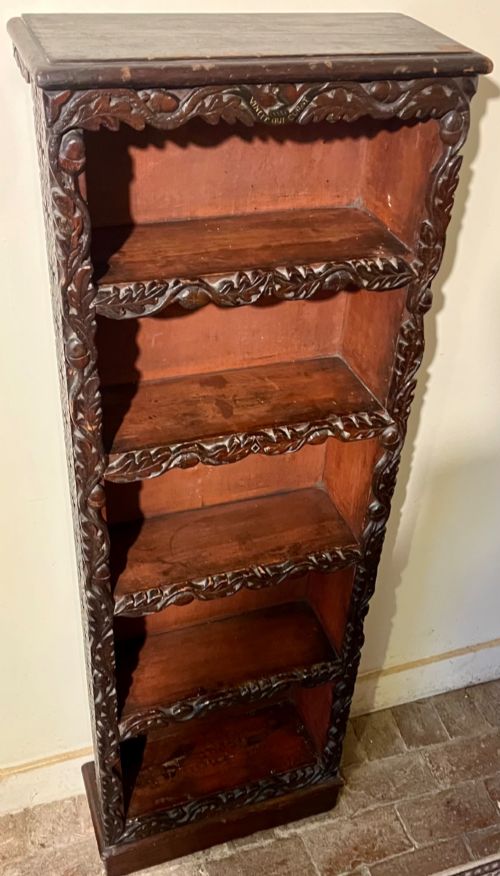
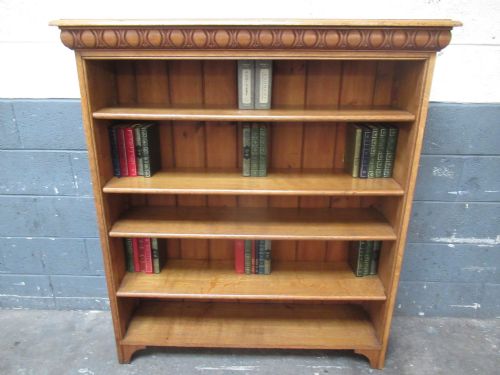
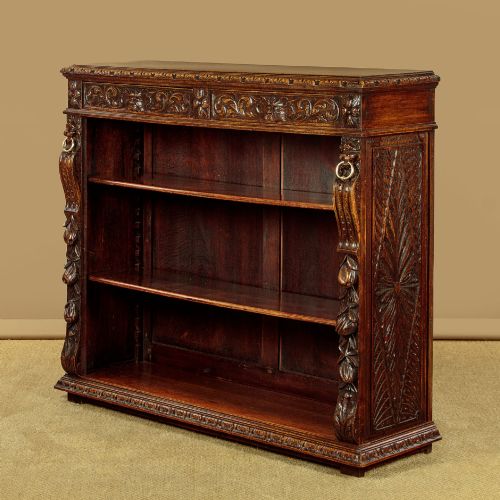
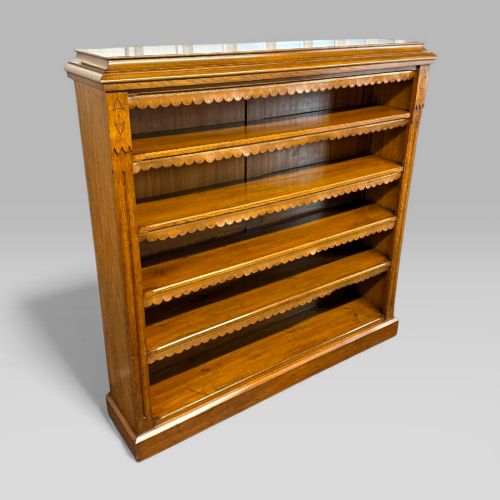
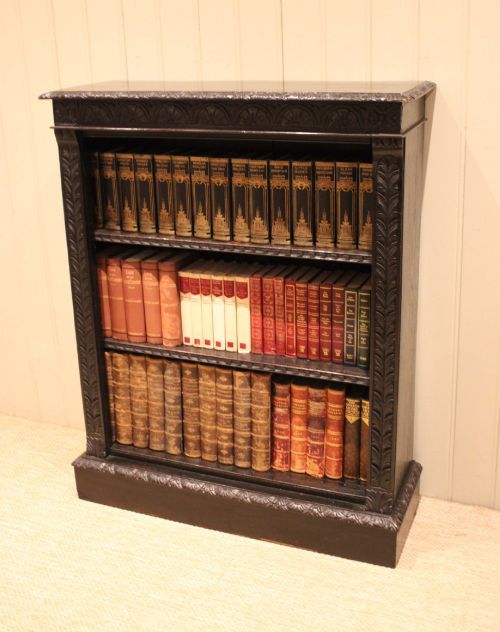
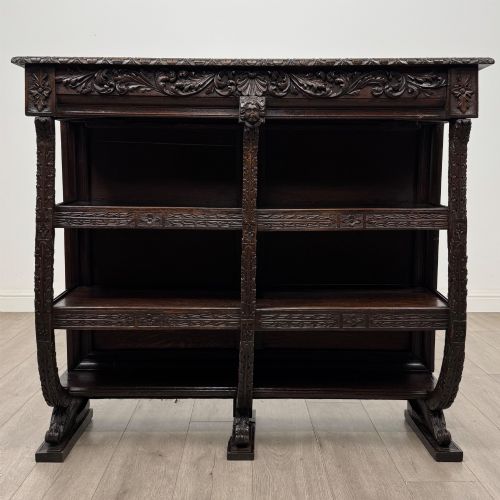
These Victorian carved oak open bookcases bring warmth and architectural presence to a room, holding rows of volumes while displaying rich timber grain.
Victorian Carved Oak Open Bookcase
The selections span distinct historical movements, moving from straightforward vernacular designs to elaborate Gothic Revival, Aesthetic Movement, and Arts and Crafts interpretations. Many examples utilise solid timber throughout, while some incorporate ebonised details, fret-cut panels, or striking green man motifs across the frieze.
Most specimens originate from the Victorian era proper, though related pieces stretch into the Edwardian decades with similar proportions and construction methods. The open front format distinguishes these from glazed library cabinets, putting the book bindings directly on display.
How they were made
Makers utilised solid oak planks, frequently quarter-sawn to reveal characteristic medullary rays, alongside brass fixing hardware and occasional multi-wood inlay elements. Surfaces received hand-carved ornamentation, such as linenfold panels, geometric strapwork, or bold figural carvings.
Construction relied upon sturdy joinery designed to bear heavy book loads without sagging over time. Interior uprights often incorporated slotted vertical battens or wooden pins to allow flexible shelf height adjustment.
Victorian Carved Oak Open Bookcase Retail Price Guide 2026
Typical asking prices for victorian carved oak open bookcase among the pieces listed under this phrase on Sellingantiques today, from the lower quarter to the upper quarter. They describe what is for sale here now, not the wider market.
Listings feature various styles including Gothic Revival, Aesthetic Movement, and Arts and Crafts across the Victorian and Edwardian periods.
What varies in quality
The depth and crispness of the timber carving separate standard utility furniture from exceptional cabinet work executed for country houses or institutional libraries. Sharp undercutting on foliage and balanced proportions across breakfront cornices indicate superior workshop standards.
The selection of timber grain and the integrity of the original polish or bleached finish also influence the character of each cabinet. Pieces retaining their functional adjustable shelving systems and original brass fittings preserve higher integrity than those altered later.
Richard Bridgens
The Victorian Carved Oak Open Bookcase Glossary
- Breakfront
- A cabinet design where the central section projects forward from the flanking wings, creating visual depth and architectural structure.
- Ebonised
- Wood treated with a dark stain or chemical finish to imitate ebony, popular during the Victorian period for high-contrast decorative effects.
- Green Man
- A sculptural architectural motif depicting a human face emerging from or entwined with foliage, frequently found on carved woodwork.
- Adjustable shelves
- Shelvings supported by moveable brackets or notched pilasters, allowing internal heights to change according to book sizes.
- Fret-cut
- Openwork ornamentation pierced through thin timber panels using a fine saw to create geometric or organic patterns.
Victorian Carved Oak Open Bookcase: Frequently Asked Questions
How do I style a large oak bookcase?
Pair the rich timber tones with neutral walls and allow natural light to highlight the grain and carved details. Mix upright book rows with ceramic objects or framed works to break the visual weight.
Ensure heavy volumes sit on lower shelves to maintain visual and physical stability. The open format lets you change displays easily as collections grow.
Are the shelves adjustable on these bookcases?
Many examples feature movable internal shelving supported by traditional wooden or metal track systems. This adaptability accommodates folio volumes alongside standard octavo novels.
Check individual descriptions to confirm whether a specific piece retains its original adjustment mechanism.
What is Gothic Revival oak furniture?
Gothic Revival pieces draw inspiration from medieval architecture, featuring pointed arches, tracery, and heavy carved mouldings. Cabinetmakers applied these ecclesiastical motifs to domestic furniture during the nineteenth century.
This style emphasises vertical lines, robust construction, and dramatic relief carving such as linenfold or figural panels.
How do I tell Victorian oak from Edwardian oak?
Victorian pieces often display heavier proportions, darker finishes, and dense relief carving associated with revival styles. Edwardian examples tend to show lighter tones, simpler lines, or Arts and Crafts influence.
Examine the construction methods and decorative vocabulary to understand the likely production period.