




Victorian Carved Book Cupboard
These walnut, mahogany and oak pieces give a room genuine Victorian character while keeping your volumes neatly enclosed.
Victorian Carved Book Cupboard
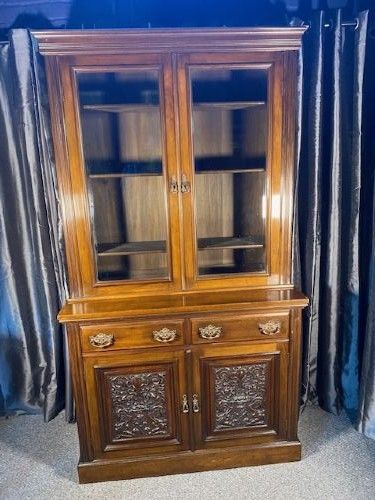
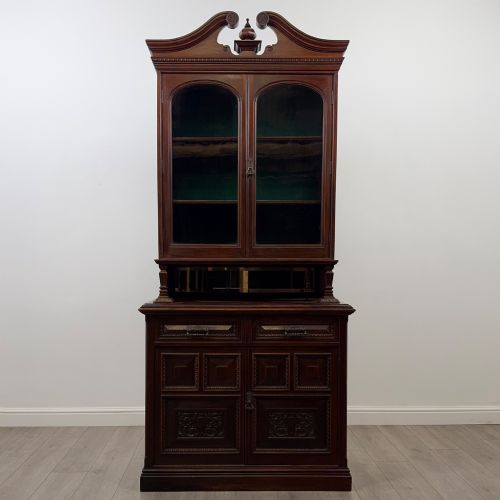
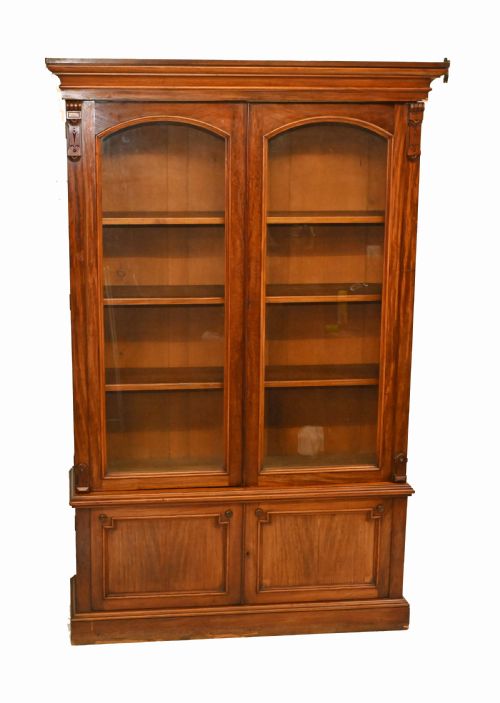
A Victorian carved book cupboard combines enclosed lower storage with upper shelving for volumes, serving as a practical focal point in a study or library. The pieces found here span the nineteenth century, including specific dates from the middle and late decades.
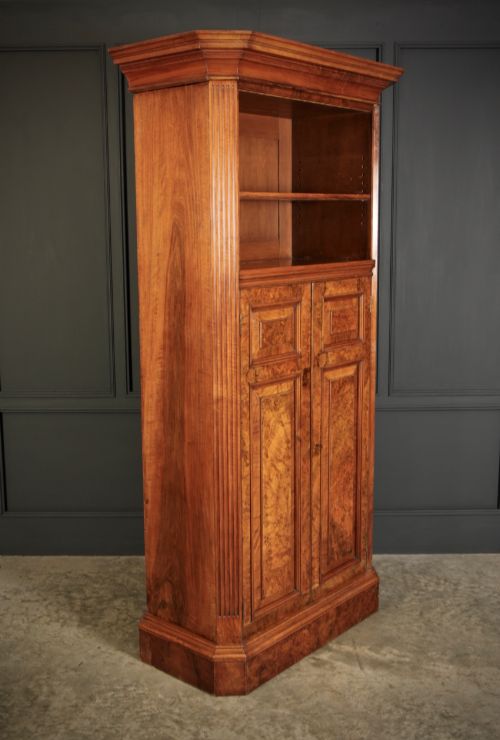
You will encounter forms ranging from tall library bookcases in two parts to smaller side cabinets and chiffoniers with open shelves. Oak, mahogany and walnut provide the primary structures, frequently paired with glazed doors or carved cupboard bases.
Materials and construction
Cabinet makers utilised dense hardwoods like mahogany, oak and walnut, often selecting burr or figured veneers for visual depth on flat surfaces. Brass hardware secures the doors and shelves, whilst glass panels protect the contents of the upper sections.
Joinery techniques from the period include heavy carving, particularly on Gothic revival examples featuring oak and pollard oak. Cupboard bases are frequently built separately from the upper bookcase tiers to facilitate transport.
Victorian Carved Book Cupboard Retail Price Guide 2026
Typical asking prices for victorian carved book cupboard among the pieces listed under this phrase on Sellingantiques today, from the lower quarter to the upper quarter. They describe what is for sale here now, not the wider market.
Listings feature woods including oak, pollard oak, mahogany, walnut, burr walnut and rosewood across nineteenth-century periods.
Judging the work
Quality rests upon the selection of timber and the crispness of the hand carving, especially on Gothic revival and decorated oak panels. Finer examples display carefully matched burr walnut veneers or well-figured mahogany across the entire facade.
Proportion and scale distinguish standard pieces from superior library furniture, with narrower formats and two-part configurations demonstrating higher ambition. The integration of glazed doors with solid lower cupboards requires precise carpentry that endures.
The Victorian Carved Book Cupboard Glossary
- Burr walnut
- A prized timber harvested from tree growths, yielding intricate swirling patterns used for surface veneers.
- Gothic Revival
- An architectural and decorative style drawing on medieval forms, featuring pointed arches and heavy carving.
- Chiffonier
- A low cabinet with drawers or cupboards, occasionally fitted with open book shelves above.
- Glazed door
- A timber-framed door fitted with glass panels to display volumes while keeping them dust-free.
- Two-part bookcase
- A tall cabinet constructed in separate upper and lower sections for ease of movement.
Victorian Carved Book Cupboard: Frequently Asked Questions
How do I date a Victorian bookcase?
Examine the timber species, construction methods and stylistic markers such as Gothic revival motifs or plain Victorian classical lines. Exact dates often rely on documented provenance or distinctive regional cabinet-making traits.
Mid-century pieces typically employ solid mahogany, while later decades favour oak and figured walnut veneers with more pronounced machine assistance in the joinery.
What is a two-part library bookcase?
A two-part library bookcase consists of a heavy lower cupboard base supporting an upper glazed shelving unit. This modular construction allowed large pieces to be transported into rooms more easily.
The separation point usually sits at counter height, concealed by moulding where the two heavy sections meet.
Where should I place a heavy oak cupboard?
Position these substantial pieces against load-bearing walls away from direct sunlight and heat sources that might dry out the timber. Ensure the floor is level so the heavy doors swing true and close evenly.
Allow sufficient clearance around the base to prevent dampness against exterior walls, particularly with older country oak examples.
How do I maintain walnut veneer?
Dust regularly with a soft, dry cloth and apply occasional natural wax to nourish the grain. Avoid modern chemical polishes that can degrade the historic finish.
Keep room humidity stable to prevent the delicate burr walnut veneers from lifting or splitting along the edges.