


Victorian Caddy on Stand
A victorian caddy on stand gathers tabletop containers and miniature chests onto elevated frames for easy access.
Victorian Caddy on Stand
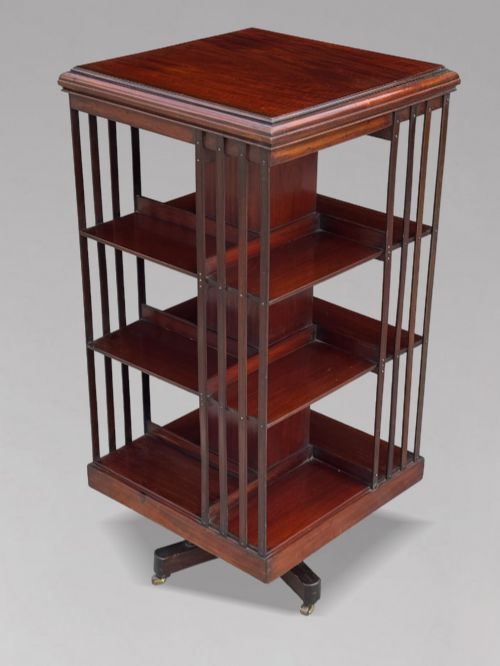
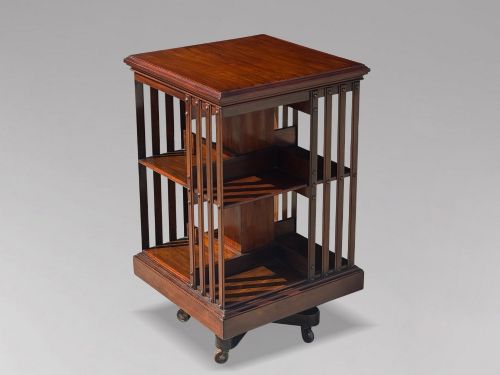
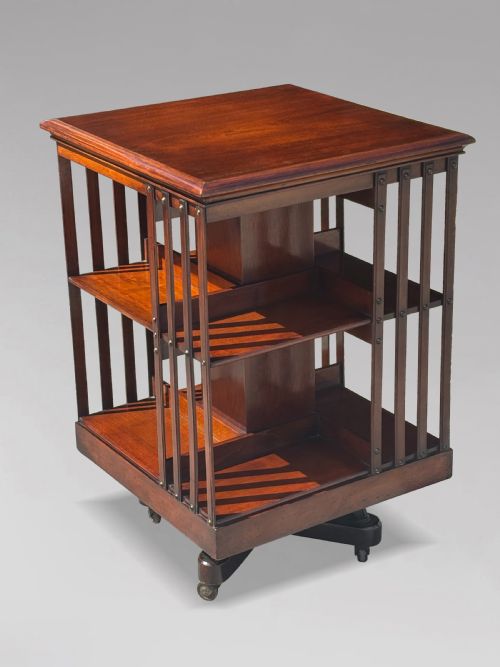
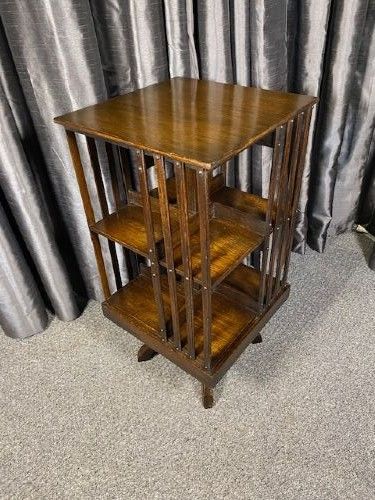
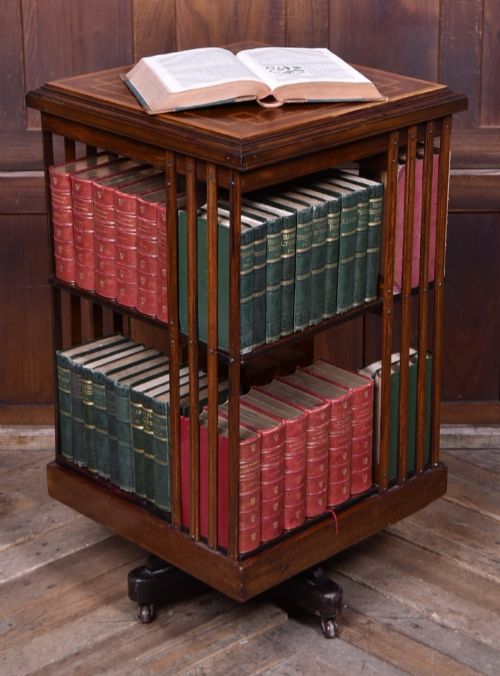
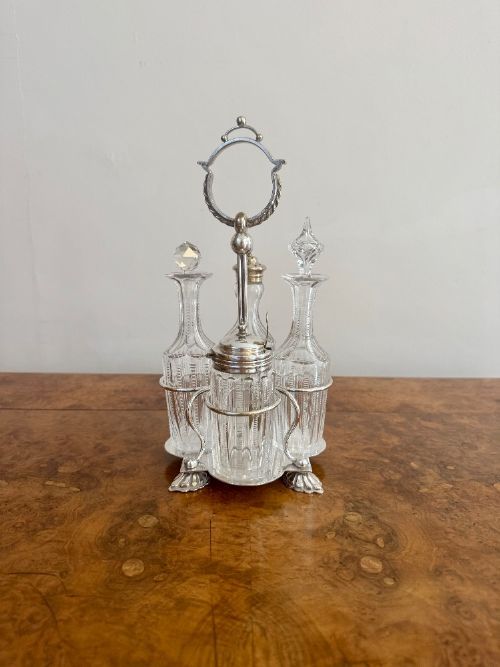
When you search for a victorian caddy on stand, you encounter varied tabletop holders and fitted boxes raised on legs or frames from the nineteenth century. The selection spans distinct forms like rotating bookcases, cruet sets, tantalus frames, and sewing stands rather than a single standardised tea caddy structure.
The pieces appearing here date predominantly from the Victorian and Edwardian periods, stretching from the eighteen sixties through to nineteen twenty. Mahogany, oak, walnut, and coromandel provide the wooden chassis, while silver plate and brass furnish the stands, mounts, and fittings.
Materials and Construction
Cabinetmakers utilised dense hardwoods including mahogany, oak, walnut, and yew, frequently incorporating marquetry inlay, burr veneers, and turned columns. These timbers formed the structural bodies of revolving bookcases, tea teapoys, and magazine racks.
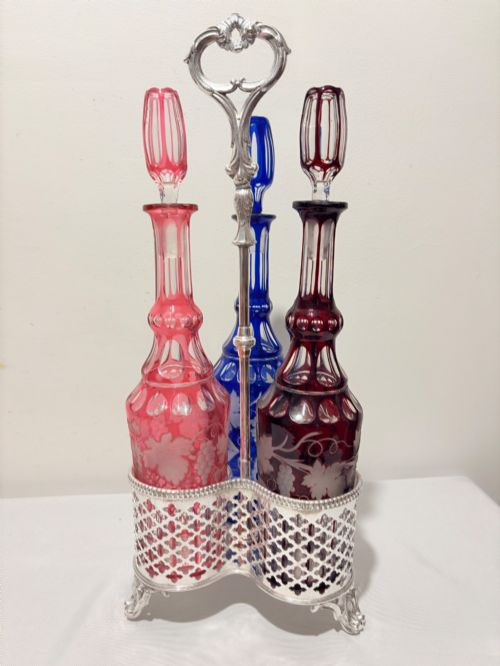
Metalworkers combined cast brass, cast iron, and silver plate to create handles, bottle frames, and condiment stands. Cut glass and crystal decanters, cruet bottles, and condiment jars integrated directly into these metal and wooden chassis.
Listings combine nineteenth-century revolving bookcases, oak and coromandel tantalus sets, and silver-plated cruet frames.
Judging Quality
The standard of a piece rests upon the crispness of its joinery, the weight of its silver plate, and the clarity of its cut glass. Heavier gauge metals and deeply carved timber details elevate an object above simpler utilitarian versions.
Design complexity also separates examples, distinguishing plain functional bottle holders from elaborately fitted tantalus sets with games compartments, or simple revolving shelves from intricate pierced scroll divisions.
Mappin Brothers
The Victorian Caddy on Stand Glossary
- Tantalus
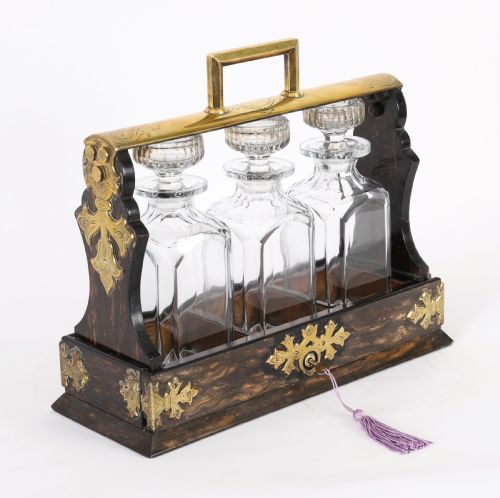
- A locked frame holding decanters securely to prevent unauthorized access to the contents. The mechanism requires the unlocking of a top bar before any bottle can be removed.
- Cruet set
- A matched collection of condiment bottles, often holding oil, vinegar, salt, and mustard, housed within a metal frame. These sets sit upon dining tables for individual seasoning.
- Teapoy
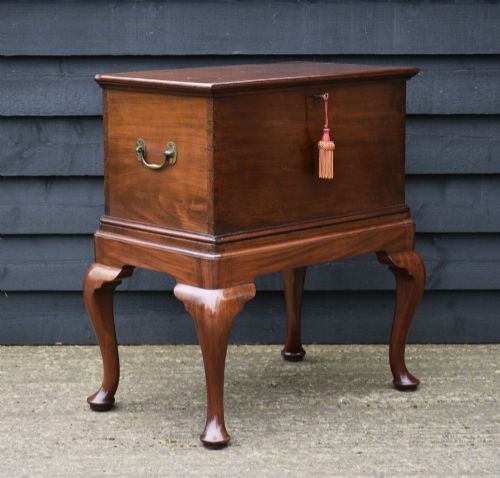
- A small box or chest designed to hold tea, traditionally mounted on a central pillar or stand. Interiors frequently contain lidded canisters and mixing bowls.
- Canterbury
- A low multi-tiered stand used for holding sheet music, books, or magazines. Divided vertical sections separate the stored items.
- Silver plate
- A thin layer of silver fused to a base metal, commonly copper or nickel brass, providing the appearance of solid silver. This technique gained widespread use across nineteenth-century tabletop wares.
Victorian Caddy on Stand: Frequently Asked Questions
What is a tantalus?
A tantalus is a locking wooden or metal frame designed to secure spirit decanters behind a barred rail. The locking mechanism prevents guests or servants from pouring drinks without authorization.
Most examples house two or three cut crystal decanters within an oak, mahogany, or coromandel base. The design allows the bottles to remain visible while keeping their contents physically inaccessible until opened with a key.
How were cruet sets used?
Cruet sets held liquid and dry condiments for use at the dining table during meals. Diners used the individual bottles to season food to taste.
These stands typically feature silver-plated frames equipped with a central carrying handle. They group together cut glass bottles for oil, vinegar, pepper, mustard, and salt.
What is a teapoy?
A teapoy is a lidded box designed to store loose tea leaves securely away from moisture and light. In the nineteenth century, tea was an expensive commodity requiring careful domestic management.
These containers sit upon table stands or pillar supports and feature internal compartments or removable canisters. Some versions incorporate mixing bowls for blending different tea varieties.
How do I care for silver plate?
Silver-plated items require gentle cleaning with non-abrasive cloths and dedicated metal polishes to preserve the thin metallic surface. Excessive rubbing can wear through the plating to reveal the base metal underneath.
Store these objects in stable humidity conditions away from direct sunlight to minimise tarnishing. Regular dusting prevents chemical accumulation on both the metal frames and the associated glass components.