

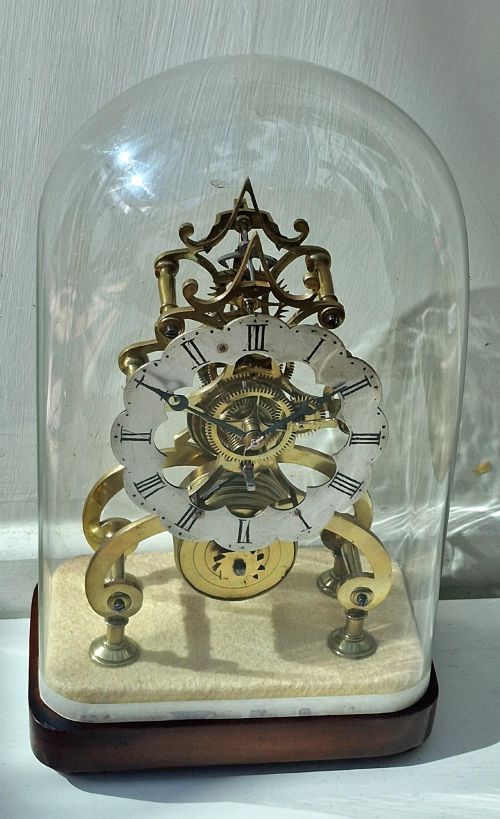
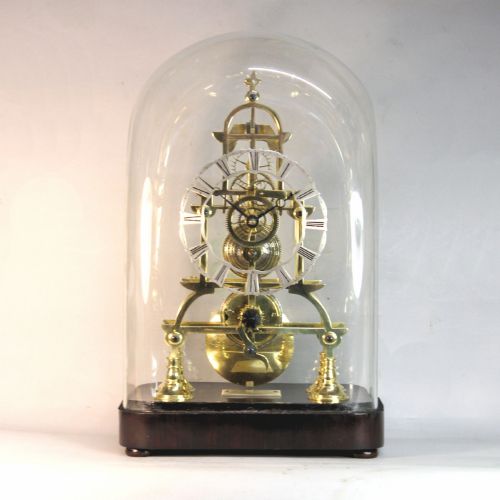


Victorian Brass Skeleton Clock
A victorian brass skeleton clock strips timekeeping down to its gleaming brass plates and spinning gears, offering a mesmerizing mechanical display for a mantelpiece.
Victorian Brass Skeleton Clock
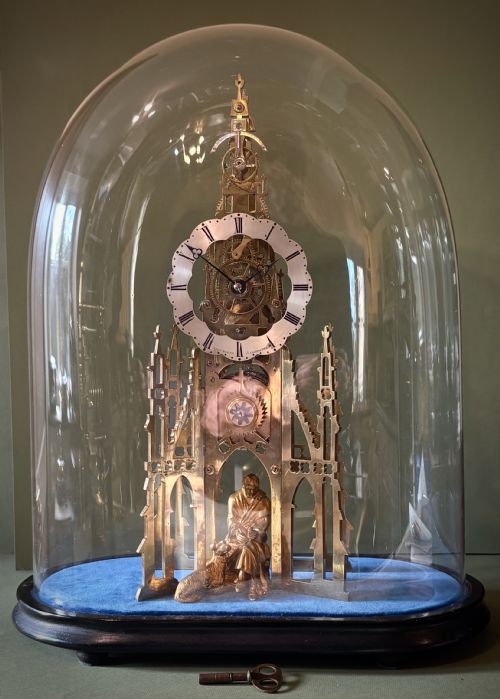
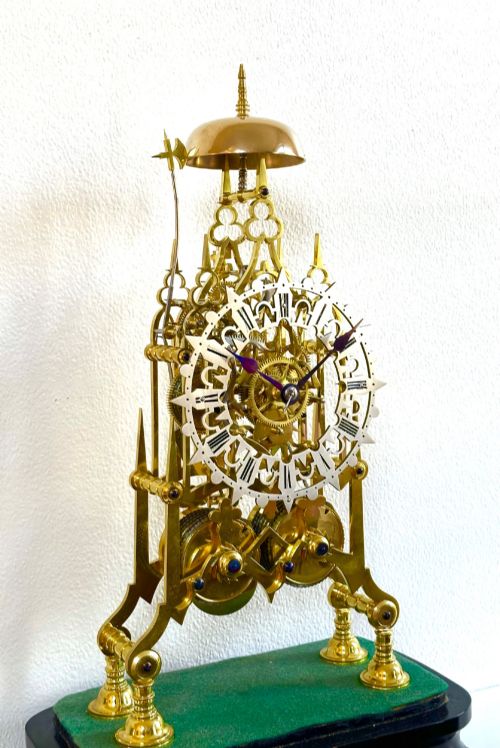
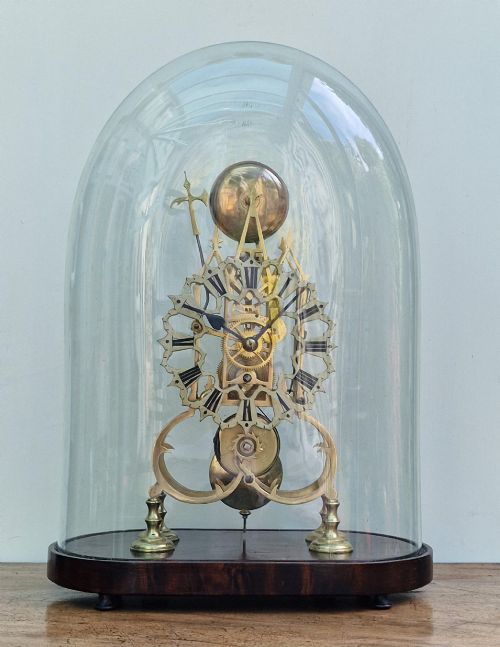
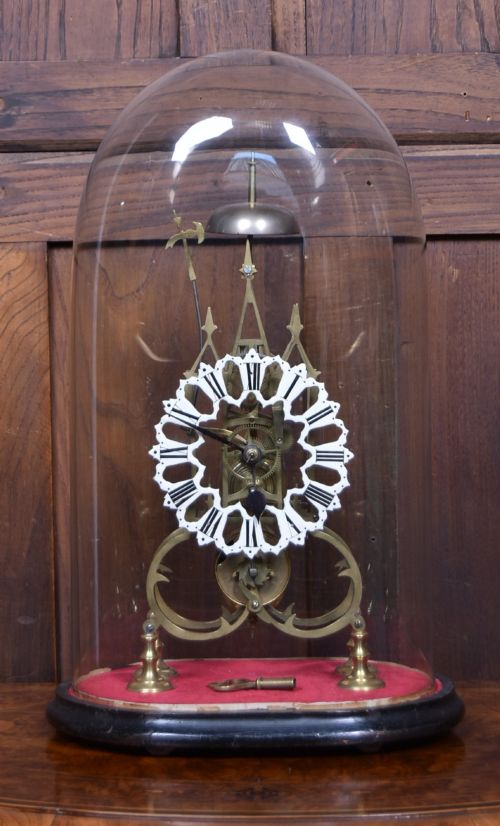
A victorian brass skeleton clock exposes its intricate wheel train and escapement between openwork metal plates rather than hiding them behind a solid dial. You will frequently encounter English and French examples enclosed beneath protective glass domes on wooden or marble bases.
The layout typically takes the form of a mantel clock designed to sit prominently in a library or drawing room. Makers produced both simple timepieces and complex striking versions with fusee movements during the nineteenth century.
Materials and Construction
Brass forms the structural backbone of these timepieces, shaped into open frames and wheel work of varying complexity. Steel components drive the mechanism, while enamel is used for the chapter rings that show the hours.
Enclosures rely on blown glass domes resting on bases of mahogany, ebonised wood or marble. These materials protected the delicate exposed gears from dust and air currents in nineteenth-century homes.
Victorian Brass Skeleton Clock Retail Price Guide 2026
Typical asking prices for victorian brass skeleton clock among the pieces listed under this phrase on Sellingantiques today, from the lower quarter to the upper quarter. They describe what is for sale here now, not the wider market.
Some nineteenth-century clocks ticked so loudly in quiet libraries that owners had to move them to the hallway.
Assessing Craftsmanship
Quality rests in the precision of the wheel work, such as whether the brass plates feature six-spoke designs and hand-finished pierced details. Finer movements incorporate sophisticated escapements like the coup perdu detent rather than standard anchor setups.
The presence of the original glass dome and matching base heavily influences the integrity of a piece. Superior examples often bear the signature of a known maker engraved on the dial or backplate.
Richard Winter of Chieveley·Thwaites of London·William Evans of Handsworth·E White Of Manchester·Allen Colyer
The Victorian Brass Skeleton Clock Glossary
- Fusee
- A conical pulley used in mechanical clocks to ensure even tension on the gear train as the mainspring unwinds. This mechanism improves timekeeping accuracy across the power reserve.
- Escapement
- The mechanism that controls the release of power to keep the pendulum swinging at a steady rate. Examples include the coup perdu detent found in advanced movements.
- Glass dome
- A blown glass cover that sits over the clock to protect the exposed brass mechanism from dust. Surviving original domes are valued by collectors.
- Chapter ring
- The circular band bearing the numerals that indicate the hours on the dial. On these clocks, the ring is often white enamel with black markings.
- Passing strike
- A mechanism that strikes a single blow on a bell or gong on the hour without counting the full time. It adds an audible element to the running movement.
Victorian Brass Skeleton Clock: Frequently Asked Questions
How do I wind a fusee skeleton clock?
Use the proper winding key on the square arbor located on the dial or front plate, turning it gently until resistance increases.
Take care not to over-wind the mechanism, as this can strain the fusee chain and mainspring.
Why is the movement exposed?
Clockmakers designed skeleton clocks to showcase the intricate brass gear train and mechanical motion as a decorative art form.
The glass dome kept dust away while allowing an unobstructed view from every angle.
How do I keep the clock running accurately?
Ensure the wooden or marble base rests on a completely level surface so the pendulum swings evenly.
Adjust the regulating nut on the pendulum rod if the clock gains or loses time over a twenty-four hour period.
What is the difference between English and French examples?
English versions often feature robust fusee movements built for longevity and precision timekeeping on mantelpieces.
French pieces frequently utilise smaller platform escapements and different striking trains housed under similar glass domes.