




Victorian Brass Hearth Rail
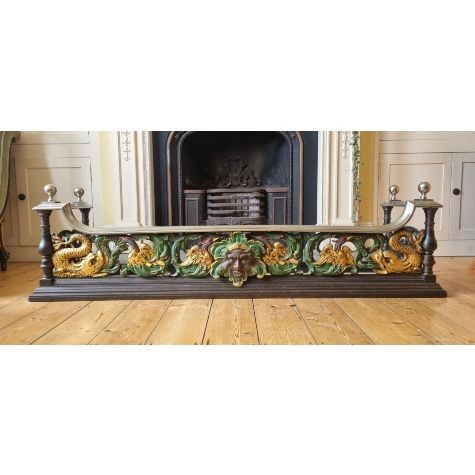
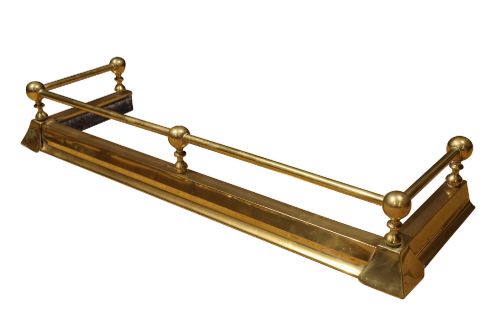
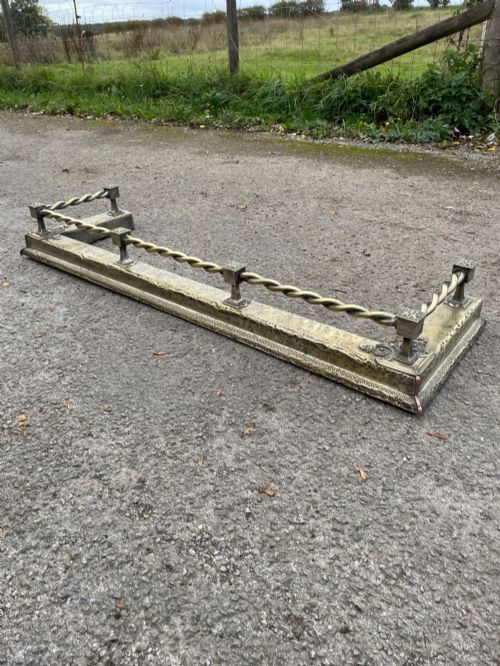
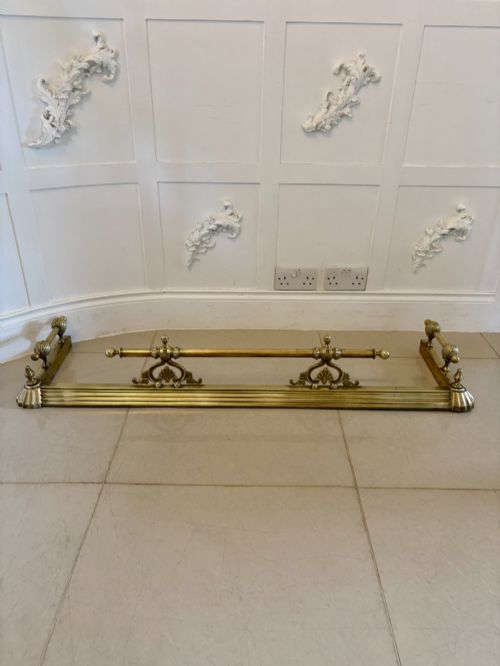
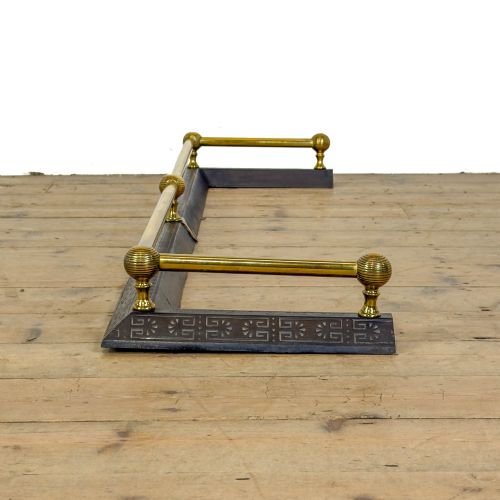
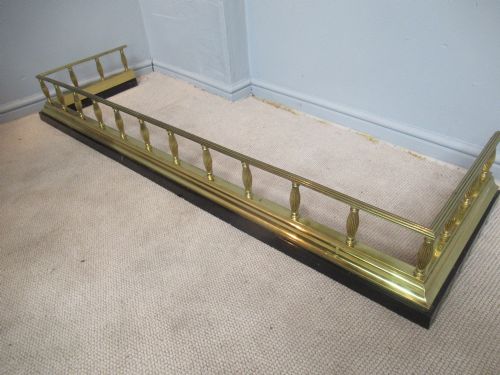
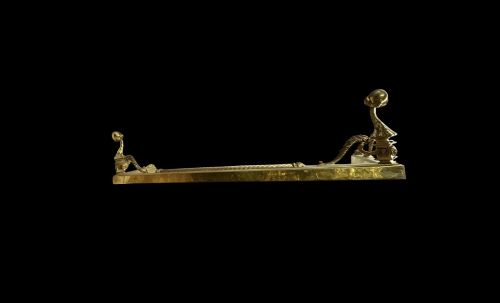
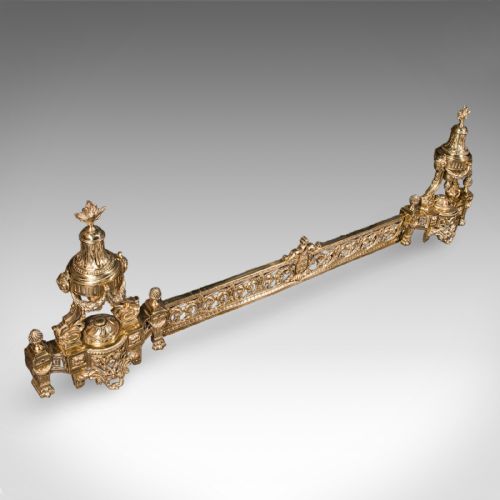
These Victorian brass hearth rail pieces are solid metal fireplace guards and fenders that anchor a hearth with period weight and polish.
Victorian Brass Hearth Rail
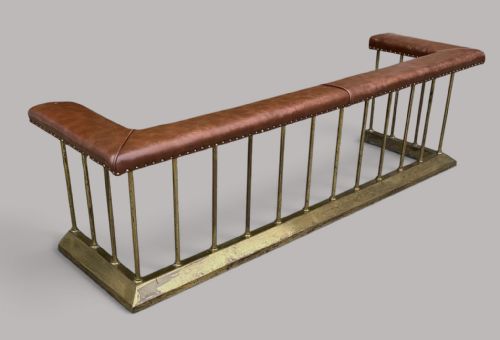
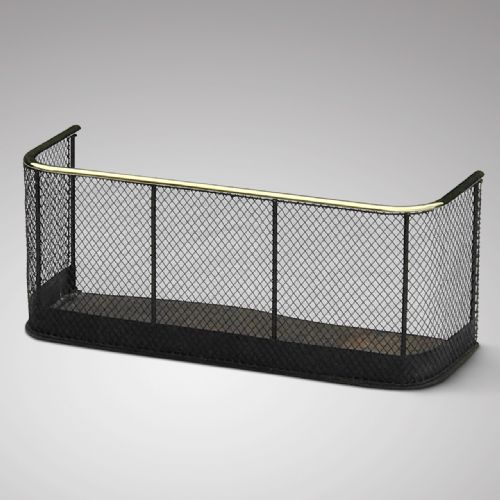
A victorian brass hearth rail provides a defined metal boundary around a fireplace hearth, catching embers while framing the grate. The selection spans straightforward kerbs to substantial club fenders upholstered in mature tan leather, alongside variants featuring attached clothes rails and nursery guards.
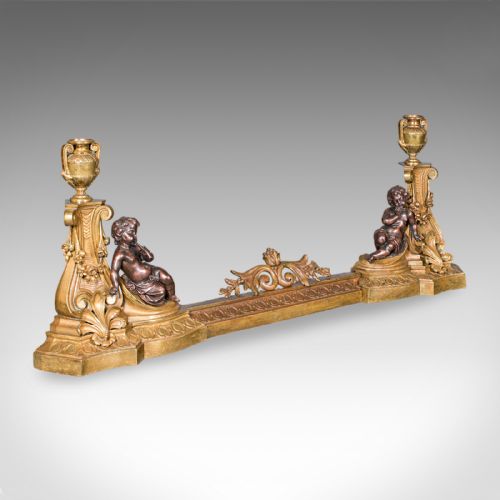
Most examples date from the nineteenth century, including pieces marked by Edwardian touches and late nineteenth-century Art Nouveau scrollwork. Materials combine brass with cast iron, steel, bronze, or copper, resulting in substantial metalwork designed for daily domestic use.
How they were made
Makers formed these heavy-gauge assemblies using cast and sheet brass, often mounting them over sturdy iron or steel inner frames to ensure rigidity against hearth heat. Components join through traditional mechanical fixings, heavy brazing, and detailed piercing work.
Surface treatments range from bright polished brass to polychromed highlights and dark black finishes, occasionally paired with hand-stitched leather upholstery on club fender seats.
Victorian Brass Hearth Rail Retail Price Guide 2026
Typical asking prices for victorian brass hearth rail among the pieces listed under this phrase on Sellingantiques today, from the lower quarter to the upper quarter. They describe what is for sale here now, not the wider market.
Several heavy-gauge brass rails arrive equipped with integrated clothes rails, proving our ancestors used the hearth as a domestic radiator.
What varies in quality
Quality rests in the gauge of the metal and the crispness of the casting, where heavier brass sections and deep relief scrolling distinguish superior work from lighter production. The integrity of structural joints and the quality of secondary metals like iron or steel dictate how well a piece maintains its geometry.
In seated or cushioned variants, the grade of the leather and the firmness of the internal padding mark the distinction between utility pieces and grand reception room furnishings.
The Victorian Brass Hearth Rail Glossary
- Hearth fender
- A low metal barrier placed around the front of a fireplace to contain ash and embers. These frames sit directly on the floor and define the hearth perimeter.
- Club fender
- A specialised hearth fender featuring low upholstered seats along the top rails. They provide seating close to the fire during colder months.
- Nursery fender
- A tall protective guard designed to keep children and clothing at a safe distance from open flames. Many include integrated rails for airing garments.
- Ormolu
- Gilt bronze ornamentation applied to metalwork for decorative effect. This finish adds rich metallic contrast against polished brass frames.
- Pierced metal
- Sheet metal perforated in decorative patterns to allow airflow and visual lightness. This technique appears on the pierced aprons of nineteenth-century guards.
Victorian Brass Hearth Rail: Frequently Asked Questions
How do I measure for a hearth rail?
Measure the width and depth of your fireplace opening and hearth stone to ensure the metal frame clears the fire surround comfortably.
Allow sufficient clearance on all sides so the fender sits squarely without crowding the hearth space.
Can adjustable fenders fit any fireplace?
Adjustable models incorporate sliding sections that permit minor modifications to overall width during installation.
Check the minimum and maximum extension ranges to confirm the mechanism suits your specific hearth dimensions.
How do I clean nineteenth-century brass?
Use a soft cloth and a mild, non-abrasive metal cleaner formulated for brass to remove tarnish while preserving the underlying metal.
Avoid harsh scraping tools that can strip applied dark finishes or polychrome highlights.
What is the difference between a kerb and a club fender?
A simple kerb is a low metal barrier designed solely to contain logs and ash within the fireplace opening.
A club fender incorporates padded leather seats on the upper rails, serving as both a guard and a piece of fireside furniture.