


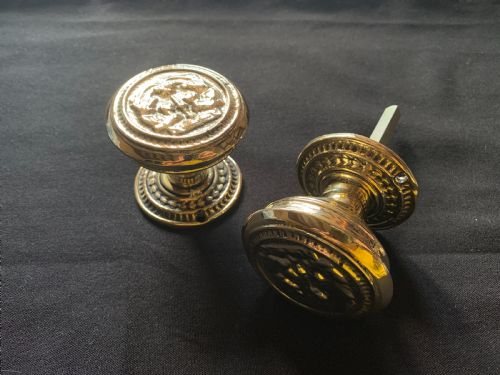


Victorian Brass Door Knobs
Victorian brass door knobs offer heavy metal construction and period character, bringing tactile nineteenth-century design to modern interiors.
Victorian Brass Door Knobs
Victorian brass door knobs are domestic hardware pieces designed for interior and exterior doors during the nineteenth century. The selection on this page centres primarily on Victorian and Regency periods, alongside examples from around nineteen hundred, featuring both single centre pulls and matched pairs. Buyers encounter various profiles, including standard rounded designs, octagonal facets, and distinctive ribbed beehive forms.
Beyond standard brass, the inventory includes pieces paired with materials such as oak, ebony wood, steel, bronze, iron, and amber glass. Objects range from standalone pairs and rim lock sets to large centre door knobs and matching door finger plates with integrated locks. These items derive from nineteenth-century manufacturing traditions, spanning formal Regency styles through to later Arts and Crafts and Art Nouveau aesthetics.
Materials and construction
The objects combine solid brass, bronze, iron, and steel components, often turned or cast into specific architectural profiles. Makers utilised timber elements like oak and ebony, as well as amber glass inserts, to provide contrasting grips and visual variety.
Production methods rely on traditional foundry techniques, creating weighted metal forms intended for daily domestic use. Door hardware components integrate matching backplates, rim locks, and finger plates manufactured from the same durable metals.
Assessing quality and finish
Substantial weight and the use of solid brass or bronze separate heavier architectural hardware from lighter production. The precision of turned details, such as the ridges on beehive profiles or the crispness of octagonal facets, indicates superior workmanship.
The integration of secondary materials like ebony wood, oak, or amber glass contributes to the distinction between standard hardware and more ornate, decorative examples. Complete sets featuring matching finger plates or rim locks generally represent a higher degree of original domestic appointment.
The Victorian Brass Door Knobs Glossary
- Centre door knob
- A large door handle mounted in the middle of a primary entrance door rather than the edge. These are typically fixed in place and used for pulling the door shut.
- Beehive
- A turned brass door knob featuring closely spaced concentric ridges resembling a traditional beehive. This pattern offers a distinctive tactile grip popular in nineteenth-century homes.
- Rim lock
- A mechanical door lock housed in a metal box surface-mounted on the interior face of a door rather than mortised inside. These often require specific matched pairs of knobs with appropriate spindles.
- Finger plate
- A flat metal or wooden plate mounted on a door around the handle to protect the surface from hand marks. They frequently match the style and material of the accompanying door knobs.
- Octagonal
- A geometric form featuring eight distinct sides, commonly shaped into brass or bronze door furniture. This faceted design catches the light and provides a firm grip.
Victorian Brass Door Knobs: Frequently Asked Questions
How do I fit antique door knobs?
Fitting antique hardware requires attention to spindle sizes and existing mortise or rim lock mechanisms. Many nineteenth-century spindles differ slightly from modern standards and may need careful adjustment.
Ensure the backplates or rosettes align properly with previous screw holes to protect the timber door surface. Professional installation is often advisable for older rim lock assemblies.
Are these door knobs suitable for daily use?
Solid brass, bronze, and iron door furniture from the nineteenth century was built for heavy domestic service. These robust materials withstand regular handling in modern environments.
Period pieces combined with wood or glass elements simply require standard care to maintain their original mechanical action.
What is a centre door knob?
A centre door knob mounts directly in the middle of an exterior or primary entrance door. Unlike edge-mounted latches, these stationary pulls assist in drawing a heavy door closed.
They often appear alongside matching letter plates or heavy architectural furniture from the Victorian and Regency eras.
How do I clean brass door hardware?
Cleaning antique brass involves removing surface dust with a soft cloth while preserving the accumulated patina. Avoid harsh chemical abrasive cleaners that strip away historical character.
Unlacquered nineteenth-century metals respond best to gentle polishing if a bright finish is preferred over aged warmth.