



Victorian Brass Bookends
Victorian brass bookends bring heavy metal craftsmanship and period weight to your library, keeping volumes upright with genuine nineteenth-century character.
Victorian Brass Bookends
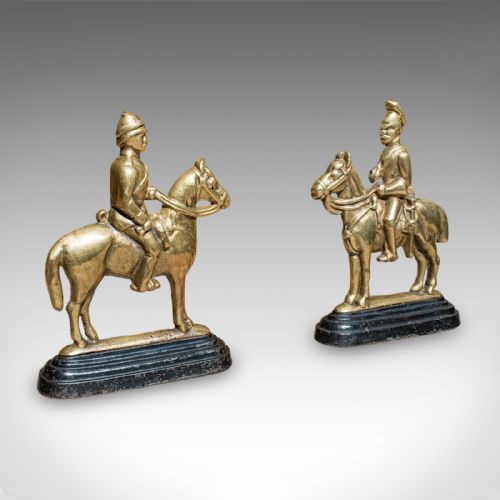
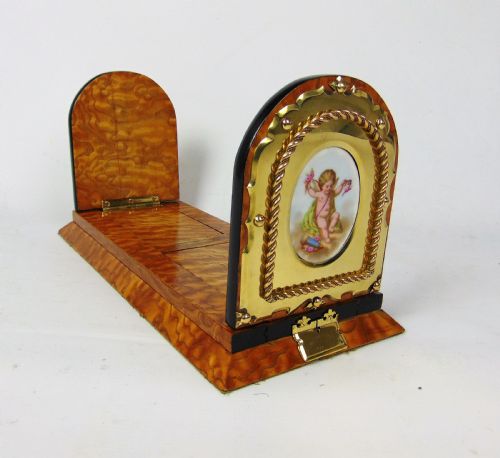
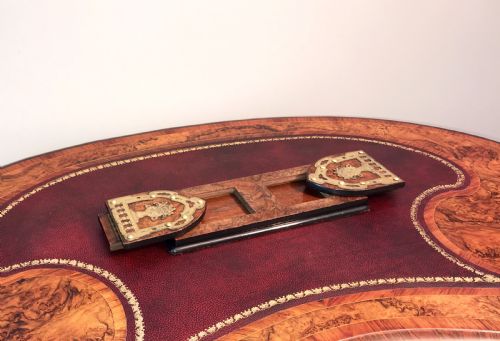
Victorian brass bookends and sliding book slides organise bookshelves using robust metal mounts and rich timber bases. You will most frequently encounter pairs of cast animal figures alongside extendable walnut book troughs.
The objects stem from nineteenth-century English workshops, often combining polished brass with burr wood, walnut, or rosewood. Makers also produced versatile desk accessories that functioned as both static bookends and adjustable slides.
Beyond standard pairs, the selection includes related heavy items like cast iron doorstops and figural door porters sharing the same period aesthetic. These pieces reflect the functional desk requirements of nineteenth-century studies and libraries.
How they were made
Foundries shaped the metal components through traditional casting techniques, producing detailed animal figures such as lions, elephants, foxes, and horse riders in solid brass or cast iron. These heavy castings provided the necessary mass to support rows of heavy books.
Cabinetmakers constructed the wooden sliding bases from dense timbers like walnut, rosewood, and burr wood, securing them with brass hinges, mounts, and extending mechanisms. Selected pieces incorporate bone or enamel details to accent the timber and metal framework.
Victorian Brass Bookends Retail Price Guide 2026
Typical asking prices for victorian brass bookends among the pieces listed under this phrase on Sellingantiques today, from the lower quarter to the upper quarter. They describe what is for sale here now, not the wider market.
Nineteenth-century desk accessories often co-opted fierce brass lions and foxes to stand guard over gentle poetry collections.
What varies in quality
Quality rests in the crispness of the metal casting and the depth of the timber grain used for the bases. Superior examples exhibit finely detailed chasing on the brass figures and robust, smooth sliding action on expandable book troughs.
Makers who incorporated secondary materials like enamel, bone, or specialised woods such as rosewood elevated standard desk accessories into finer decorative objects. The weight and substantial feel of the combined brass and wood construction dictate the upper tier of the range.
Tiffany and Co·Betjemann
The Victorian Brass Bookends Glossary
- Book slide
- An extendable desk accessory with upright ends, designed to hold a varying number of volumes securely between metal or wooden supports.
- Gilt brass
- Brass treated with a gold-coloured finish or thin layer, adding brightness and decorative appeal to nineteenth-century desk objects.
- Gothic Revival
- A nineteenth-century architectural and decorative style drawing inspiration from medieval forms, occasionally seen in period metalwork.
- Burr wood
- Wood featuring twisted, knotty grain patterns that create decorative swirling figures when polished on desk accessories and book slides.
- Door stop
- A heavy weighted object, often cast in iron or brass in matching animal forms, used to keep heavy interior doors propped open.
Victorian Brass Bookends: Frequently Asked Questions
What is a book slide?
A book slide is an adjustable desk accessory featuring two upright ends connected by an expandable base. It holds a row of volumes securely as the collection grows or shrinks.
These pieces sat on Victorian library tables and desks, offering a practical way to keep working volumes tidy without needing fixed shelving.
How do sliding bookends work?
Sliding bookends utilise a mechanical track or overlapping wooden leaves that expand and contract smoothly. This allows the user to adjust the overall length of the trough to fit the exact number of books.
Inside the mechanism, brass mounts and hinges secure the moving parts while adding decorative contrast to the walnut or rosewood timber.
Are doorstops and bookends related?
Doorstops and bookends share identical nineteenth-century casting methods, metal alloys, and figural designs. Foundries often produced heavy brass and cast iron animals like lions or foxes for both domestic purposes.
While doorstops required massive weight to hold heavy doors, smaller castings served the exact same sculptural purpose on library bookshelves.
How do I date a Victorian book slide?
Dating relies on identifying period timber choices like walnut and rosewood combined with nineteenth-century brass mounting techniques. Patent stamps and maker marks can also narrow down the production decade.
Stylistic cues such as Gothic Revival motifs or Anglo-Indian decorative elements further anchor pieces within the broader Victorian era.