



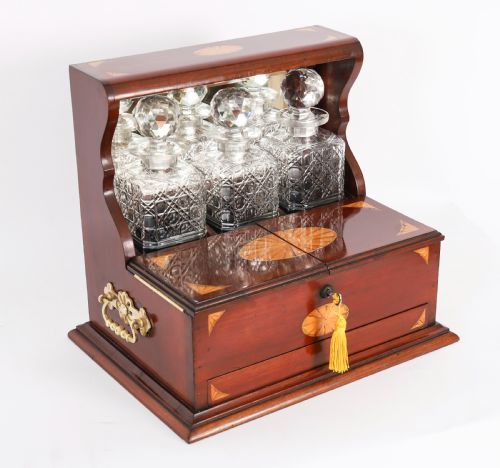


Victorian Bottle Box
A victorian bottle box is a practical container designed to hold glass vessels securely, combining fine carpentry with utilitarian purpose.
Victorian Bottle Box
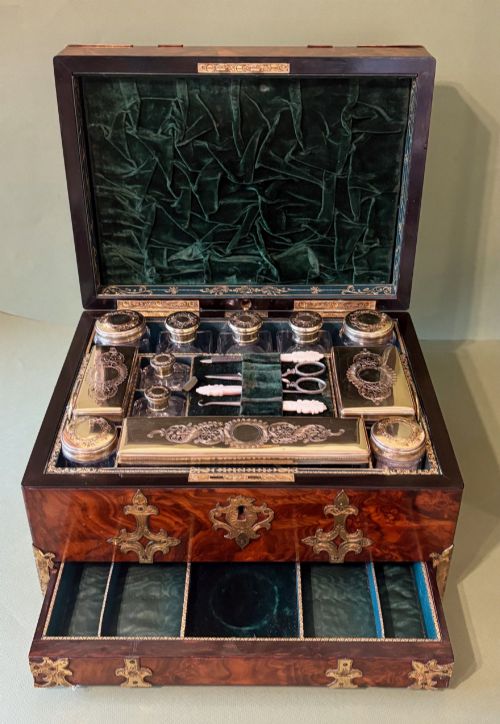
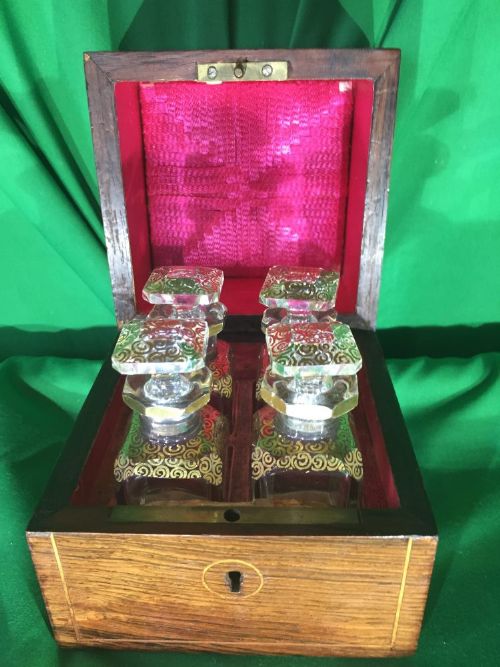
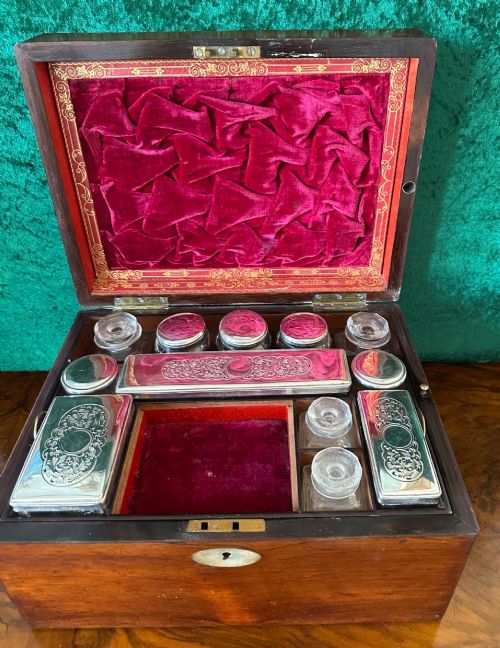
A victorian bottle box encompasses various fitted containers, from scent bottle caskets and vanity cases to tantalus sets and apothecary chests. These pieces originate predominantly from the nineteenth century, reflecting an era when personal grooming, travel, and hospitality required orderly containment. Oak, mahogany, rosewood, and coromandel form the primary carcasses of these boxes, frequently accented with brass mounts and inlay.
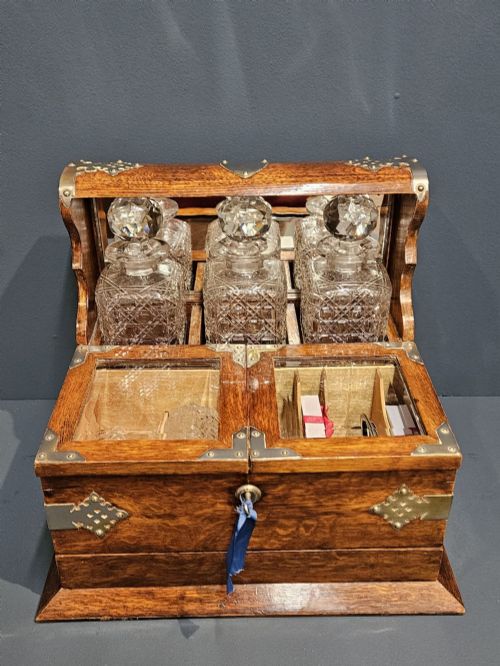
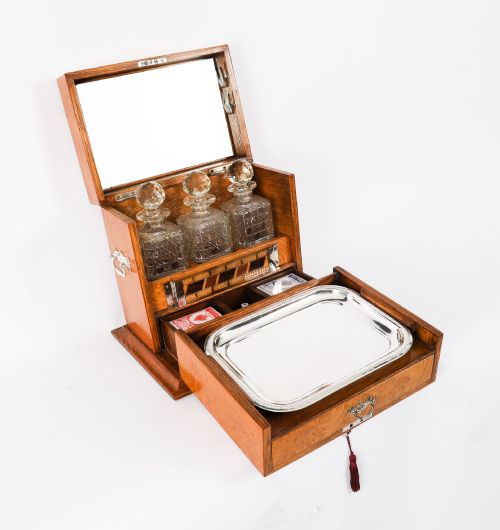
The most common iterations on this page are tantalus frames and scent bottle boxes, which secure glass decanters or small perfume flacons within fitted interiors. Velvet and leather linings cushion the glass, while locking mechanisms protect valuable contents. Buyers encounter both domestic tabletop versions and portable campaign styles intended for travel.
Beyond standard tantalus and perfume cases, the selection includes related items such as travelling communion sets, inkstands, and miniature apothecary cabinets complete with original bottles. Each form demonstrates the period's commitment to combining functional storage with decorative exterior craftsmanship.
Materials and Construction
Carpenters constructed the structural frames from dense hardwoods like oak, walnut, mahogany, and exotic coromandel, often employing satinwood inlay or brass banding for reinforcement. These timbers provided the necessary weight and durability to house heavy glass vessels safely during transport or daily use. Brass hinges, locks, and corner mounts secured the assemblies while adding a distinct decorative contrast.
Interiors rely on precision woodwork and upholstery techniques, featuring fitted wooden dividers lined with velvet, leather, or silk to cradle each specific bottle. Cut glass, crystal, and silver-gilt components inside the boxes required specialist glasscutting and silversmithing, resulting in coordinated sets where every vessel fits its designated slot exactly.
Victorian Bottle Box Retail Price Guide 2026
Typical asking prices for victorian bottle box among the pieces listed under this phrase on Sellingantiques today, from the lower quarter to the upper quarter. They describe what is for sale here now, not the wider market.
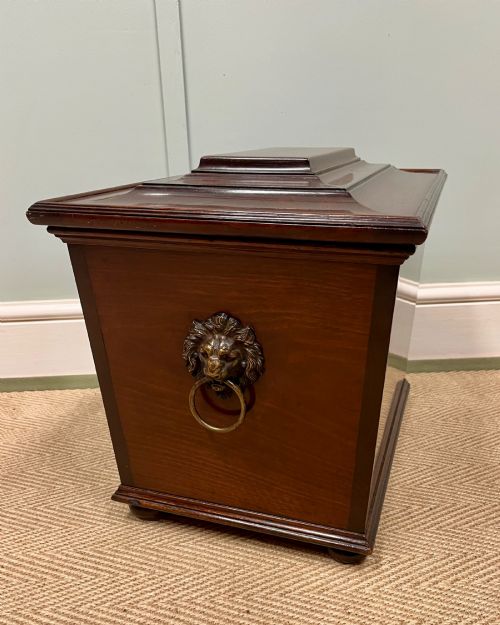
Listings demonstrate that nineteenth-century makers favoured dense hardwoods like oak, mahogany, and coromandel for housing glass bottles securely.
Assessing Quality
Quality in a victorian bottle box rests on the integration of the fitted interior with the outer timber carcass. Superior examples feature flawless timber selection, such as figured oak or highly grained coromandel, paired with robust locking mechanisms and original, matching cut glass bottles. Poorer examples show mismatched replacement bottles, poorly fitted dividers, or split wood resulting from improper seasoning.
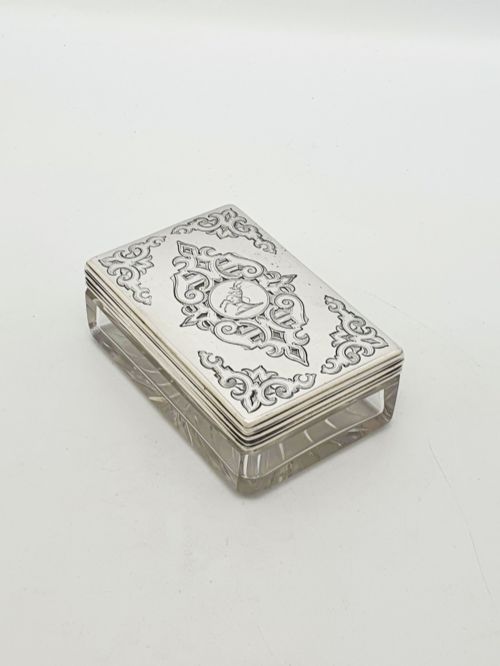
The presence of maker attribution, hallmarked sterling silver mounts, and complex brass hardware elevates a piece above standard domestic production. Craftsmanship is visible in the tightness of the joinery, the execution of any marquetry stringing, and the preservation of original velvet or leather linings within the case.
Edward Smith·Asprey·Philip Ashberry·RA Robertson
The Victorian Bottle Box Glossary
- Tantalus
- A locking drink container that secures decanters beneath a metal bar to prevent unauthorized access while displaying the bottles.
- Coromandel
- A dense, dark East Indian timber featuring striking grain patterns, frequently utilised for high-end nineteenth-century luxury boxes.
- Guilloche
- An intricate mechanical engraving technique producing precise repeating geometric patterns on metal surfaces, often seen on silver boxes.
- Vinaigrette
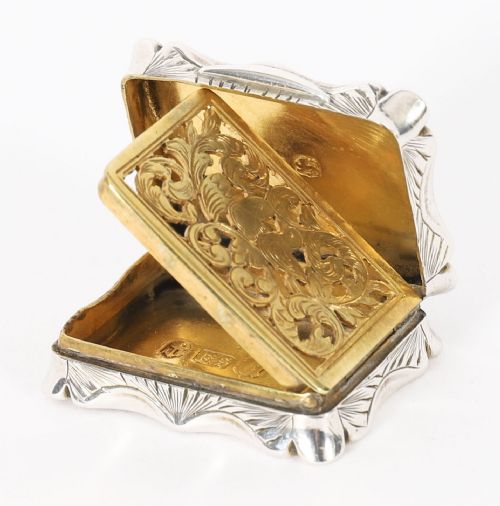
- A small ornamental box containing a perforated grille, designed to hold a sponge soaked in aromatic vinegar.
- Cellarette
- A lockable floor-standing or tabletop cabinet used for storing wine bottles and decanters near the dining table.
Victorian Bottle Box: Frequently Asked Questions
What is a tantalus?
A tantalus is a locking bottle cabinet that holds decanters upright beneath a metal retaining bar. The design prevents guests or servants from pouring drinks while still allowing the contents to remain visible.
Most examples secure with a key, locking the handle mechanism in place so the bottles cannot be removed without unlocking the frame.
Were these boxes meant for travel?
Many vanity cases and apothecary boxes were built for journeys, featuring sturdy brass corners and recessed carrying handles. Other versions, such as heavy table tantalus sets, remained stationary in dining rooms.
Portable variants usually include secure internal partitions to keep glass bottles from shifting during carriage rides or rail travel.
How do I care for the wood and velvet?
Wood surfaces benefit from occasional application of microcrystalline wax to nourish the grain without building up heavy residues. Velvet and leather linings require dry dusting with a soft brush to prevent moisture damage.
Keeping these boxes away from direct sunlight and fluctuating central heating prevents the timber from splitting and the glue in the joints from failing.
Are the glass bottles usually original?
Many pieces retain their original cut glass or crystal decanters and stoppers, which were custom-fitted to the internal wooden partitions. Replacement bottles do occur due to breakage over the decades.
Examining the wear patterns on the base of the bottles and checking whether they seat completely without crowding helps determine if they belong to the box.