






Victorian Bookstand
A Victorian bookstand brings practical desk-top organisation and floor-standing utility to a library, offering sturdy timber framing for everyday volumes.
Victorian Bookstand
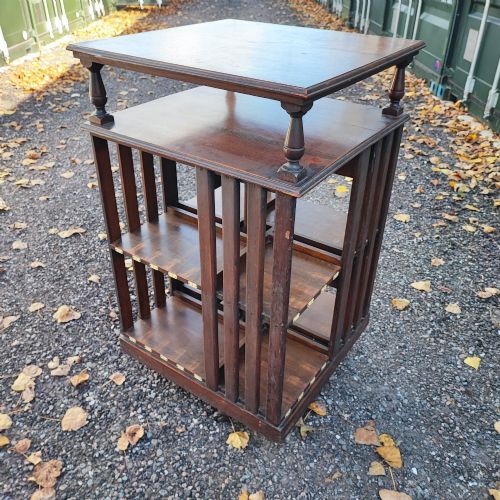
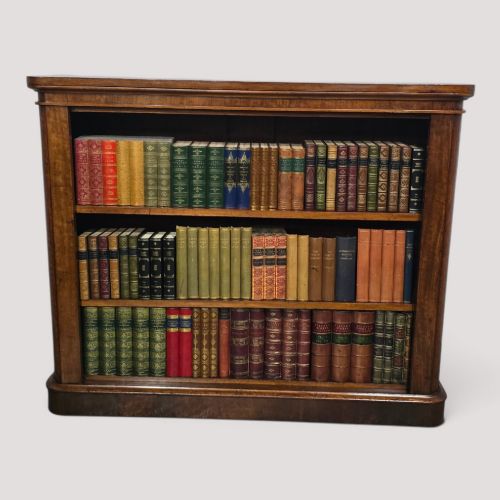
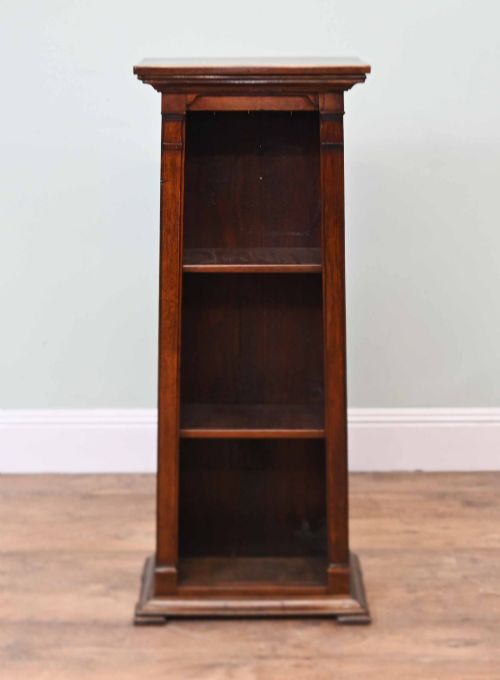
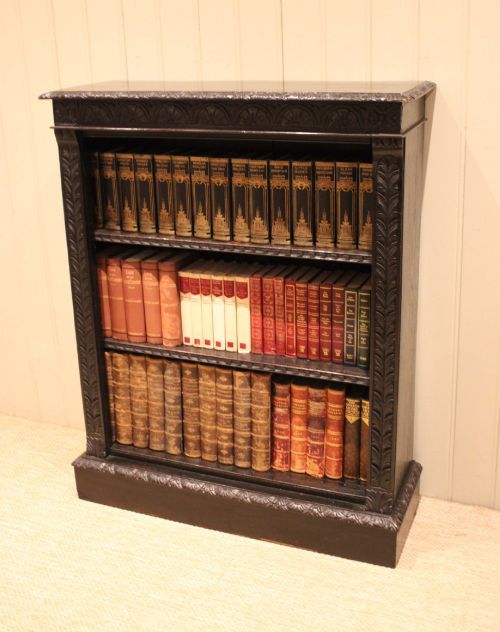
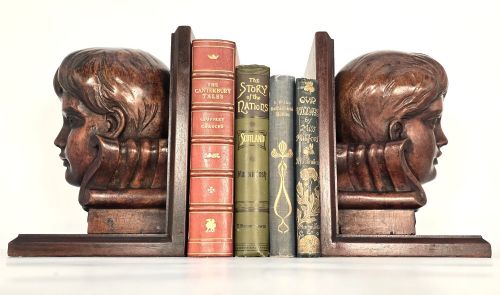
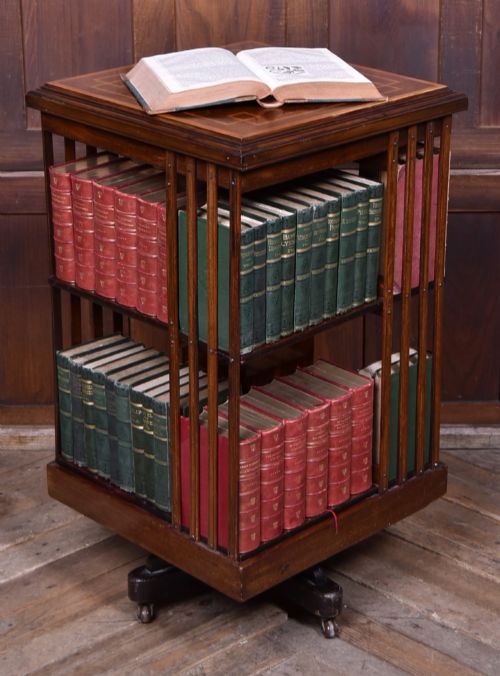
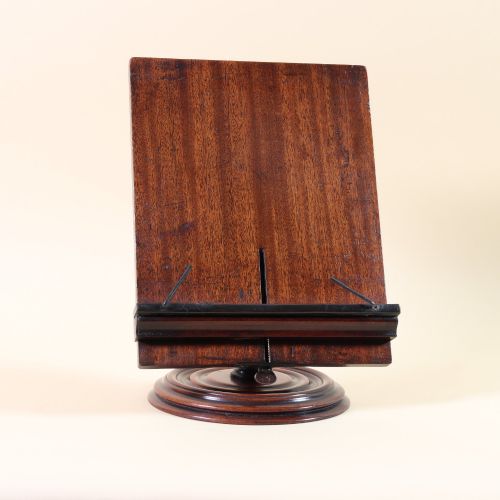
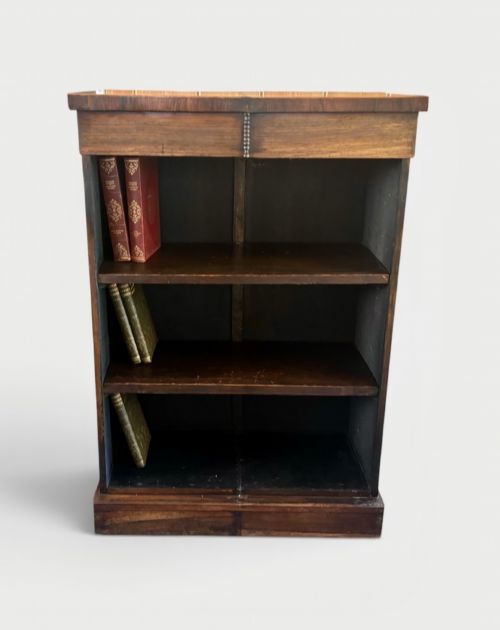
A victorian bookstand encompasses a range of library furniture designed to hold, slide, or revolve volumes on desks and floors. The selection on this page shows everything from table-top reading stands and extending book slides to revolving bookcases and tall open library shelving.
The most common formats met here are rotating floor models and adjustable desk rests. Makers built these pieces primarily in mahogany, oak, and walnut, frequently incorporating brass mounts or extending mechanisms to suit diverse interior spaces.
How they were made
Craftsmen built these items using dense hardwoods like mahogany, oak, walnut, and rosewood, sometimes adding decorative veneers such as burr walnut, satinwood, or flame mahogany. Structural stability relied on solid timber joinery for upright shelves and rotating platforms.
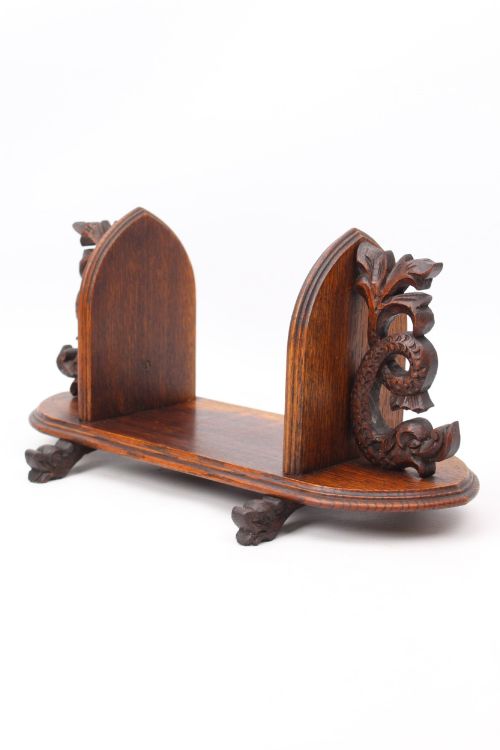
Metal components played a crucial functional role, particularly brass for extending book slides, hinges, and reading stand supports. Inlaid details, including mother of pearl and Tunbridge Ware, ornamented surface areas alongside carved gothic motifs.
Victorian Bookstand Retail Price Guide 2026
Typical asking prices for victorian bookstand among the pieces listed under this phrase on Sellingantiques today, from the lower quarter to the upper quarter. They describe what is for sale here now, not the wider market.
Some book slides were marketed as novel rests, offering Victorian readers a compact mechanical prop for keeping novels open at breakfast.
What varies in quality
The standard of timber selection defines the primary tier, moving from plain utility boards to finely figured flame mahogany, burr walnut, and rosewood. Superior examples feature well-matched grain patterns across visible surfaces and drawer fronts.
Mechanical complexity and decorative carving further separate pieces. Smooth action in revolving mechanisms, precise brass extending slides, and crisp ecclesiastical or Gothic Revival carvings indicate higher workshop input.
Maple & Co·Gillows
The Victorian Bookstand Glossary
- Book slide
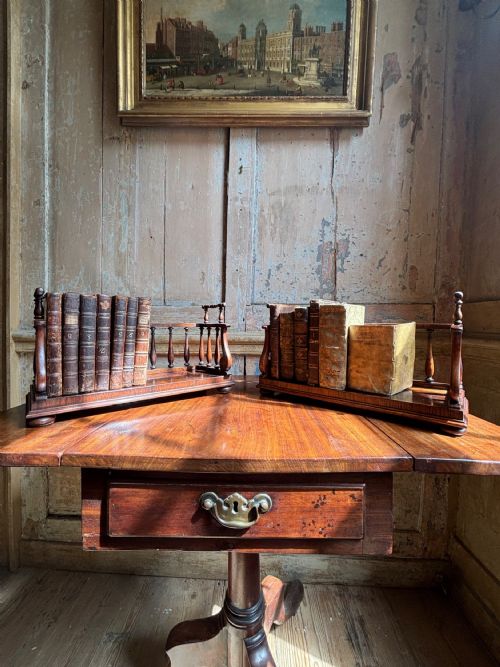
- An extending desktop rack designed to hold a row of books upright between two sliding ends. These often feature brass mounts and folding hinged supports.
- Revolving bookcase
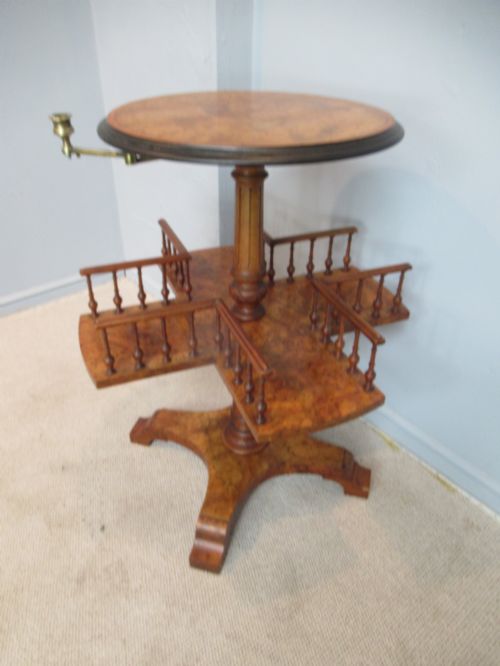
- A freestanding floor unit mounted on a rotating pivot that allows easy access to books from all sides. They appear in table-top and tall multi-tiered formats.
- Lectern stand
- A sloping reading desk designed to hold large volumes or folios at a comfortable angle. They frequently incorporate adjustable brass support rods.
- Tunbridge Ware
- Small wooden decorative items adorned with mosaic tesserae forming detailed pictorial motifs. This technique utilised precise blocks of naturally coloured woods.
- Gothic Revival
- A design style drawing on medieval architectural motifs such as pointed arches, quatrefoils, and heavy carved tracery. It frequently appears on oak and walnut pieces from the nineteenth century.
Victorian Bookstand: Frequently Asked Questions
How do revolving bookstands operate?
Revolving bookstands sit upon a concealed central pivot and ball-bearing mechanism hidden beneath the base. This allows the entire tiered wooden structure to turn smoothly by hand.
Most examples are designed for floor placement next to armchairs or desks, though smaller table-top rotating versions also exist in the listings.
What is an extending book slide?
An extending book slide is a desk accessory featuring a central wooden trough with two movable end blocks. Users slide the ends inward to securely clamp a small selection of active volumes.
These slides often incorporate brass hinges, Gothic Revival mounts, or decorative inlays such as Tunbridge Ware and mother of pearl.
Where were table-top reading stands used?
Table-top reading stands served scholars, writers, and readers on large library desks, reading tables, or campaign furniture. They held heavy reference books or folios at an ergonomic angle.
Many of these stands feature adjustable brass struts underneath to alter the reading pitch and fold flat when not in use.
How do I identify a Gothic Revival piece?
Gothic Revival pieces display architectural motifs borrowed from medieval stone buildings, including pointed arches, quatrefoils, and heavy linenfold or carved tracery. They are typically rendered in dark oak or walnut.
These items frequently include solid brass extending slides or hinges that complement the robust ecclesiastical aesthetic.