



Victorian Book Press
These heavy iron and timber victorian book press pieces flatten pages and bind volumes with genuine nineteenth-century weight.
Victorian Book Press
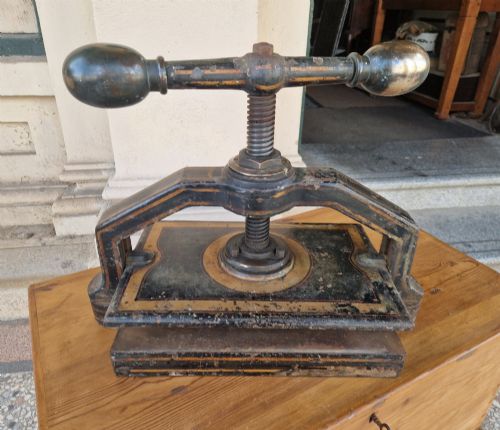
When you search for a victorian book press, you encounter robust tabletop machinery designed to press paper, flatten flowers, or bind books. Most examples on this page are compact table-top appliances intended for domestic libraries or binderies rather than large industrial floors.
The selections span the nineteenth century, including pieces from the Georgian and George IV eras up to the late Victorian period. Alongside dedicated presses, the evidence shows related forms like press chests, linen presses, and library bookcases.
You will most frequently meet heavy cast iron frames fitted with brass screw mechanisms, often mounted on mahogany, oak, or elm tabletops. Some variations function dually as flower presses or small printing presses.
Materials and construction
Makers built the structural frames primarily from heavy cast iron and bronze, providing the massive weight and rigidity required to apply immense pressure without flexing. These metal components frequently feature brass details on the spindles, handles, or maker plates.
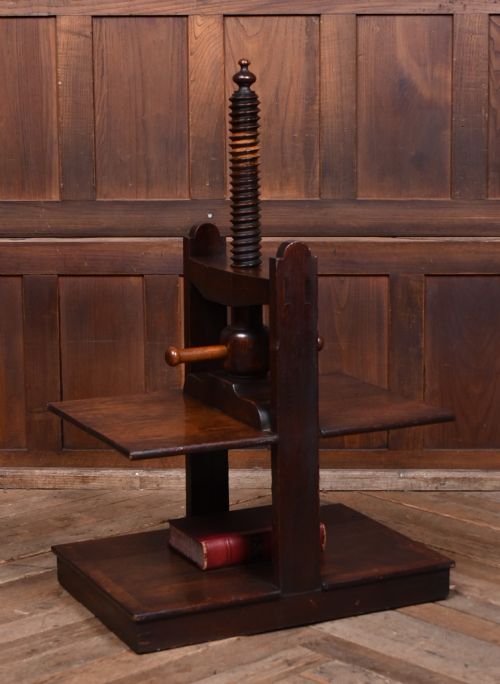
The timber bases and platens utilise dense hardwoods such as oak, mahogany, rosewood, and elm. Carpenters joined these wooden elements with sturdy dowels and housings to withstand the outward thrust of the central screw.
Victorian Book Press Retail Price Guide 2026
Typical asking prices for victorian book press among the pieces listed under this phrase on Sellingantiques today, from the lower quarter to the upper quarter. They describe what is for sale here now, not the wider market.
Recorded periods span the Georgian era, George IV, and the broader nineteenth-century Victorian epoch.
Evaluating quality
The calibre of a press depends on the heft of its metal castings and the smoothness of its threaded screw mechanism. Superior examples turn effortlessly while maintaining parallel alignment between the upper and lower platens.
Material selection divides standard utility pieces from finer workshop items. Presses incorporating figured mahogany, rosewood, or patinated oak sit at the upper end, alongside patented designs bearing maker inscriptions.
DOWNIE'S PATENT·E. C. Osborne of Birmingham
The Victorian Book Press Glossary
- Platen
- The flat heavy board or plate that descends to press the material evenly. It moves downward as the operator turns the central screw handle.
- Nipping press
- A small mechanical press used by bookbinders to squeeze newly glued books. These compact units sit easily upon a library table.
- Spindle
- The vertical threaded rod that translates rotational force into downward pressure. A well-cut thread ensures the platens meet squarely.
- Drop-flap
- A hinged leaf attached to a table or stand that folds down when not in use. This mechanism extends the working surface for binderies.
Victorian Book Press: Frequently Asked Questions
What is a victorian book press used for?
These presses flatten folded paper, press flowers, and squeeze newly bound books to set the glue. They served both in home libraries and professional binderies during the nineteenth century.
Today, collectors use them for light bookbinding, flattening botanical specimens, or as striking decorative objects on desks and sideboards.
How do you date a book press?
Dating relies on material combinations, cast iron styles, and timber types recorded across the nineteenth century. Georgian and early Victorian pieces often pair timber bases with heavy metal screws.
Later Victorian examples lean towards heavier all-iron construction or bear specific maker patents. Comparing the joinery on the wooden base to standard cabinet-making periods provides further context.
Are these presses too heavy for normal furniture?
Many cast iron and hardwood models possess substantial weight that requires a sturdy table or dedicated stand. Placing them on flimsy surfaces risks damaging the furniture under the combined mass of iron and timber.
For heavier examples, placing the press on a low sideboard or a fitted wooden stand ensures safe display and daily operation.
Can you still use them for bookbinding?
Working mechanisms with clean threads and parallel platens function precisely as they did in the nineteenth century. Turning the handle drives the platen down with enough force for modern paper repair and binding.
Applying a light oil to the metal screw helps maintain smooth movement without staining the timber or paper.