



Victorian Bobbin Seating
Victorian bobbin seating brings unmistakable turned charm into a room, offering sturdy frames and distinct historical character.
Victorian Bobbin Seating
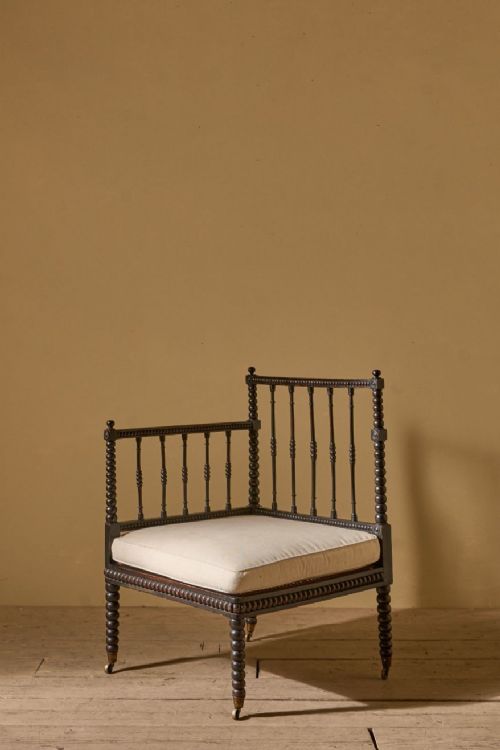
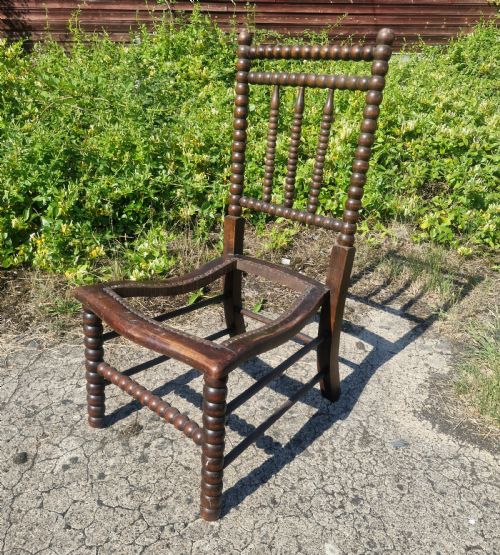
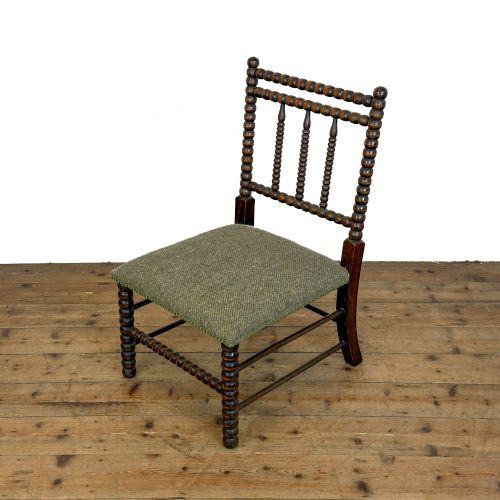
Victorian bobbin seating comprises armchairs, corner chairs, rocking chairs, and stools shaped by repetitive spherical turnings that mimic the profile of textile bobbins. These pieces emerge predominantly from the nineteenth century, reflecting periods such as the Victorian era alongside revivals styled after earlier English vernacular traditions.
The assortment on this page relies heavily on individual chairs and matched pairs executed in forms ranging from low bedroom seats to substantial library armchairs. Stools and children's chairs also appear, providing compact options within the wider category.
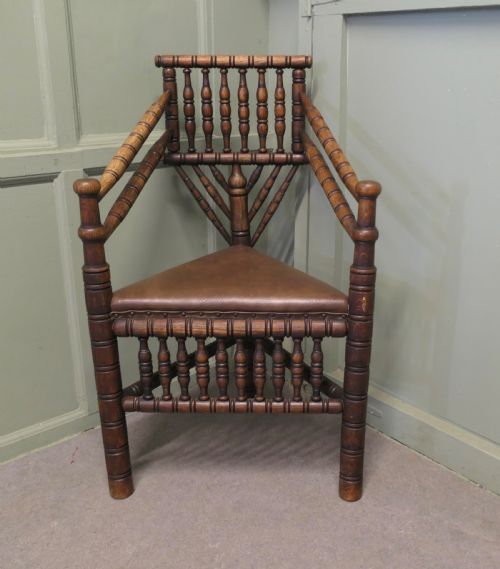
Makers drew on historical models, often labelling heavy oak examples as Old Saxon or Turner's chairs while deploying ebonised finishes for lighter parlour seating. Buyers encounter everything from simple beech and oak frames to more select walnut and rosewood constructions.
How they were made
Carpenters shaped these frames using hardwoods including oak, beech, walnut, and rosewood, often turning individual members on a lathe to create the signature spherical bobbin profile. Ebonised wood finishes frequently appear alongside natural grains, providing a dark, uniform appearance that mimics more costly exotic timbers.
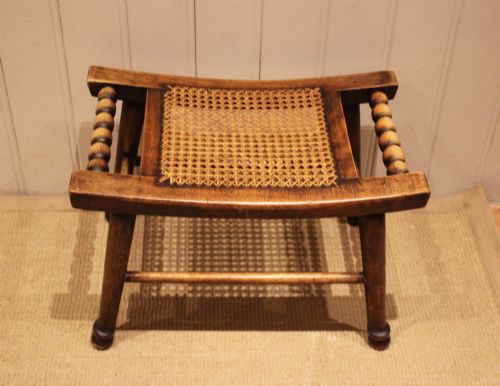
Seating surfaces vary according to the specific form, utilising woven cane, upholstered fabric, leather, or loose cushions set over solid frames. Joinery relies on traditional pegged and dowelled construction to ensure the heavily turned components remain rigid under daily use.
Victorian Bobbin Seating Retail Price Guide 2026
Typical asking prices for victorian bobbin seating among the pieces listed under this phrase on Sellingantiques today, from the lower quarter to the upper quarter. They describe what is for sale here now, not the wider market.
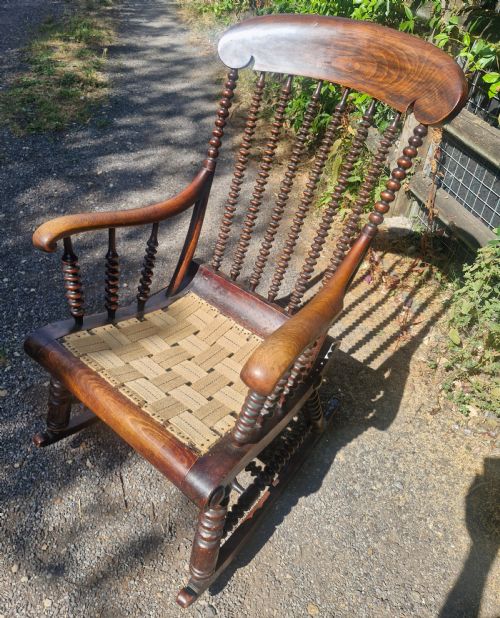
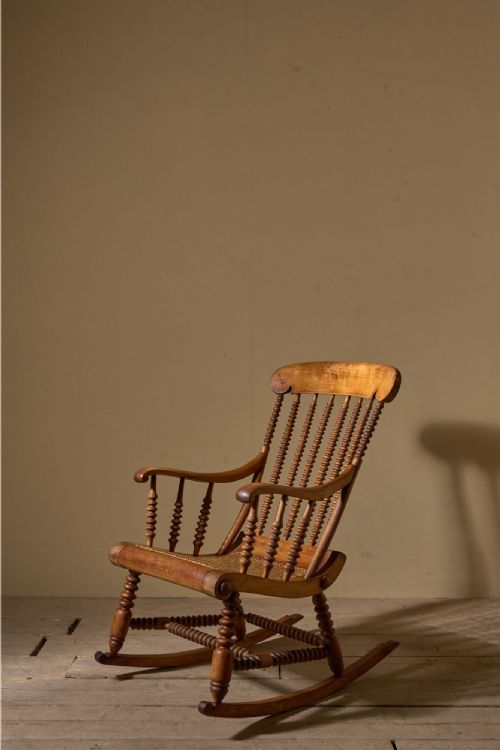
The selection includes varied seating forms such as rocking chairs, corner chairs, slipper chairs, and low dressing table stools.
What varies in quality
The distinction between standard utility pieces and finer examples rests on the selection of timber and the crispness of the lathe turning. Dense hardwoods like oak and walnut display sharper definition in the bobbin mouldings than softer secondary woods.
Proportion and decorative ambition separate simple vernacular work from ambitious revival pieces, particularly in items incorporating carved details or specialised seating materials like cane and leather. The integrity of the original turned joints dictates the structural standing of each piece.
The Victorian Bobbin Seating Glossary
- Bobbin turning
- A form of woodturning characterised by a sequence of rounded spheres resembling spools or bobbins. This decorative technique creates strong visual rhythm along the legs, stretchers, and arm supports of the chair frame.
- Ebonised wood
- Timber treated with a dark stain or finish to imitate ebony. This treatment was common during the nineteenth century to achieve a formal, sophisticated aesthetic on domestic furniture.
- Turner's chair
- A sturdy armchair constructed entirely from turned wooden members and spindles. These heavy pieces often date to revival periods referencing earlier vernacular English furniture.
- Corner chair
- A seating form designed to fit into the corner of a room, featuring a diagonal seat plan and a curved back rail supported by turned posts. They provide compact seating while maintaining architectural presence.
- Cane seat
- A seating surface woven from peeled rattan strips in an open mesh pattern. This technique offers flexible support and a light texture that contrasts with heavy wooden frames.
Victorian Bobbin Seating: Frequently Asked Questions
Where should I place a bobbin chair?
These chairs suit hallways, bedrooms, or living spaces where their distinctive turned frames can be viewed from multiple angles. Their open profiles prevent them from dominating smaller rooms.
Pairing a low seat or corner chair with a simple side table creates a deliberate reading or resting spot without requiring extensive floor space.
How do I care for cane and wood?
Maintaining these pieces involves dusting the turned spindles regularly with a soft cloth and applying appropriate wax to nourish the hardwood frames. Cane seats benefit from occasional gentle cleaning with a damp sponge to keep the rattan supple.
Placing chairs away from direct heat sources prevents the wood from splitting and stops natural cane from becoming brittle over time.
Are these chairs comfortable for daily use?
Many examples feature generous proportions or supportive arms that accommodate relaxed sitting, particularly the library and rocking chair variants. Stools and low bedroom chairs serve well for shorter periods of use.
Adding a loose cushion or scatter pillow can improve comfort on wooden or cane seats while maintaining the aesthetic integrity of the frame.
How do I identify the period of a piece?
Dating relies on observing the combination of timber species, turning precision, and construction methods alongside stylistic clues like Gothic or Saxon revival motifs. Nineteenth-century examples often exhibit hand-turned irregularities that distinguish them from later reproductions.
Examining the underside of the seat and the wear patterns on the feet provides further context regarding the age and history of the piece.