
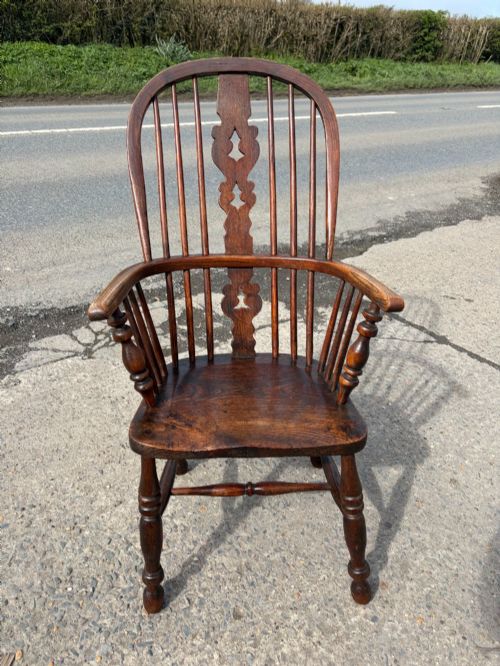


Victorian Beech Desk Chair
A victorian beech desk chair brings robust nineteenth-century timber and honest vernacular design straight to the modern study.
Victorian Beech Desk Chair
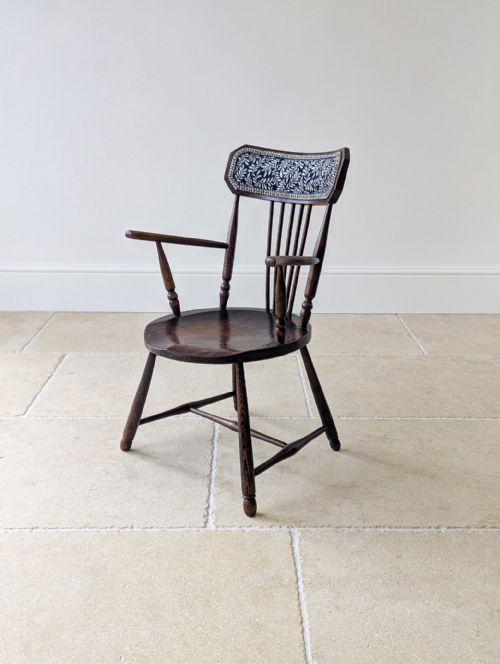
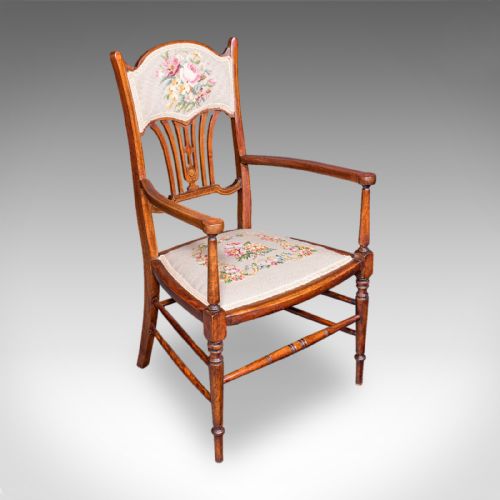
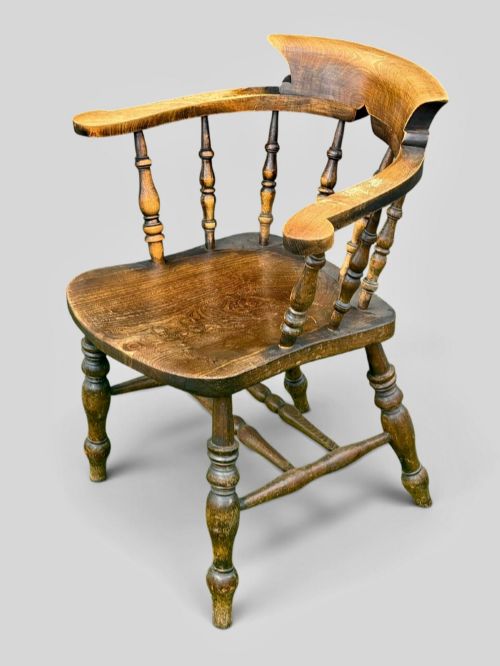
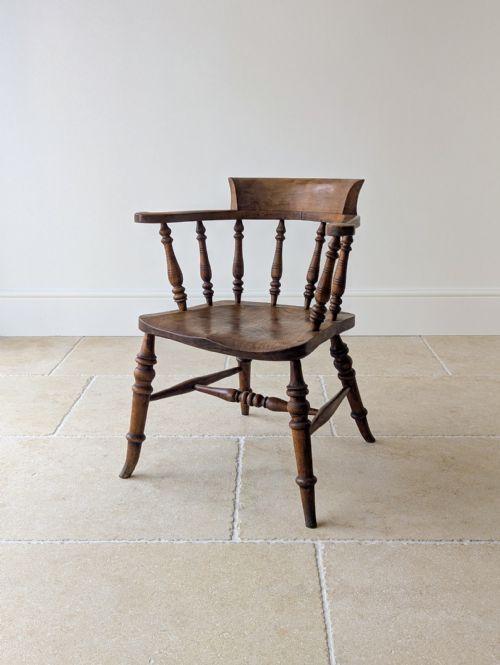
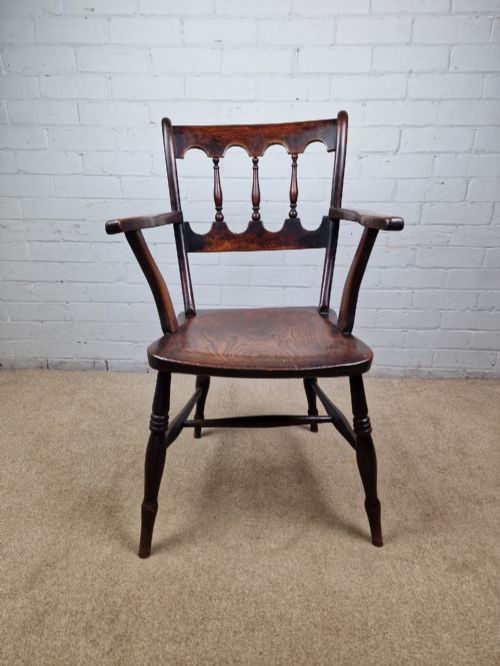
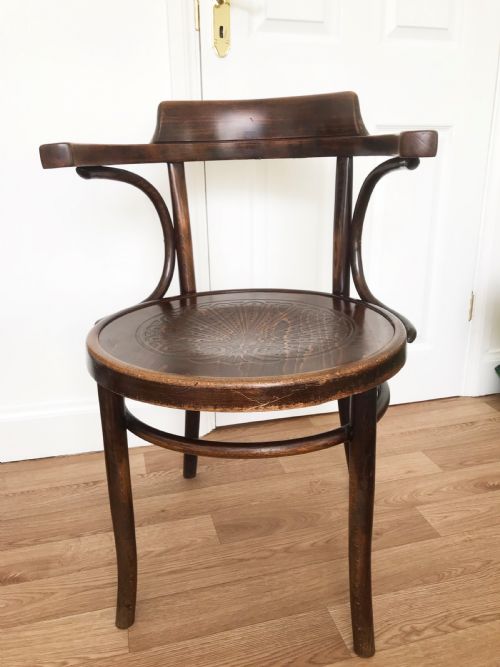
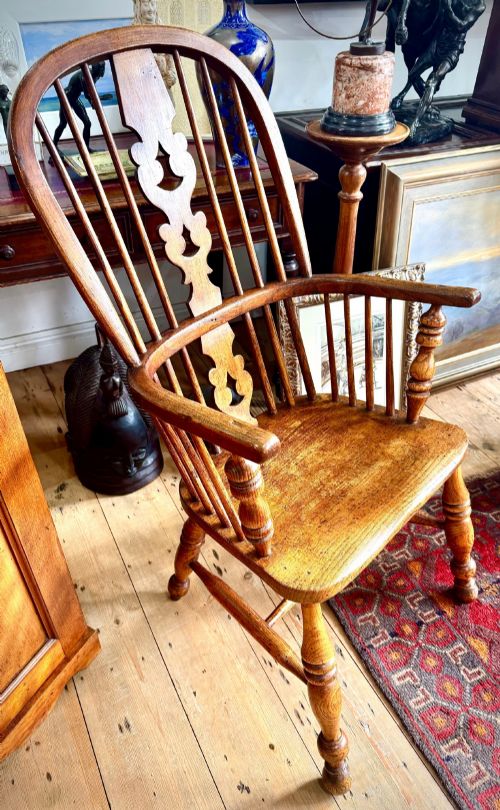
A victorian beech desk chair is fundamentally a utilitarian seat built for the nineteenth-century study, office or counting house. The pieces gathered here predominantly take the form of smoker's bows, captain's chairs and Windsor armchairs, alongside turned clerks' stools and revolving office seats.
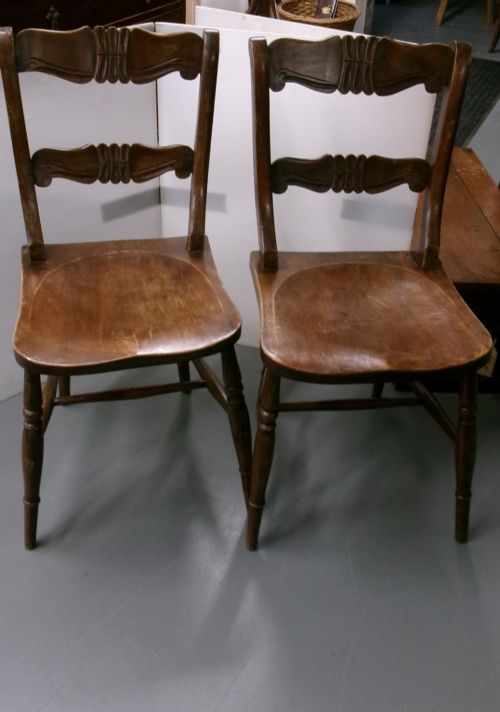
Most examples pair a resilient beech frame with an elm seat board, combining sturdy turned spindles with comfortable saddle-shaped timber. The aesthetic ranges from plain English country workshop styles to cleaner Arts and Crafts lines and occasional bentwood forms.
Buyers seeking this phrase most frequently encounter nineteenth-century vernacular seating designed for long hours at a desk. These chairs prioritize lumbar support and robust construction over delicate ornamentation, making them practical for daily use today.
Craftsmanship and proportion
Quality rests heavily on the depth of the saddle shaping in the seat and the graceful sweep of the steam-bent armbows. Superior examples display well-balanced proportions and crisply turned spindles without excessive timber shrinkage or clumsy replacement parts.
The choice of secondary woods and the retention of original surface patination distinguish finer workshop output from plain utility pieces. Uniformity in the wood grain and tight, uncompromised joinery mark the division between standard provincial seating and more accomplished cabinet work.
Current listings feature beech, elm, alder and rush materials across Victorian country, Arts and Crafts and Thonet styles.
Morris & Co
The Victorian Beech Desk Chair Glossary
- Smoker's bow
- A low-backed Windsor armchair with a continuous curved armrail supported by turned spindles. This form is widely found in nineteenth-century offices and smoking rooms.
- Windsor chair
- A wooden chair constructed with a solid contoured seat into which the legs and back sticks are separately inserted. The design relies on interconnected timber components for rigidity.
- Bentwood
- Timber softened by steam and bent under pressure into curved structural shapes. This technique produced light yet resilient chair frames during the later nineteenth century.
- Splat back
- A chair back featuring a central vertical wooden strip framed by side posts. The flat central element often displays subtle shaping or piercing.
- Ebonised
- Wood treated with a chemical stain or black finish to imitate high-status ebony. This treatment was common on decorative nineteenth-century seating.
Victorian Beech Desk Chair: Frequently Asked Questions
Are these chairs comfortable for daily desk work?
Most variants feature ergonomically scooped wooden seats carved to fit the body during long hours of writing. Their sturdy spindle backs offer dependable support without requiring modern adjustments.
Adding a small cushion or pad makes them suitable for contemporary study spaces while preserving their nineteenth-century character.
How do I distinguish a desk chair from a kitchen chair?
Desk chairs typically feature lower, wider armbows designed to tuck neatly beneath writing tables, or swivel mechanisms built for office use. Kitchen chairs from the same period more often stand on higher, straighter legs without revolving bases.
The presence of robust armrests and lower seat heights usually signals a piece intended for a captain, clerk or study environment.
What is the difference between elm and beech parts?
Elm was chosen specifically for the seat plank because its twisted grain prevented splitting when pinned with legs and spindles. Beech provided straight, dense timber for the turned legs, stretchers and steam-bent armbows.
Seeing both timbers on a single chair is a standard indicator of traditional nineteenth-century vernacular construction.
How should I care for the wooden surface?
Maintain the dry timber by applying natural beeswax sparingly to nourish the grain and protect the original finish. Avoid placing antique chairs near direct heat sources or modern radiators to prevent wood shrinkage and joint loosening.
Routine dusting with a soft cloth keeps the patination intact without stripping the historic surface.