

Victorian Ash Country Chair
A victorian ash country chair brings sturdy local craftsmanship and honest vernacular form directly into daily interior seating.
Victorian Ash Country Chair
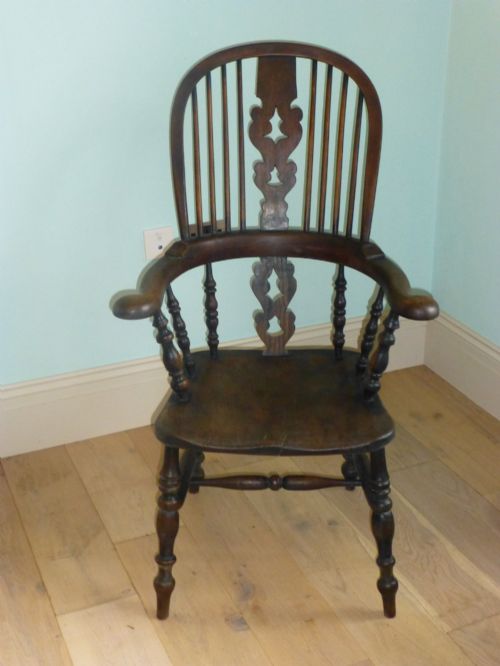
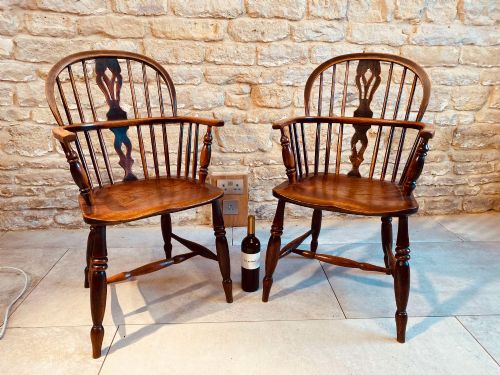
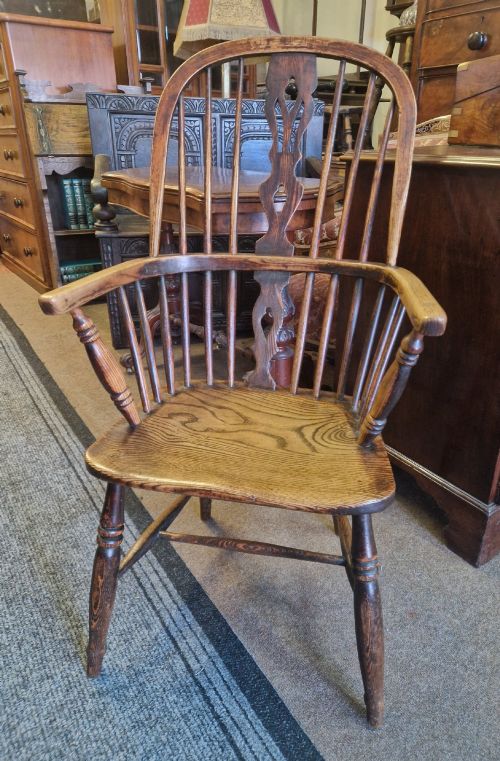
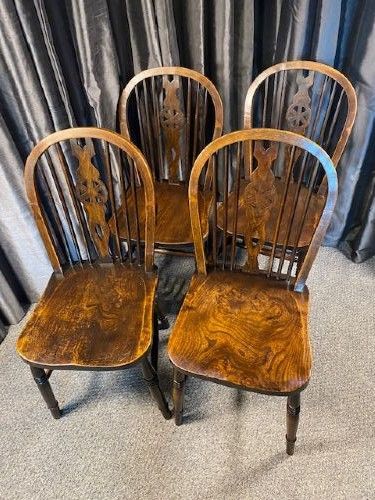
When searching for a victorian ash country chair, buyers encounter robust vernacular seating produced across British rural workshops during the nineteenth century. These seats served domestic kitchen, farmhouse and parlour functions, built for utility rather than formal drawing room display.
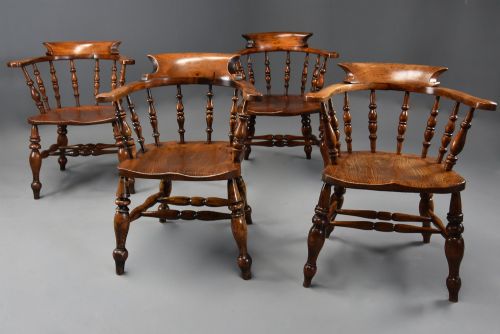
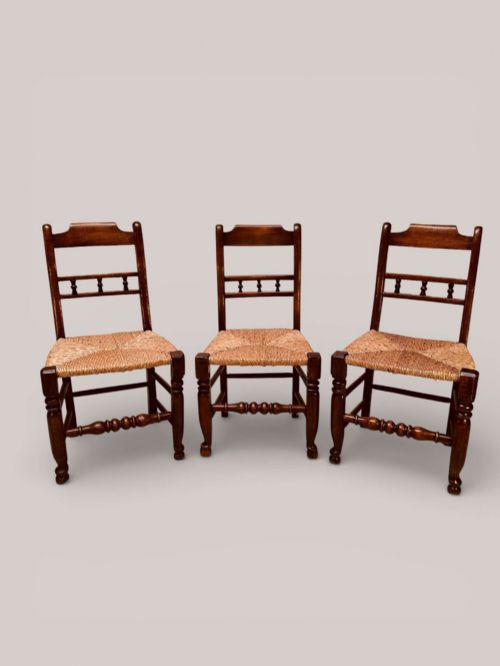
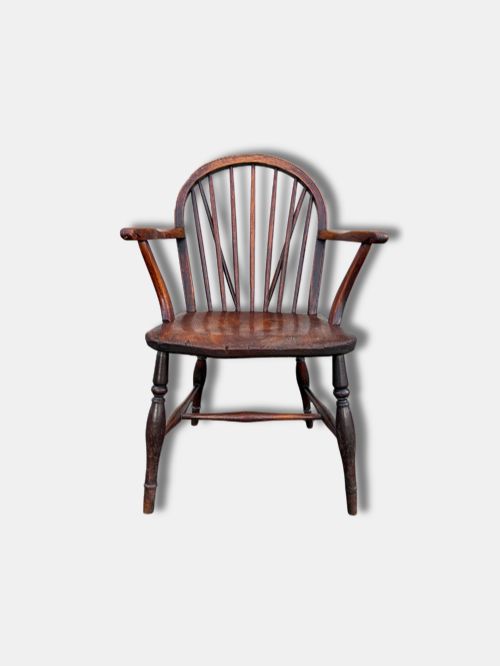
The selections available range from single armchairs and matching dining sets to low back windsors, high comb backs and child variants. Elm and beech frequently supplement the ash construction, paired alongside rush or timber seats.
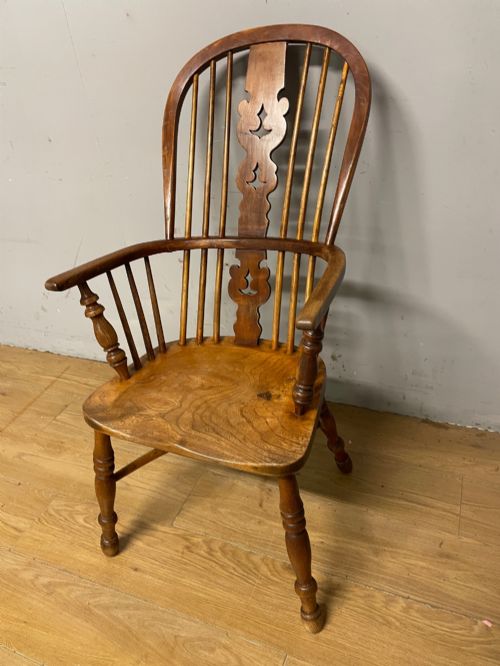
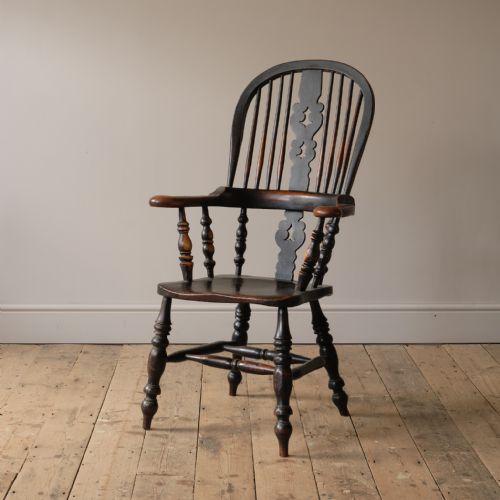
Regional variations appear across English and Scottish vernacular styles, including Thames Valley kitchens, Lancashire spindle backs and wheel back designs. Buyers most commonly meet stick backs and Windsor forms featuring turned spindles and broad arms.
Materials and construction
Maker construction relies on contrasting native timbers chosen for specific structural demands within the chair frame. Ash provides flexible strength for bent components and spindles, while elm supplies a tough, non-splitting surface for solid saddle-shaped seats.
Traditional bodging methods involved green woodworking techniques where turned legs and uprights were wedged into bored seats. Additional support comes from steam-bent hoops, bow backs and H-stretchers locking the underframe together.
Victorian Ash Country Chair Retail Price Guide 2026
Typical asking prices for victorian ash country chair among the pieces listed under this phrase on Sellingantiques today, from the lower quarter to the upper quarter. They describe what is for sale here now, not the wider market.
Current listings span the nineteenth century, incorporating materials like ash, elm, beech, yew and rush across English and Scottish vernacular forms.
Assessing quality
Quality rests upon the harmony of the timber selection and the integrity of the original joints. Chairs retaining their untouched surface patination and balanced proportions demonstrate superior workshop origin compared to those altered by heavy sanding or replacement underparts.
The crispness of the spindle turnings and the depth of the sculpted elm seat distinguish fine vernacular pieces from standard utilitarian production. Maker attribution or distinct regional traits elevate specific examples above general farmhouse stock.
Philip Clissett·Duncan McKellar
The Victorian Ash Country Chair Glossary
- Windsor chair
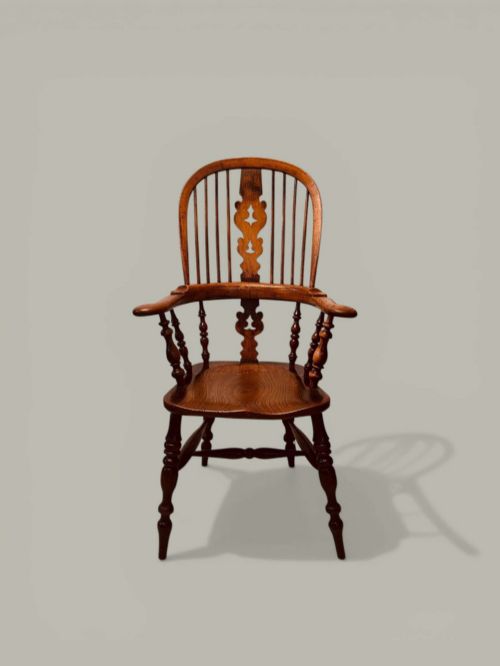
- A wooden chair built with a solid saddle-shaped seat into which the legs and back spindles are separately bored and wedged. This form relies on a central hoop or comb to support the backrest.
- Smokers bow
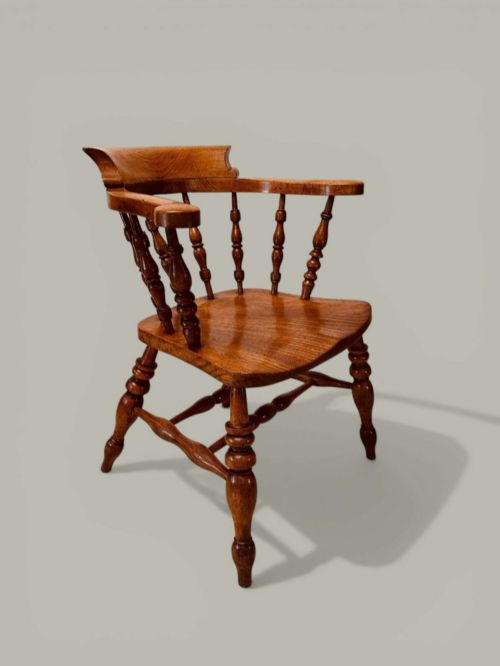
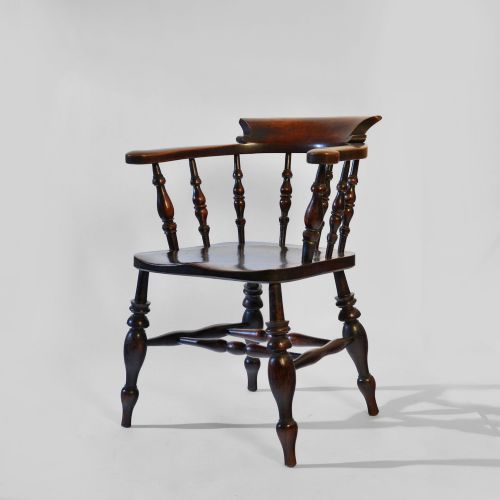
- A low-backed Windsor armchair featuring a continuous curved armrail supported by turned spindles above the seat. These comfortable seats frequently appeared in country parlours and inns.
- Stick back
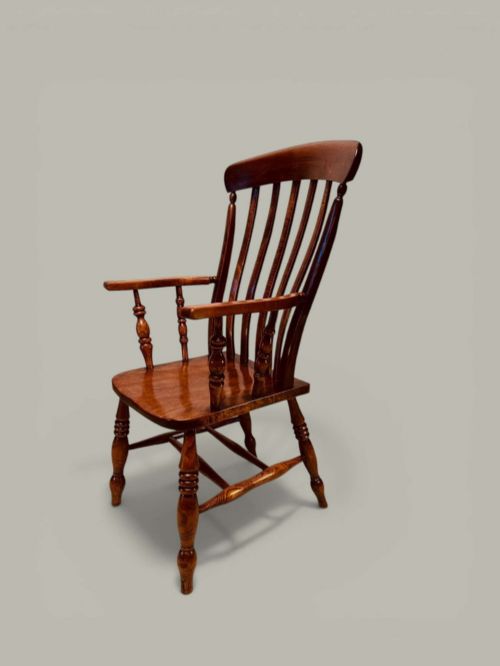
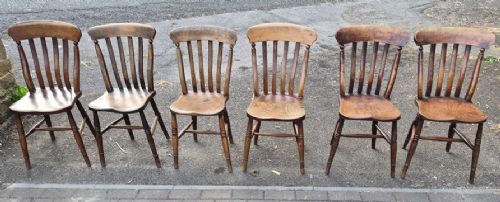
- A chair design where simple turned or straight wooden rods form the backrest rather than a solid carved splat. The uprights connect the seat directly to the top rail.
- Ladderback
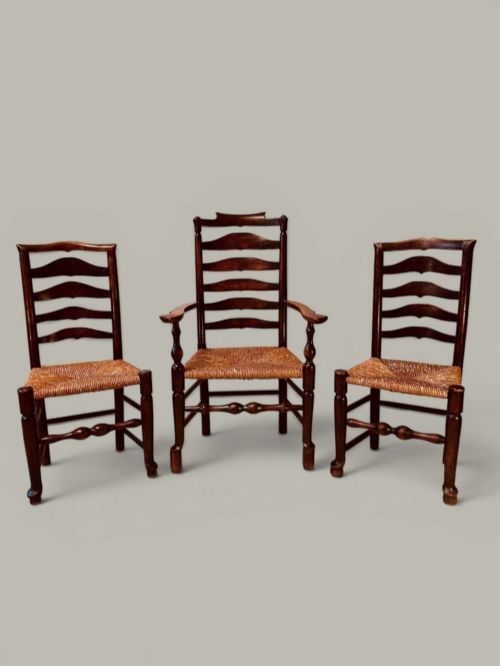
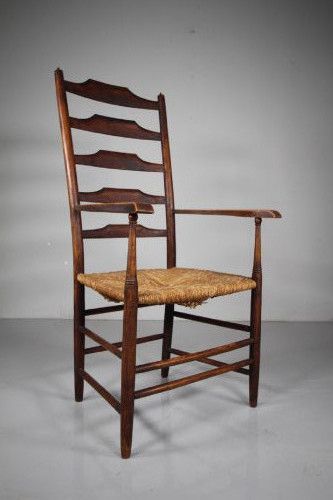
- A chair style characterised by horizontal wooden slats set between two upright rear posts. These frames often incorporate woven rush seating.
- Vernacular
- Objects built by local craftsmen following traditional regional patterns rather than academic architectural styles. These pieces prioritise practical utility and local materials.
Victorian Ash Country Chair: Frequently Asked Questions
Were these chairs used only in kitchens?
While frequently called kitchen or farmhouse chairs, these seats served varied domestic roles across the home. Lower versions suited bedside or nursery tasks, while robust armchairs stood in hallways and parlours.
Country gentlemen and farm inhabitants alike relied on these versatile seats for daily tasks. Their durable construction suited heavy-use environments throughout the house.
How should I care for an antique wooden seat?
Maintain stable indoor humidity levels to prevent the native ash and elm timbers from drying out and splitting. Apply microcrystalline wax sparingly to nourish the wood surface and preserve the historic finish.
Avoid placing chairs near direct heat sources or in strong sunlight. Regular gentle dusting keeps the grain clear without disturbing the surface patination.
What is the difference between a low back and high back Windsor?
Low back Windsor chairs feature a continuous armrail positioned at elbow height, offering compact proportions and easy movement. High back variants extend upwards with comb backs or bent hoops to support the head and shoulders.
High back versions provide a more enclosing seating position suited to fireside use. Both types utilise identical solid wood saddle seats and turned underframes.