


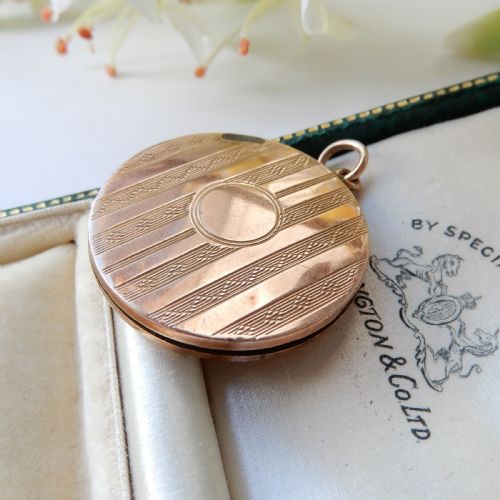


Victorian 9ct Gold Locket
A victorian 9ct gold locket holds a miniature portrait, a lock of hair or a dried bloom close to the skin.
Victorian 9ct Gold Locket
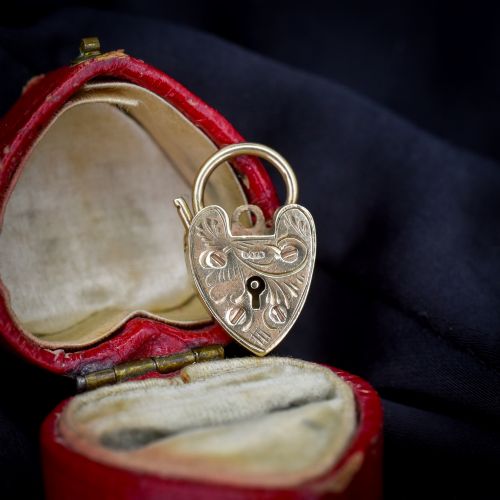
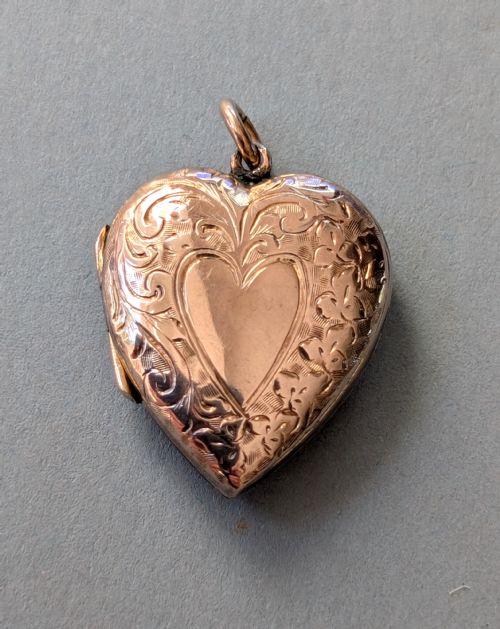
When searching for a victorian 9ct gold locket, collectors encounter heart shapes, round pendants and oval hinged cases designed to hold photographs. The most common examples span the Victorian and Edwardian eras, alongside later vintage iterations from the mid-twentieth century.
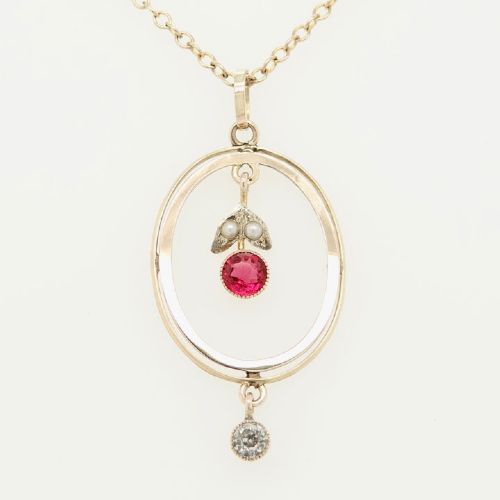
Many items combine 9ct yellow or rose gold with decorative motifs such as seed pearls, enamel stars, rubies, amethysts and floral engravings. Variants include back and front constructions, shaker lockets with glass panels, and padlock charms.
How they were made
Goldsmiths utilised 9ct yellow and rose gold, sometimes constructing pieces as back and front designs where solid gold fronts and backs are supported by a base metal core. Surface decoration relied on hand engraving, engine turned detail and applied wirework.
Gemstones including seed pearls, rubies, amethysts, garnets and turquoise were flush or prong set into the metal, while blue or coloured enamel added contrast. Glass panels were incorporated into picture frames and shaker styles to protect photographs or hair arrangements.
Victorian 9ct Gold Locket Retail Price Guide 2026
Typical asking prices for victorian 9ct gold locket among the pieces listed under this phrase on Sellingantiques today, from the lower quarter to the upper quarter. They describe what is for sale here now, not the wider market.
Listings feature 9ct yellow gold and 9ct rose gold, alongside materials like seed pearls, enamel, agate, amethyst, garnet and turquoise.
What varies in quality
The standard of a victorian 9ct gold locket depends upon the crispness of the hand engraving and the complexity of decorative elements like enamel stars, floral baskets and bird motifs. Solid gold construction commands higher regard than back and front versions.
The refinement of the hinge, the security of the snap closure and the intact survival of delicate seed pearls or glass picture frames distinguish finer examples from simpler production.
The Victorian 9ct Gold Locket Glossary
- Back and front
- A construction method where the exterior plates are formed from 9ct gold while the interior utilises a base metal for structural reinforcement.
- Shaker locket
- A pendant featuring glass panels on both sides that allow loose seed pearls or mementos to shift freely within the compartment.
- Engine turned
- A geometric pattern of fine lines mechanically engraved into the gold surface using a rose engine lathe.
- Puffy heart
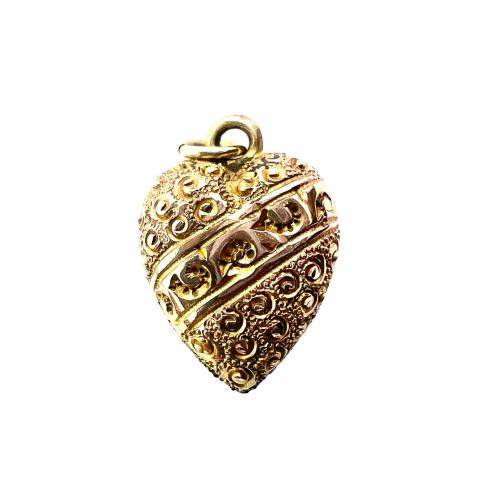
- A rounded, three-dimensional heart shaped pendant stamped from sheet gold and joined at a central seam.
- Mizpah
- An inscription or motif denoting emotional connection and safe parting between loved ones.
Victorian 9ct Gold Locket: Frequently Asked Questions
What is a back and front locket?
A back and front locket is constructed with outer sheets of 9ct gold enclosing an inner base metal core for stability.
This method allowed makers to produce larger, more affordable hinged cases during the nineteenth and twentieth centuries.
How do you open a hinged locket?
Most hinged lockets feature a small thumbnail notch along the outer rim that releases the snap closure when gently pressed.
Care should be taken not to force older mechanisms if the hinge has accumulated dust or compression over decades.
Can you wear a locket on a chain?
Lockets are suspended from chains or ribbons using an integrated jump ring or a fixed suspension loop at the top.
Many period examples were originally paired with matching gold chains or fob attachments for wear around the neck.
What is inside an antique glass locket?
Glass fronted lockets often display miniature photographs, woven hairwork, or loose seed pearls arranged against a fabric background.
These transparent compartments were designed to keep personal mementos visible yet protected from dust and moisture.