
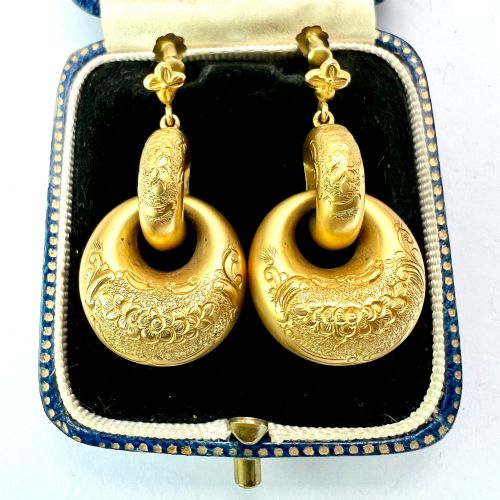
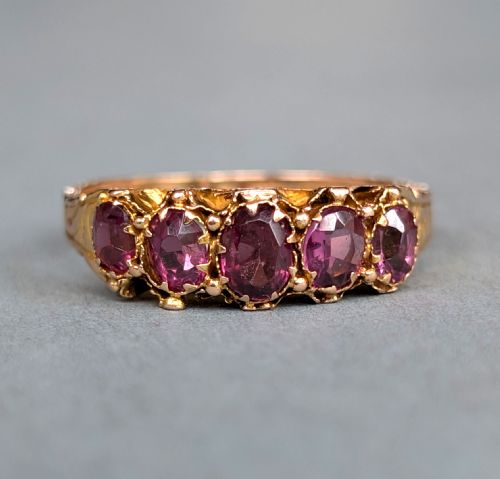


Victorian 15 Carat Gold
These victorian 15 carat gold items are solid pieces of high carat jewellery, offering buyers rich warm metal tones and genuine period craftsmanship.
Victorian 15 Carat Gold
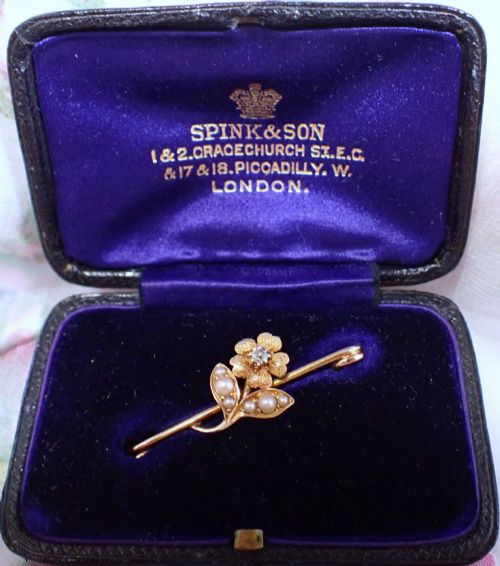
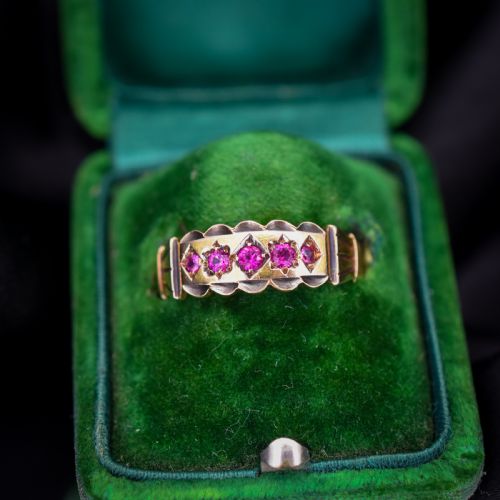
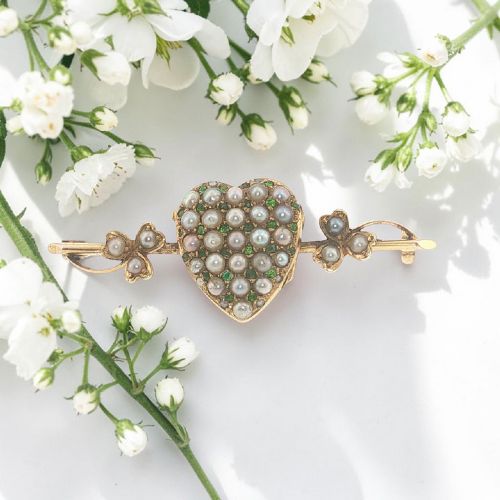
Most items stem from the Victorian and Edwardian periods, displaying distinct nineteenth-century aesthetics alongside early twentieth-century variations. Buyers frequently find garnet, turquoise, opal, and seed pearl set securely into yellow gold or rose gold frames.
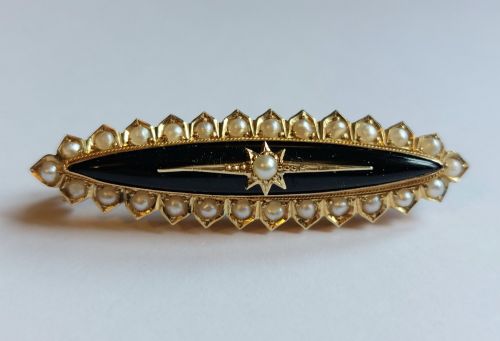
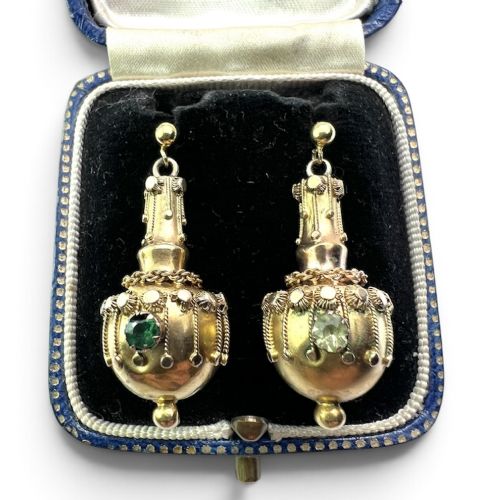
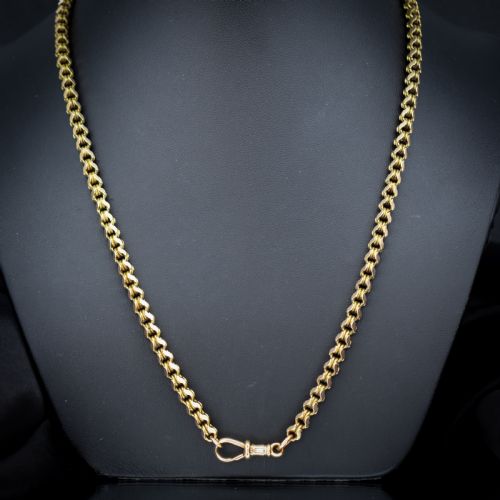
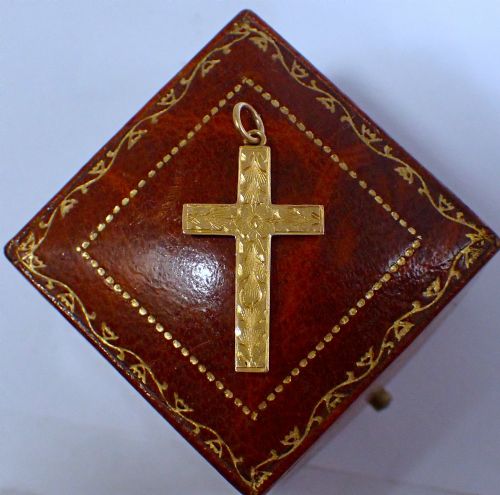
Forms range from structural mourning brooches and engraved crosses to hollow hoop earrings and heavy link chain necklaces. Pieces vary from simple engraved bands to elaborate Etruscan Revival amphora earrings and multi-stone cluster rings.
What Varies in Quality
The standard of a piece rests upon the crispness of its hand engraving and the structural integrity of its hollow or solid components. Superior examples maintain intact chased details and secure stone settings without distortion to the goldwork.
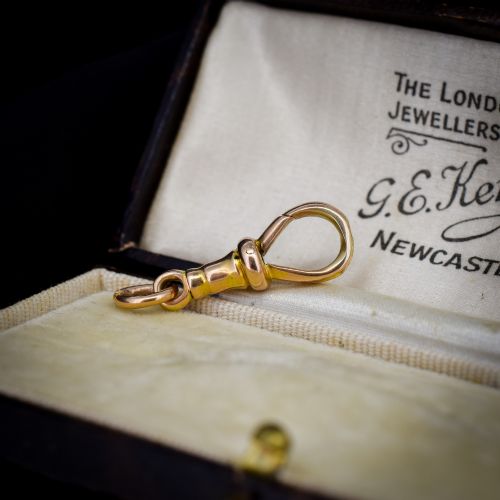
Gemstone selection and arrangement define the upper tier of the range, particularly where opals, old cut diamonds, or matched turquoises are employed. The survival of original fittings, such as functional dog clips and secure pin stems, elevates the integrity of surviving chains and brooches.
Several lockets contain hidden strands of human hair, preserved as personal tokens of affection.
The Victorian 15 Carat Gold Glossary
- Dog Clip
- A spring-loaded swivel fastening commonly found on nineteenth-century watch chains and necklaces. This mechanism allowed secure attachment to charms, lockets, or pocket watches.
- Etruscan Revival
- A Victorian design style inspired by archaeological discoveries of ancient Italian jewellery. Pieces feature granulation, applied wirework, and classical amphora shapes.
- Mourning Jewellery
- Pieces created to commemorate a deceased person, frequently incorporating black onyx, hair under crystal, or dark enamel. They served as tangible tokens of remembrance during the nineteenth century.
- Seed Pearl
- Tiny, naturally occurring pearls often drilled and threaded onto silk or set into floral and star clusters. They provide delicate, lustrous accents in Victorian pendants and rings.
- Rose Cut
- An antique gemstone cutting style featuring a flat base and a domed crown with triangular facets. This cut predates modern brilliant facets and imparts a soft glow to diamonds.
Victorian 15 Carat Gold: Frequently Asked Questions
What is 15 carat gold?
Fifteen carat gold is a historical British gold alloy containing 62.5 percent pure gold. It was a standard purity mark in Britain from the mid-nineteenth century until the introduction of lower standards in the early twentieth century.
Items stamped with this purity possess a distinct warm yellow or rose hue that differs from modern alloys. This specific metal standard helps collectors date British pieces accurately.
How do I care for antique gold jewellery?
Antique jewellery requires gentle handling due to the delicate nature of seed pearls, opals, and hollow gold components. Warm water and a soft cloth suffice for cleaning most metal surfaces.
Harsh chemical dips and ultrasonic cleaners should be avoided because they damage soft gemstones and pearl adhesives. Storing pieces individually prevents scratching between items.
Were these pieces worn daily?
Many items served as everyday adornments, while others were reserved for specific social occasions or periods of mourning. Wedding bands and signet rings were worn continuously by their original owners.
Delicate pearl brooches and gemstone necklaces typically accompanied formal attire during the late Victorian and Edwardian eras. Their survival demonstrates careful preservation by generations of owners.
How can I tell the period of a piece?
Dating relies on a combination of construction techniques, gemstone cuts, and stylistic motifs. Victorian designs often feature heavy Etruscan revival elements or sentimental seed pearl clusters.
Edwardian items tend to display lighter filigree work, platinum toppings, and softer pastel stones like aquamarines. Hallmarks and assay office marks, when present, offer precise chronological markers.