

Vernacular Wood Chair
A vernacular wood chair offers an honest encounter with historic regional craft, shaped by local timber and domestic utility rather than urban fashion.
Vernacular Wood Chair
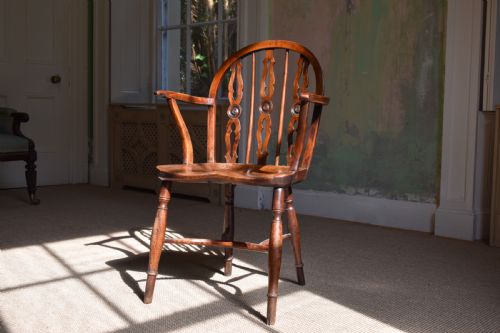
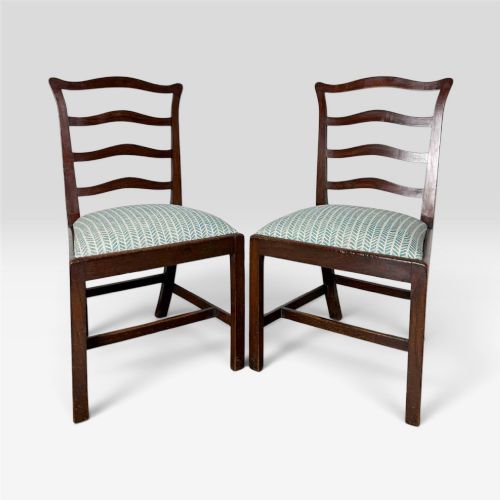
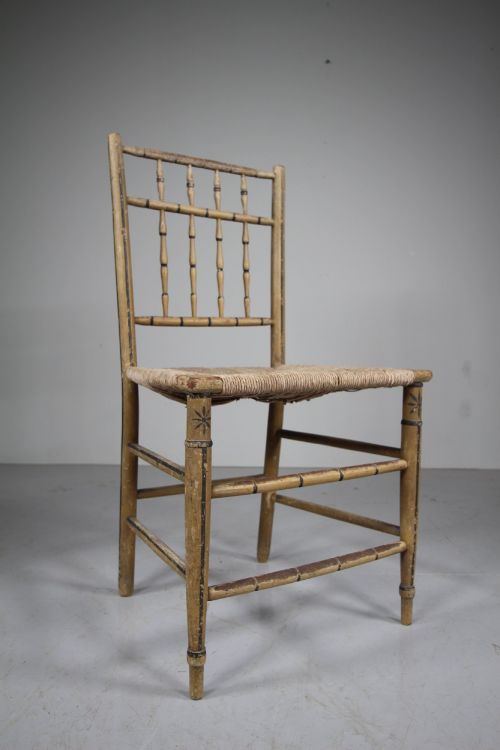
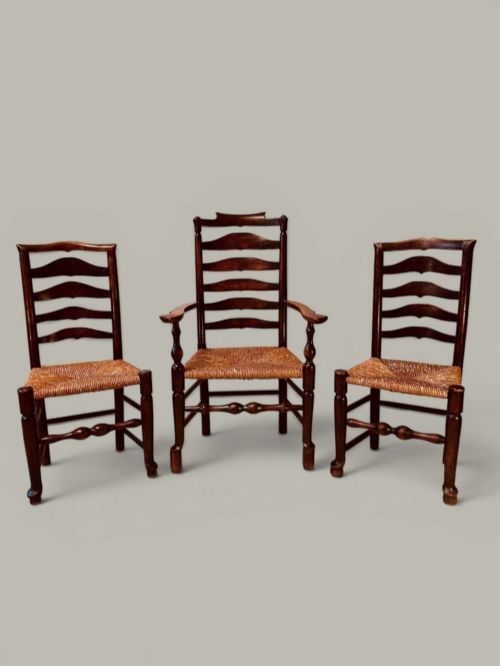
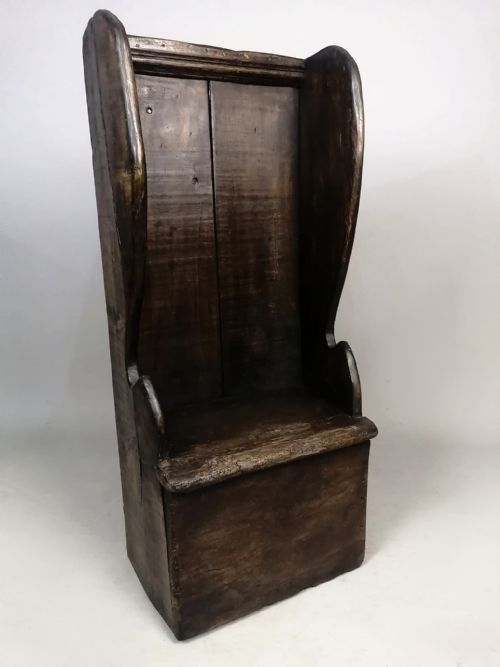
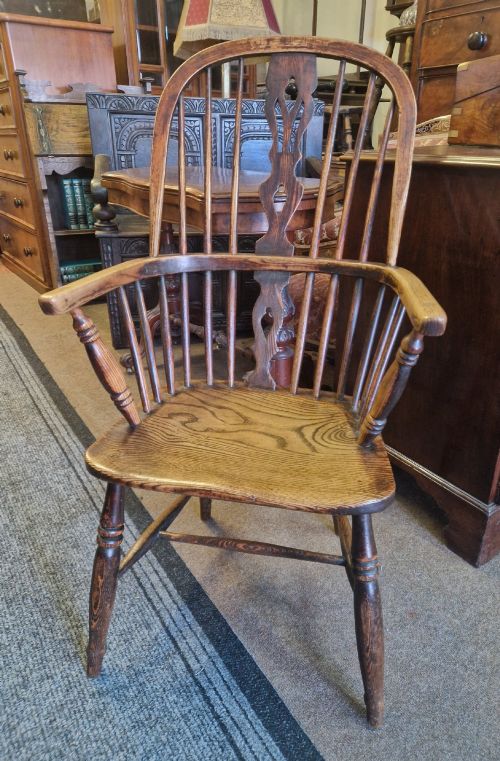
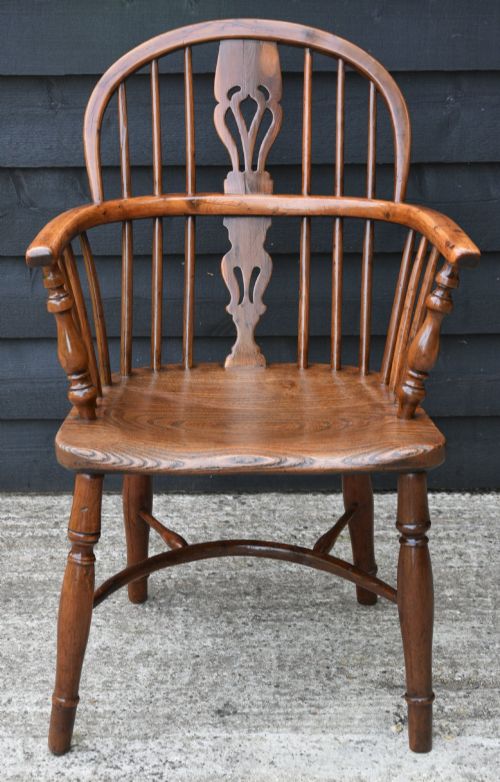
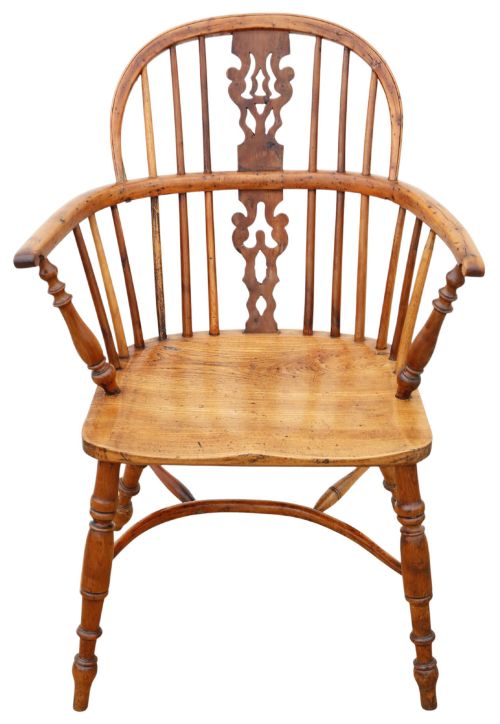
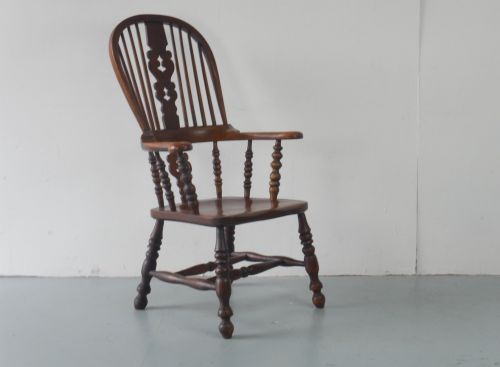
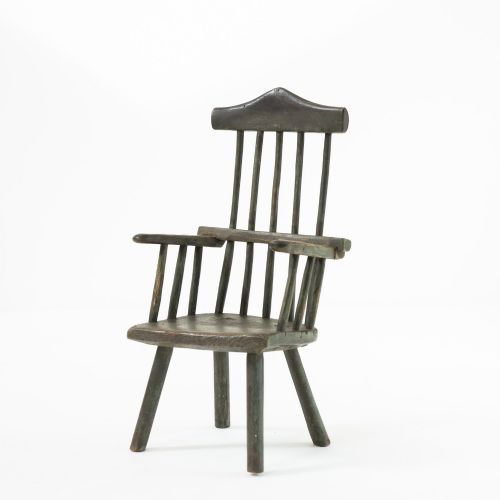
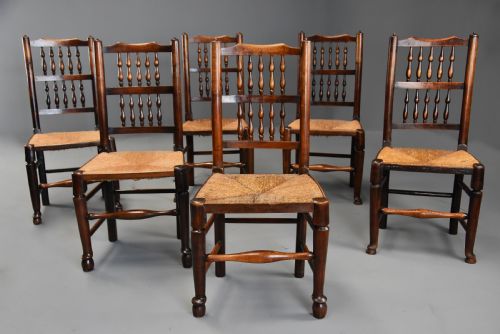
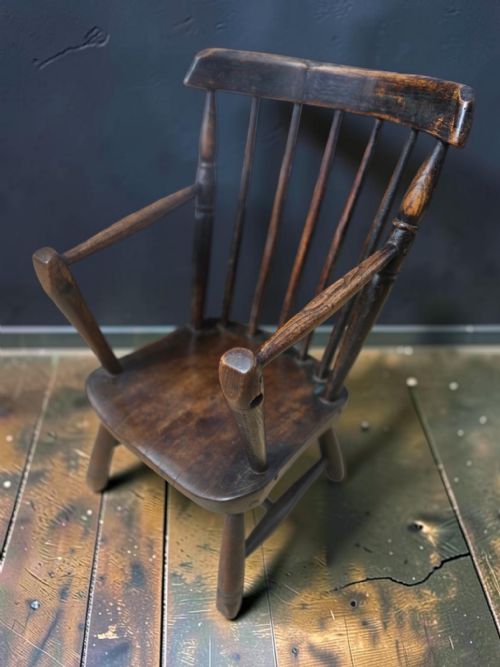
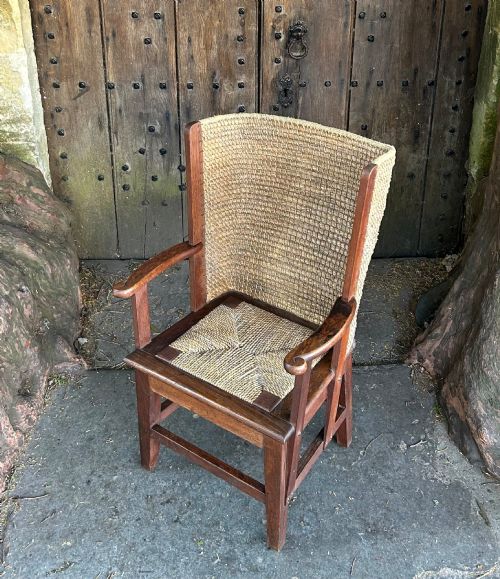
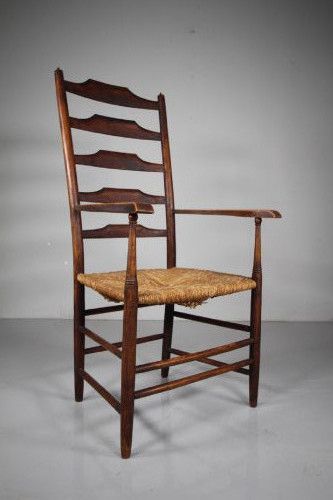
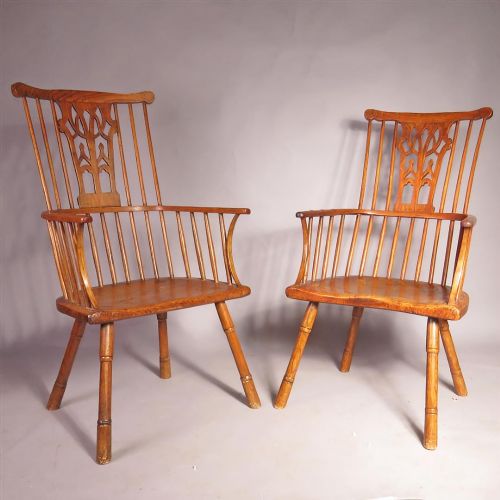
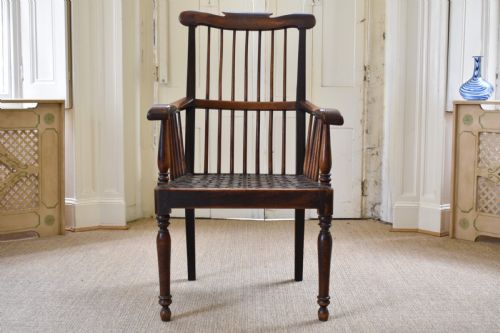
A vernacular wood chair brings together regional forms such as Windsor armchairs, stick backs, and ladder backs made across English, Welsh, and Scottish counties. Buyers meeting these pieces on this page will encounter 18th-century comb backs alongside 19th-century spindle backs, rush-seated dining sets, and child's armchairs. These seats arose from local rural traditions, utilising native woods and regional joinery methods specific to places like the Thames Valley, Lancashire, and Yorkshire.
The selection ranges from low back Windsor chairs and broad-arm carvers to lambing chairs and Orkney chairs, reflecting diverse domestic and farmhouse uses. Eighteenth-century examples often display comb backs or solid elm seats, while Victorian pieces introduce varied spindle arrangements and rocking formats. Each regional type maintains distinct structural proportions influenced by the maker's local timber supply and seating requirements.
Materials and Technique
Makers constructed these chairs by combining woods selected for specific structural properties, predominantly pairing elm seats with ash or yew for spindles, arms, and bows. Elm provided a stable, splitting-resistant timber for carved saddle seats, while ash supplied the tensile strength needed for bentwood bows and slender spindles. Additional timbers such as laburnum, fruitwood, and beech appear in specific regional variants.
Joinery relied on traditional methods including wedged tenons, through-mortises, and steam bending to shape continuous comb backs and arm bows. Rush seating was woven directly into frames made of ash, alder, or beech, securing seats without glue or nails. Surfaces were frequently left untreated, finished with natural wax, or occasionally painted.
Vernacular Wood Chair Retail Price Guide 2026
Typical asking prices for vernacular wood chair among the pieces listed under this phrase on Sellingantiques today, from the lower quarter to the upper quarter. They describe what is for sale here now, not the wider market.
Several examples feature penny seats, named for the circular wooden plugs once used to seal boring holes.
Judging Quality
Quality rests in the harmony of proportions, the character of the grain, and the integrity of the original construction rather than decorative embellishment. Superior examples display balanced spindle spacing, well-sculpted saddle seats, and harmonious timber matching between the elm seat and contrasting back components. Grain movement in yew wood backs and patinated ash surfaces distinguish finer regional pieces from standard utility furniture.
The longevity of the structure depends on tight joint retention and minimal replacement of vital components like legs, arms, and wedges. Chairs retaining their original surface patination, honest wear, and untouched regional construction demonstrate higher integrity than those with excessive restoration.
Philip Clissett·Gabbitass Worksop·Duncan McKellar·Wheelers of Arncroach
The Vernacular Wood Chair Glossary
- Comb back
- A Windsor chair variation where the central vertical spindles extend upward into a horizontal top rail resembling a traditional hair comb.
- Broad arm
- A generous, flat wooden armrest integrated into a Windsor chair, often wide enough to write upon.
- Spindle back
- A chair construction featuring a series of turned or cleft vertical wooden rods supporting the back rail.
- Rush seat
- A woven seating surface made from dried marsh rushes twisted into cords and hand-plaited across the chair frame.
- Saddle seat
- A solid wooden seat carved with ergonomic depressions to mirror the contours of the body.
Vernacular Wood Chair: Frequently Asked Questions
How were Windsor chairs constructed?
Windsor chairs were built using a distinct method where individual components were socketed into a central solid wooden seat rather than relying on a traditional framed skeleton. Legs and back spindles were turned or cleft from supportive woods and wedged firmly into drilled mortises.
Bows and arm rails were typically steam-bent from green timber to achieve continuous curved structures without weakening the grain.
How do I care for antique wood chairs?
Maintain antique wood chairs by keeping them away from direct heat sources and rapid humidity shifts that can cause timber to split or joints to loosen. Apply a microcrystalline wax occasionally to nourish the surface and preserve the historic patination.
Avoid commercial liquid polishes containing silicone, which can penetrate open grain and degrade the aged finish over time.
How can I tell regional styles apart?
Regional styles differ according to local timber availability, traditional turning patterns, and specific structural configurations preferred by rural workshops. For instance, Thames Valley chairs often feature specific comb back formations, while Welsh and northern English pieces display distinct arm and spindle arrangements.
Examining the primary wood species alongside construction methods helps identify the geographic origin of a piece.