


Veneered Walnut Storage Drawers
Veneered walnut storage drawers are timber chests and cabinets displaying rich grain patterns, prized for warmth and formal elegance in traditional and modern interiors.
Veneered Walnut Storage Drawers
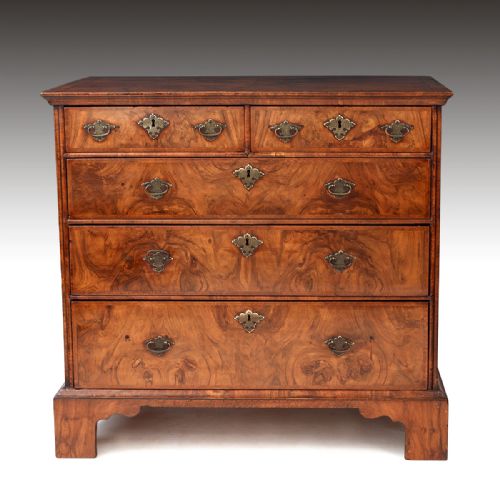
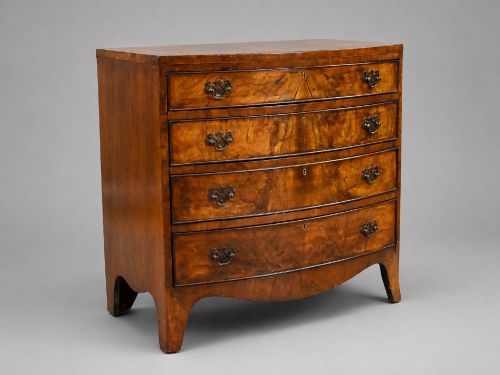
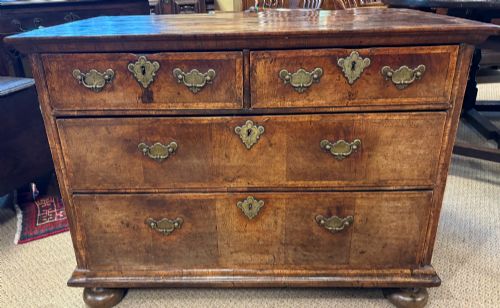
Veneered walnut storage drawers comprise chests of drawers, commodes, and bedside tables produced across several centuries. The selection ranges from late seventeenth century William and Mary oyster pieces to twentieth century Art Deco cabinets and Biedermeier commodes.
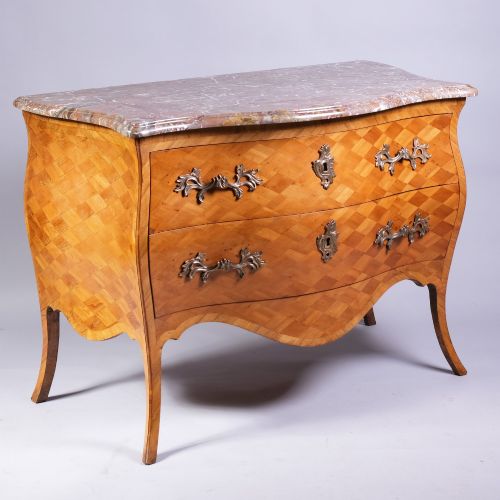
Buyers encounter eighteenth century walnut chests alongside nineteenth century French marble topped commodes and twentieth century figured walnut designs. These pieces function primarily as functional bedroom or living space storage while displaying decorative timber surfaces.
Materials and construction methods
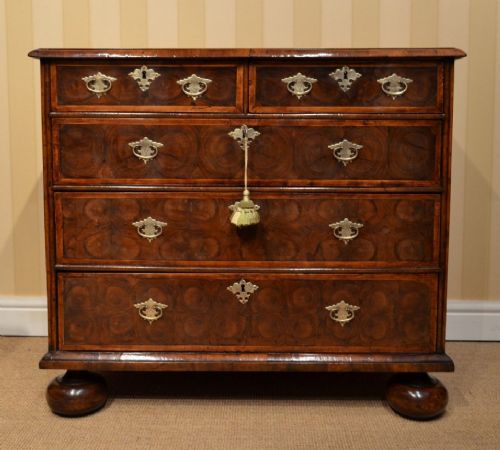
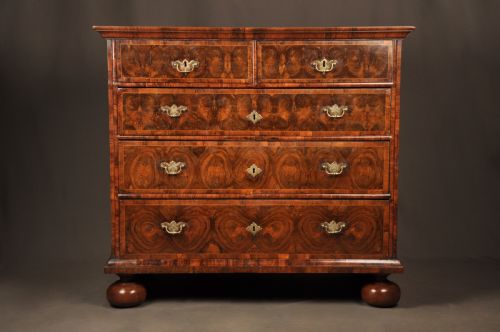
Craftsmen applied thin slices of walnut, burr walnut, or figured walnut veneers onto secondary carcase timbers such as oak and pine. Specialised cutting techniques produced distinct circular oyster patterns and symmetrical grain matches across the drawer fronts.
Brass handles, escutcheons, and hinges were fitted to secure drawers and doors. Marble tops occasionally feature on continental commodes, providing durable horizontal surfaces above the veneered timber structures.
Branch cuts create oyster patterns resembling scattered sea shells across seventeenth century drawer fronts.
Distinguishing quality in walnut furniture
Quality rests upon the selection and preservation of the veneer timber. Pieces utilising figured, burr, or oyster walnut display superior visual depth compared to plain surfaces.
Structural integrity of the underlying carcase and the crispness of drawer construction differentiate examples. Original brass hardware and stable timber movement without excessive splitting elevate the standard of the piece.
Bowman Brothers
The Veneered Walnut Storage Drawers Glossary
- Veneer
- A thin slice of decorative timber applied to a secondary carcase wood. This technique allows cabinetmakers to utilise striking grain patterns economically.
- Oyster veneer
- Timber sections cut transversely from small branches to produce circular rings resembling oysters. This method was popular in the late seventeenth century.
- Commode
- A low French storage chest featuring drawers or doors. Many examples incorporate marble tops and shaped fronts.
- Biedermeier
- A Central European style spanning the nineteenth century focusing on clean lines and blond walnut veneers. Decoration remains restrained to highlight natural wood figures.
- Burr walnut
- Wood taken from walnut tree growths featuring swirling, knotty grain patterns. It creates highly decorative surfaces on high status furniture.
Veneered Walnut Storage Drawers: Frequently Asked Questions
How do I care for antique walnut veneer?
Keep wooden storage drawers away from direct sunlight and heat sources to prevent the veneer from drying and lifting.
Apply microcrystalline wax periodically to nourish the surface and clean gently with a dry or slightly damp cloth.
What is the difference between an oyster chest and a standard chest?
Oyster chests feature cross-cut branch veneers arranged in geometric patterns across the entire surface. Standard chests typically display longitudinal grain or burr figures on the drawer fronts.
Both styles utilise walnut, but the cutting technique alters the visual texture significantly.
How do I date a walnut chest of drawers?
Examine the construction methods, drawer linings, and hardware styles to determine the period. Seventeenth century pieces often display oyster veneers and oak carcases, while twentieth century items show Art Deco or Biedermeier influences.
Secondary woods and foot designs provide further clues to the decade of manufacture.