



Veneered Walnut Credenza
A veneered walnut credenza brings rich grain and cabinetmaking craft into a room, offering both display space and practical storage.
Veneered Walnut Credenza
When you search for a veneered walnut credenza, you encounter timber cabinets designed for storage and display, surfacing in forms such as sideboards, bookcase cabinets, cocktail cabinets, and credenzas. These items span periods including the Victorian era, the nineteenth century, the nineteen-twenties, and nineteen-thirty.
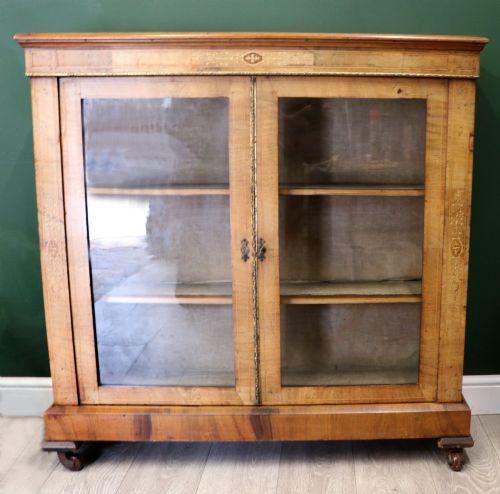
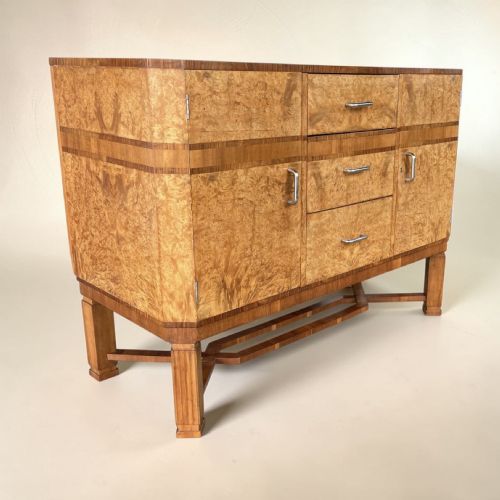
The pieces you meet on this page lean heavily towards nineteenth-century Victorian designs alongside nineteen-thirty Art Deco creations. You will find items featuring gilt metal mounts, marble tops, and inlaid decoration alongside clean geometric forms.
How they were made
Cabinetmakers constructed these pieces using hardwood frames applied with walnut veneers, frequently selecting burr walnut to create striking figured grain patterns across the doors and panels. Ebonised details, brass hardware, and ormolu mounts add contrasting metallic accents to the warm timber surfaces.
Makers incorporated glass panels into doors for display cabinets and cocktail cabinets, while certain pieces integrate marble tops or inlaid decoration to elevate the visual weight of the furniture.
Veneered Walnut Credenza Retail Price Guide 2026
Typical asking prices for veneered walnut credenza among the pieces listed under this phrase on Sellingantiques today, from the lower quarter to the upper quarter. They describe what is for sale here now, not the wider market.
A nineteen-thirty cocktail cabinet hides a drinking den behind its veneer.
What varies in quality
Quality rests in the selection and matching of the veneer, where book-matched burr walnut creates symmetrical patterns across a front facade rather than random grain alignment. The integration of mounts, whether gilt metal, ormolu, or brass, shows crisp casting and secure attachment rather than basic finishing.
Construction standards appear in the precision of the joinery on doors and drawers, alongside the sophistication of stylistic details like Queen Anne style shaping, French provincial influences, or clean Art Deco lines.
Bowman Brothers
The Veneered Walnut Credenza Glossary
- Veneer
- A thin slice of superior wood applied to a secondary timber base to create decorative surfaces. This technique allows makers to utilise striking grain patterns like burr walnut efficiently.
- Credenza
- A low cabinet or sideboard traditionally used for storing and displaying serving dishes. These pieces often feature glass doors or central cupboard sections flanked by shelving.
- Ormolu
- Gilded bronze ornamentation applied to furniture as decorative mounts. It provides a bright metallic contrast against dark walnut timber.
- Burr walnut
- Wood taken from a walnut tree growth that produces swirling, knotty grain patterns. It is highly valued for decorative veneer work on high-status cabinets.
Veneered Walnut Credenza: Frequently Asked Questions
What is a veneered walnut credenza?
A veneered walnut credenza is a low storage cabinet surfaced with decorative walnut timber. These pieces function as sideboards or display units.
They combine practical internal storage with prominent surfaces suited for displaying decorative objects or serving items.
How do I style a walnut credenza?
Position the cabinet against a main wall in a dining room, living space, or hallway where the wood grain can be appreciated. Balance the dark timber tones with neutral walls and complementary lighting.
Use the top surface for lamps or ceramics, keeping heavier pieces grounded to balance the visual weight of the furniture.
How do I tell Victorian from Art Deco walnut cabinets?
Victorian walnut pieces often feature curvilinear forms, inlaid decoration, gilt metal mounts, and traditional revival styles like Queen Anne or French influences. They emphasise ornate craftsmanship and decorative hardware.
Art Deco cabinets from nineteen-thirty rely on streamlined geometric shapes, sleek book-matched veneers, and minimal ornamentation, reflecting a shift toward modernism.