

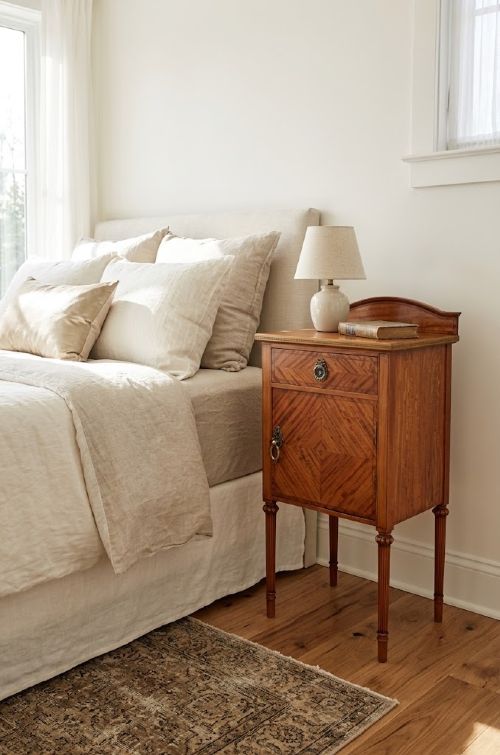
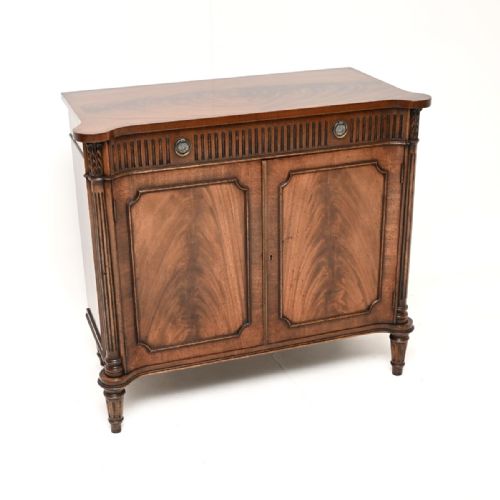


Veneered Mahogany Cabinet
A veneered mahogany cabinet brings rich timber grain and practical storage into a room, offering both classical proportion and warm interior character.
Veneered Mahogany Cabinet
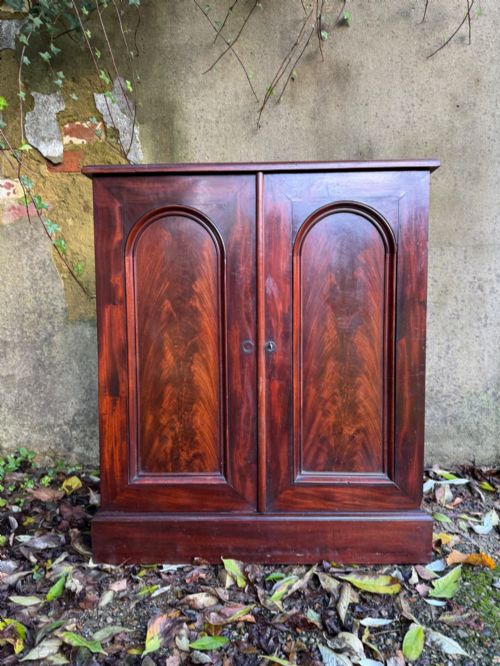
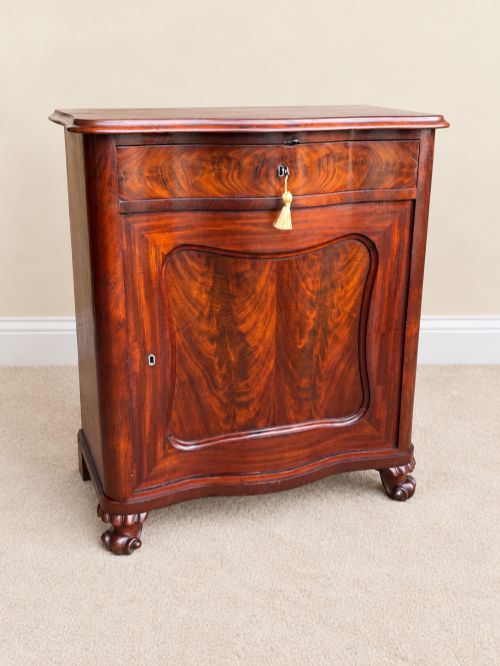
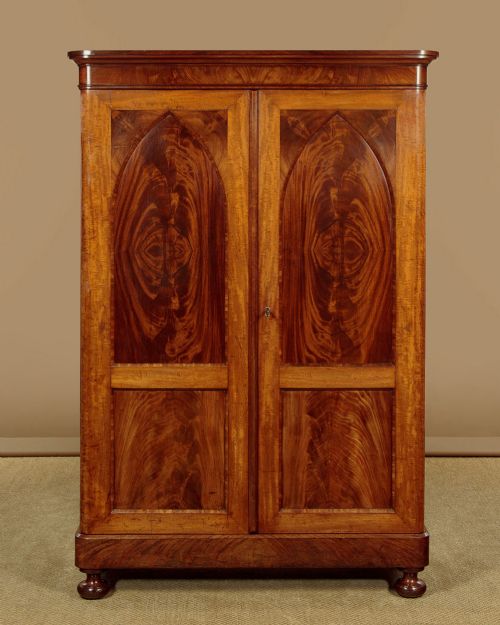
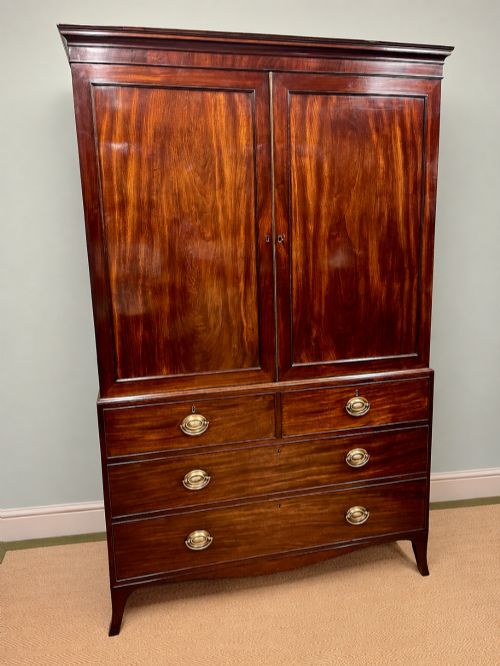
When you search for a veneered mahogany cabinet, you are looking at items built across several distinct eras, spanning from the eighteenth century through the Regency and Victorian periods into the twentieth century. These pieces encompass a wide variety of domestic forms including linen presses, chiffoniers, sideboards, bedside cupboards, and corner cabinets.
The version you are most likely to meet on this page is from the nineteenth century, often showing substantial mahogany timber with figured grain patterns. These range from tall wardrobes and linen presses down to low chiffoniers and bedside tables.
Earlier examples display Georgian and George III influences alongside fine plum pudding mahogany figure, while later pieces stretch into Edwardian satinwood highlights and Art Deco designs by makers such as the Bowman Brothers.
How they were made
Cabinet makers utilised thin slices of highly figured timber over secondary woods, applying flame mahogany veneer or plum pudding mahogany to primary surfaces to create striking visual patterns. This technique allowed workshops to display expensive grain configurations across large doors and drawer fronts without using solid timber throughout.
Additional materials such as brass fittings, glass panels, marble tops, and contrasting stringing in satinwood or kingwood were integrated into the construction depending on the style and period of the piece.
Veneered Mahogany Cabinet Retail Price Guide 2026
Typical asking prices for veneered mahogany cabinet among the pieces listed under this phrase on Sellingantiques today, from the lower quarter to the upper quarter. They describe what is for sale here now, not the wider market.
Materials recorded across these cabinets include flame mahogany veneer, satinwood, kingwood, marble, and brass.
What varies in quality
The standard of a piece depends heavily on the selection and matching of the wood veneer across the visible surfaces, where symmetrical grain alignment elevates the overall appearance. Subtlety in proportion and the integration of secondary timbers also signal superior workshop production.
Original hardware, sound structural joinery, and the condition of the timber finish separate ordinary utility items from finer examples produced during periods like the Regency and the eighteenth century.
Bowman Brothers
The Veneered Mahogany Cabinet Glossary
- Flame mahogany veneer
- A thin sheet of wood sliced from timber where the grain resembles flickering flames. This creates a dramatic, highly decorative pattern across cabinet doors.
- Chiffonier
- A small sideboard or low cabinet typically fitted with shelves or drawers below and a raised shelf or mirror on top. It emerged as a popular nineteenth century form.
- Linen press
- A tall piece of furniture featuring upper doors enclosing sliding trays for textiles and lower drawers for general storage. Eighteenth and nineteenth century examples frequently use fine mahogany veneers.
- Commode
- A low standing cabinet or chest with doors or drawers, often topped with marble. French nineteenth century examples demonstrate continental interpretations of the form.
Veneered Mahogany Cabinet: Frequently Asked Questions
What is a veneered mahogany cabinet?
A veneered mahogany cabinet is a piece of furniture constructed by applying thin decorative slices of mahogany timber over a structural wood base. These items span various domestic forms including wardrobes, sideboards, linen presses, and small bedside cupboards.
They appear across multiple periods from the eighteenth century into the twentieth century, reflecting shifting tastes in interior design and cabinet making techniques.
How do I identify a Regency cabinet?
Regency cabinets typically display restrained classical proportions, clean architectural lines, and striking mahogany or plum pudding mahogany veneers. They often incorporate brass mounts or simple stringing.
Looking at the construction details, drawer linings, and overall silhouette helps separate these early nineteenth century pieces from later Victorian or Edwardian reinterpretations.
Where should I place a chiffonier?
A chiffonier works well in a dining room or living space where its low height and enclosed storage provide both surface display and practical organisation. Many feature a small upper shelf or back panel that suits small decorative objects.
Because these nineteenth century pieces vary in scale from compact bedside units to wider sideboards, measuring your wall space ensures a balanced fit.
How do I care for mahogany veneer?
Protect mahogany veneer by keeping furniture away from direct sunlight and maintaining stable room humidity to prevent the timber from drying or warping. Regular dusting with a soft, dry cloth preserves the finish.
Avoid using silicone-based polishes or excessive moisture, as traditional wax finishes respond best to gentle, periodic maintenance.