

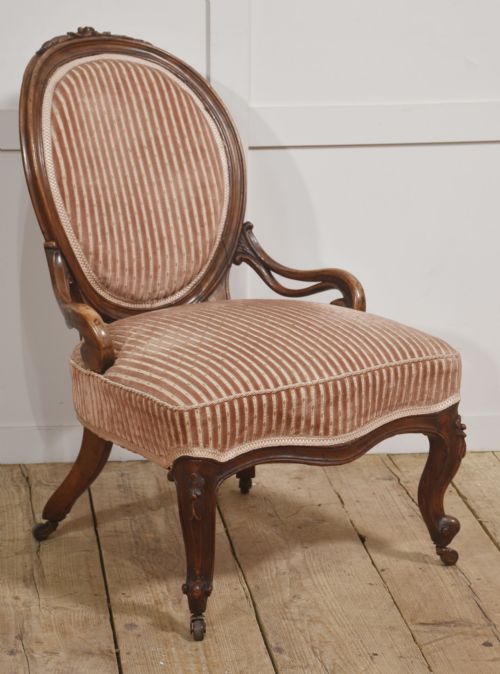


Velvet Stripe Armchairs
Velvet stripe armchairs are upholstered seating options that bring texture and historical character to a room.
Velvet Stripe Armchairs
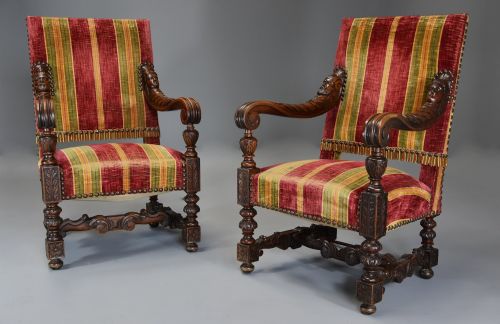
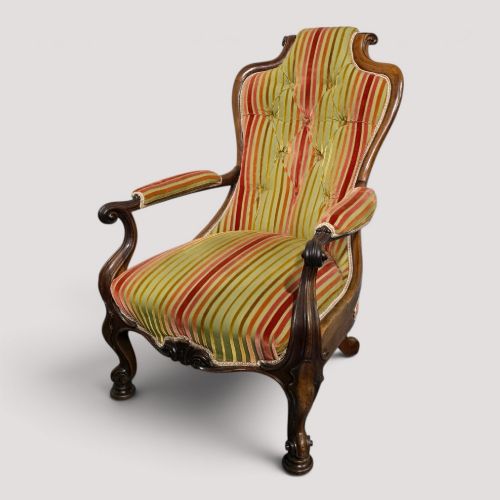
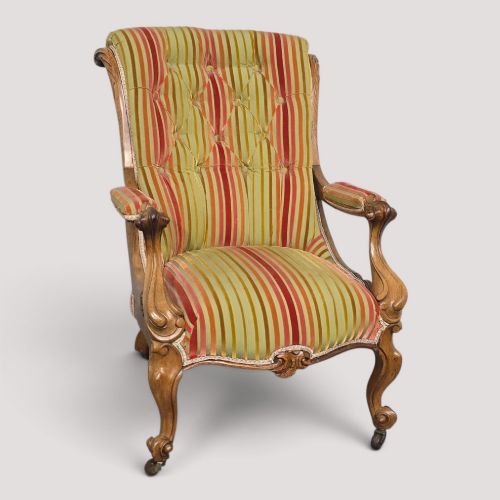
When you search for velvet stripe armchairs, you encounter a selection of seating spanning multiple periods including Regency, Georgian, nineteenth century, and the nineteen twenties. These pieces take various forms, from library armchairs and open armchairs to generous wingbacks and French bergere styles.
How they were made
Makers constructed the supportive frames of these armchairs using dense hardwoods such as mahogany, walnut, rosewood, and giltwood. Cabinet makers and joiners shaped these timbers to form open armchairs, solid library chairs, and enclosed wingbacks.
Upholsterers applied textile and velvet coverings over internal padding, occasionally accentuating the woodwork with brass details. The integration of textile panels created the striped visual effect seen across these historical seating forms.
Velvet Stripe Armchairs Retail Price Guide 2026
Typical asking prices for velvet stripe armchairs among the pieces listed under this phrase on Sellingantiques today, from the lower quarter to the upper quarter. They describe what is for sale here now, not the wider market.
A nineteenth century armchair might have spent its youth listening to scandal in a library before ending up on your reading list.
What varies in quality
The distinction between standard examples and the finest pieces lies in the crispness of the timber carving and the architectural proportion of the frame. Superior armchairs exhibit refined joinery and well-balanced structural lines that remain harmonious from every angle.
Material selection also dictates the grade of the piece, with dense rosewood, mahogany, or giltwood frames representing higher craftsmanship than simpler wood structures. The integration of the velvet upholstery with the underlying frame structure further separates basic seating from distinguished examples.
The Velvet Stripe Armchairs Glossary
- Wingback armchair
- An upholstered seat featuring protective side panels designed to shield the sitter from draughts. These high-backed chairs date back to earlier centuries.
- Bergere
- An enclosed upholstered armchair with wooden sides and an exposed frame. This French form typically incorporates woven cane or upholstered panels.
- Fauteuil
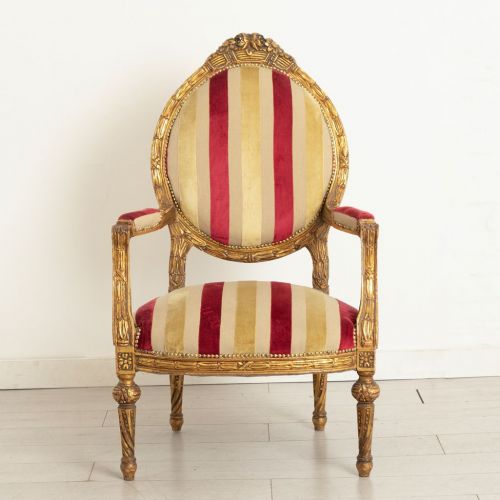
- An open-armed upholstered chair originating in France with exposed wooden framing around the back and armrests. The style is frequently associated with Louis XVI designs.
- Giltwood
- Timber treated with a thin layer of gold leaf applied to the carved surface. This finish appears frequently on decorative nineteenth century revival seating.
Velvet Stripe Armchairs: Frequently Asked Questions
What periods do these armchairs come from?
The listings span several historical eras, including the Georgian and Regency periods, alongside nineteenth century interpretations and pieces from the nineteen twenties.
Craftsmen across these different eras applied distinct regional styles, ranging from English library chairs to French Baroque and Louis XVI revivals.
How are different wood types used?
Makers utilised hardwoods like mahogany, walnut, and rosewood to build the structural frames of these seats. These timbers provided the necessary strength for supporting upholstered components.
In certain decorative French styles, gilding was applied to wood surfaces to create a gilded finish rather than leaving the natural grain exposed.
What is a bergere armchair?
A bergere is a traditional French armchair style characterised by an enclosed upholstered body and an exposed wooden frame. These chairs often feature padded armrests and loose seat cushions.
They emerged as comfortable parlour seating and appear in twentieth century interpretations within the available selection.
Are these armchairs sold as pairs?
The selection includes both individual armchairs and matched pairs. Pairs are frequently found in wingback forms and French open armchair styles.
Buyers searching for symmetrical seating often look specifically for these paired configurations across nineteenth century and later examples.