

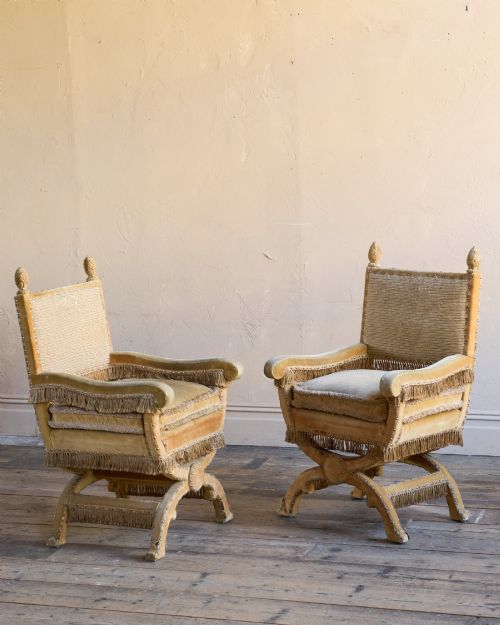
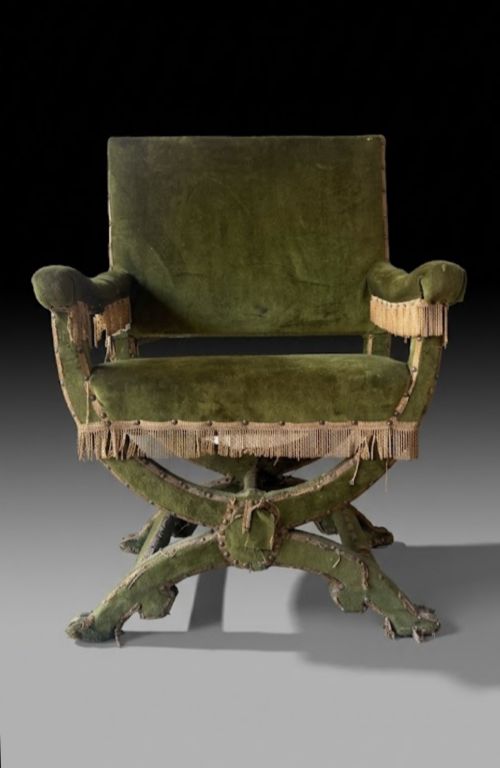
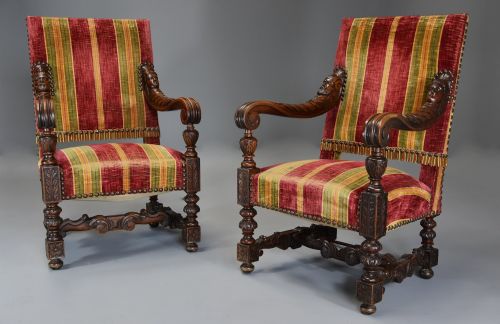
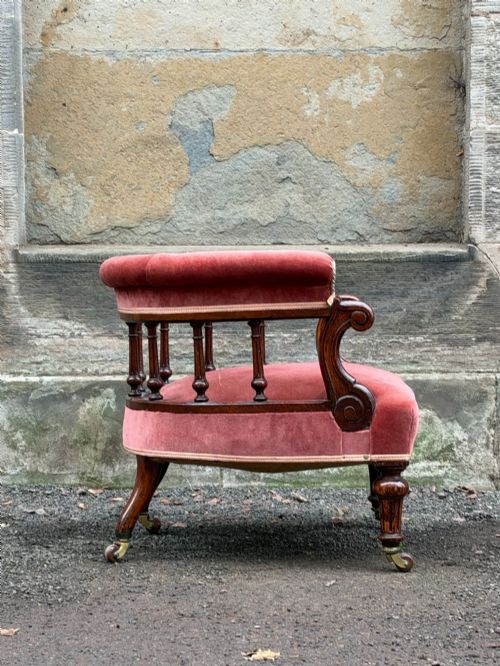
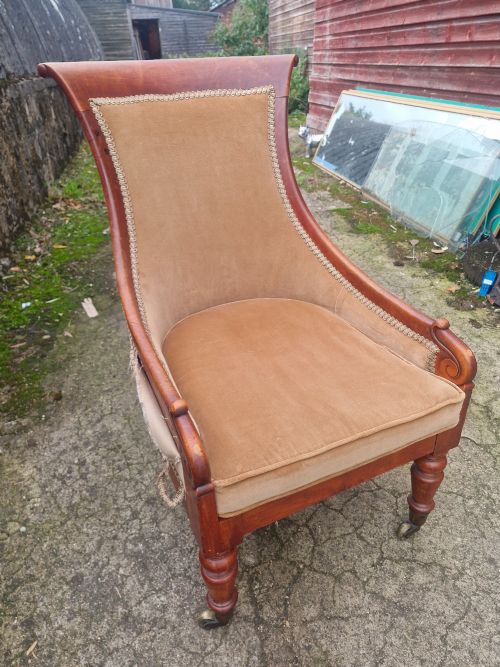
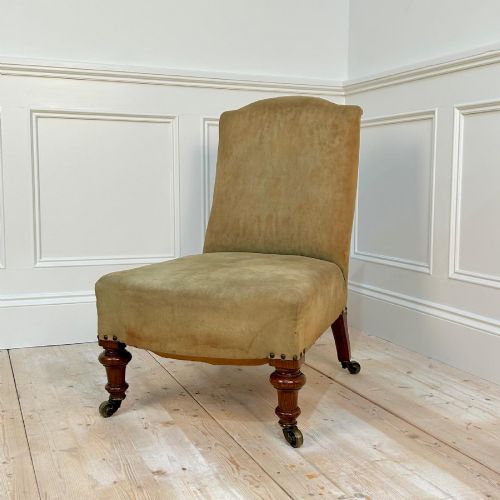
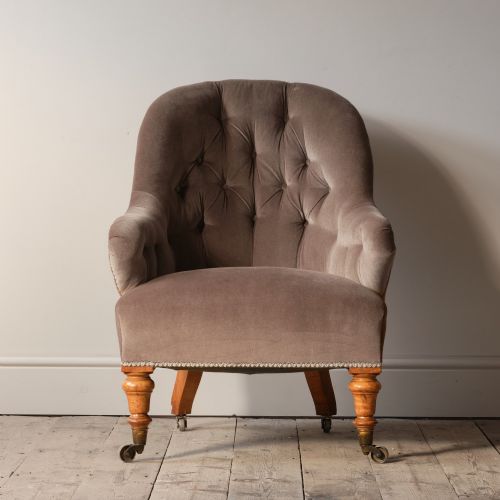
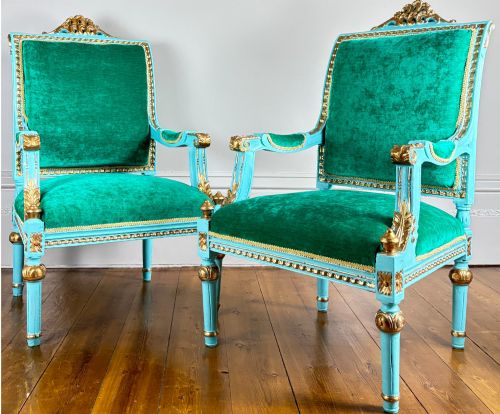
Velvet Seated Armchair
A velvet seated armchair brings tactile warmth and period form to a room, offering supportive seating rooted in centuries of craftsmanship.
Velvet Seated Armchair
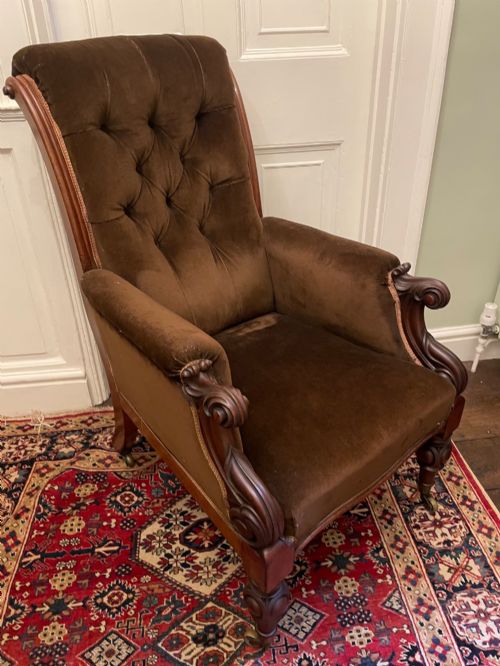
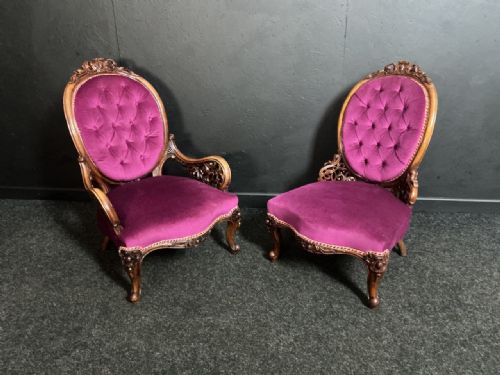
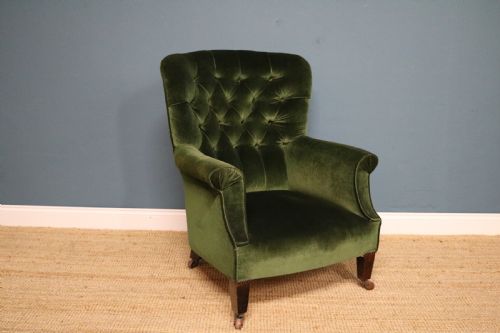
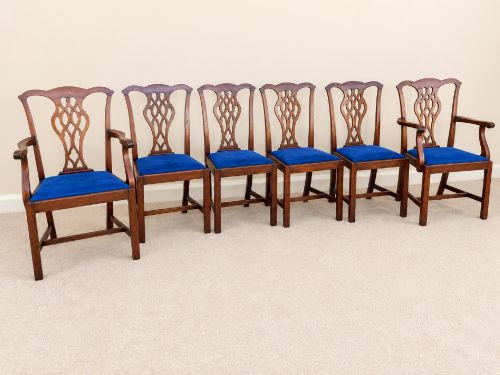
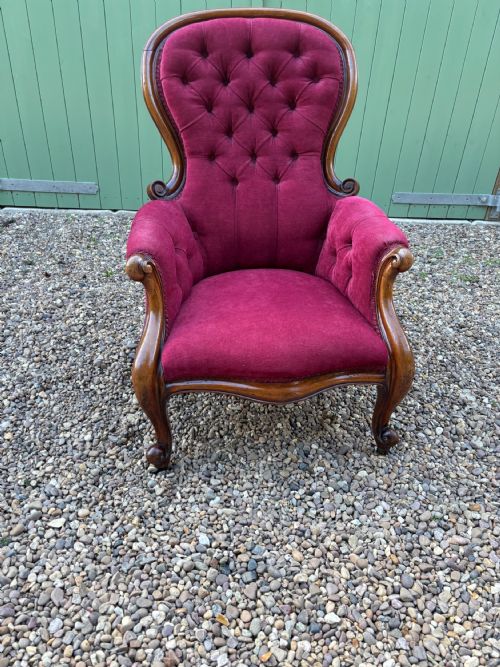
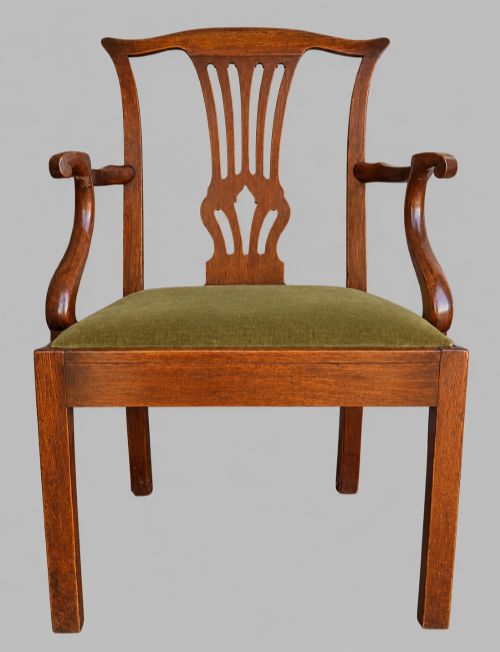
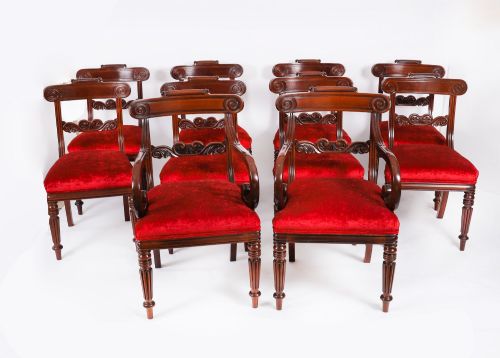
A velvet seated armchair is a traditional upholstered form designed for comfort and reception, appearing across multiple eras from the Regency period through to the Edwardian years. These chairs range from grand library and salon models to intimate bedroom and nursing chairs constructed with timber frames.
The most common examples on this page date from the Victorian era and the nineteenth century, often featuring deep buttoning, carved mahogany or walnut frames, and open arm structures. Pieces also draw upon earlier design revivals, including Georgian, Sheraton, and Queen Anne styles executed in oak, mahogany, and rosewood.
How They Were Made
Makers constructed the structural frames of these armchairs from dense hardwoods such as mahogany, walnut, oak, and rosewood, frequently incorporating hand-carved details or inlaid veneers. Joinery relied on traditional mortise and tenon joints to ensure long-term stability under daily use.
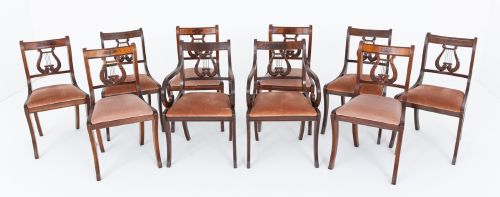
Upholstery techniques combined sprung or webbed bases with hair stuffing, secured beneath top layers of velvet, chenille, or fabric, sometimes accented with brass tacking or buttoned panels. Caning was also utilised for light back panels on specific dining and library models.
Velvet Seated Armchair Retail Price Guide 2026
Typical asking prices for velvet seated armchair among the pieces listed under this phrase on Sellingantiques today, from the lower quarter to the upper quarter. They describe what is for sale here now, not the wider market.
Several armchairs arrive accompanied by matching footstools, salon tables, or entire parlour suites for coordinated lounging.
What Varies in Quality
The integrity of the underlying timber frame and the precision of its carved or turned members dictate the baseline standard of each piece. Superior examples display crisp joinery, well-seasoned hardwoods, and robust structural proportions that resist movement over time.
Upholstery execution and textile selection further differentiate the range, where hand-stitched detailing, supportive interior padding, and rich pile velvet elevate the tactile and visual presence of the seating.
Designers Guild
The Velvet Seated Armchair Glossary
- Bergere
- An enclosed upholstered armchair with wooden framing around the sides and back, originating in France. It typically includes a loose seat cushion supported by a cane or upholstered panel.
- Button back
- An upholstery method where tufts are pulled deep into the padding and secured with twine, creating a diamond pattern of depressions. This technique adds structural tension and visual texture to the seat back.
- Carver
- An armchair designed with arms, traditionally placed at the heads of a dining table or paired with matching side chairs. These frames echo the stylistic motifs of the corresponding dining suite.
- Library chair
- A heavy, substantial armchair intended for reading rooms, often upholstered in rich fabrics like velvet or leather. They prioritize deep seating comfort and solid timber armrests.
- Sheraton Revival
- A decorative movement drawing upon late eighteenth-century neoclassical designs, characterised by slender tapered legs and delicate inlay work. Pieces from this phase balance lightness with traditional stability.
Velvet Seated Armchair: Frequently Asked Questions
What periods do these armchairs come from?
The listings span the nineteenth and early twentieth centuries, including Regency, Victorian, and Edwardian periods.
Pieces also reflect stylistic revivals reaching back to eighteenth-century Georgian and Chippendale designs.
How do I identify a Victorian velvet armchair?
Victorian examples typically feature dark timber frames in mahogany or walnut, often with deep buttoned upholstery and turned legs.
They frequently manifest as gentleman's armchairs, nursing chairs, or larger salon seats from the mid to late 1800s.
Where were these chairs used in the home?
These armchairs served multiple domestic functions, from formal drawing rooms and libraries to private bedrooms.
Smaller scale pieces functioned as nursing or occasional chairs, while sturdier open arm models suited studies and reading spaces.
What woods are commonly found in the frames?
Mahogany and walnut predominate among the listed pieces, chosen for their strength and rich grain patterns.
Oak, rosewood, and giltwood also appear across specific French and English regional styles.