



Velvet Lounge Sofa
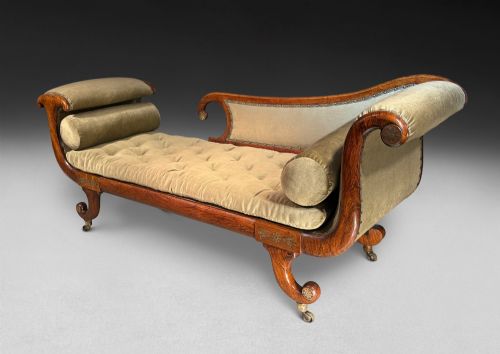
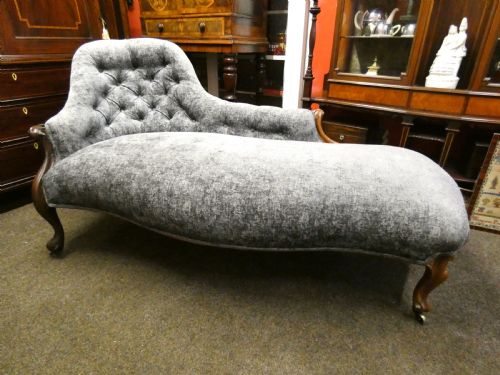
These velvet lounge sofa examples comprise day beds, chaises longues, and deep-sprung settees spanning the Regency, Victorian, and Art Deco periods.
Velvet Lounge Sofa
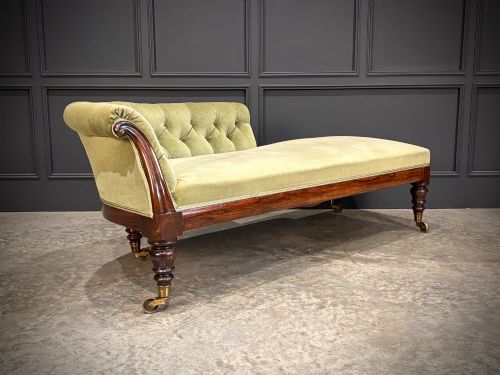
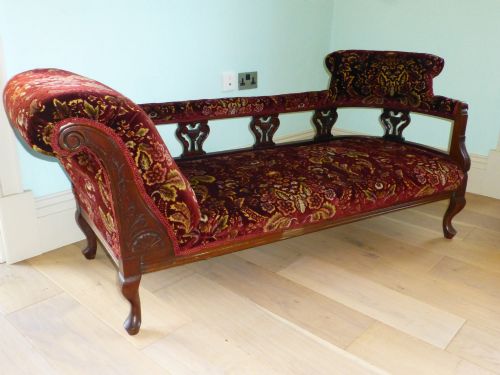
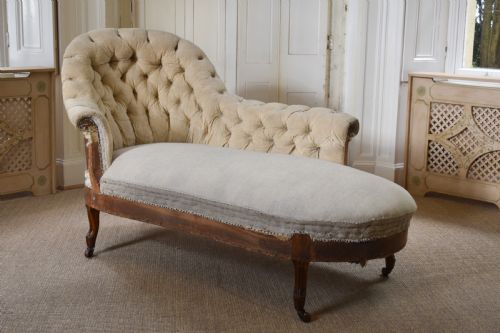
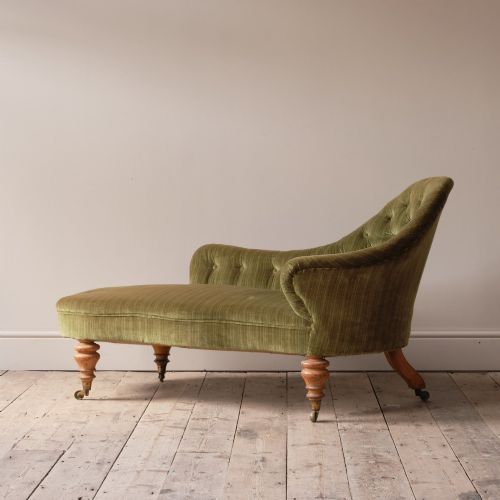
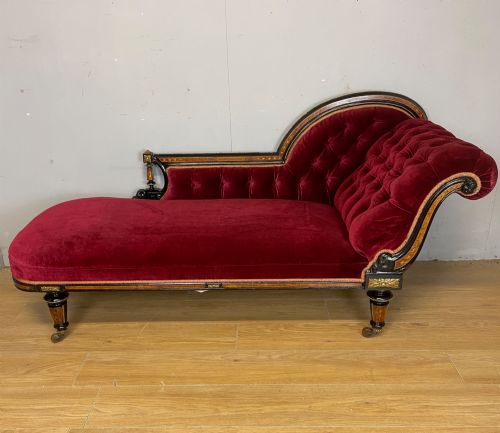
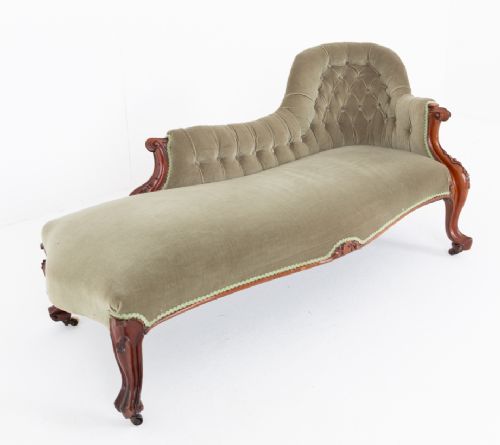
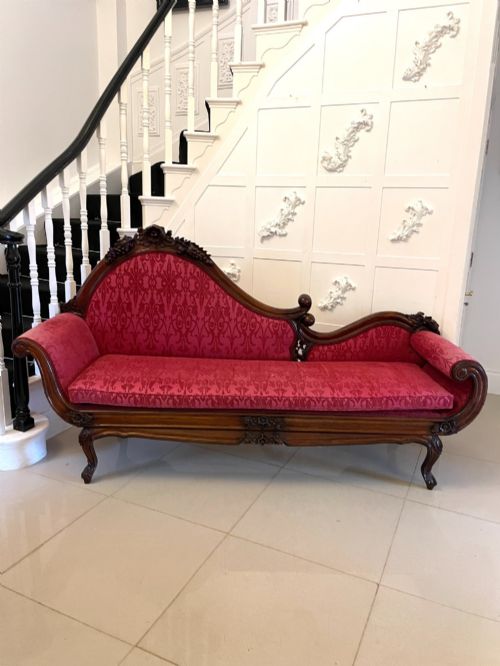
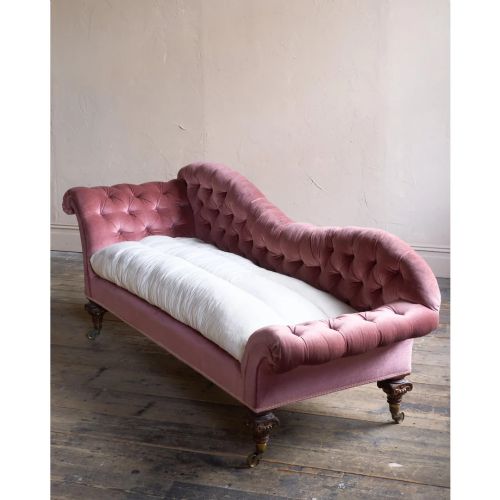
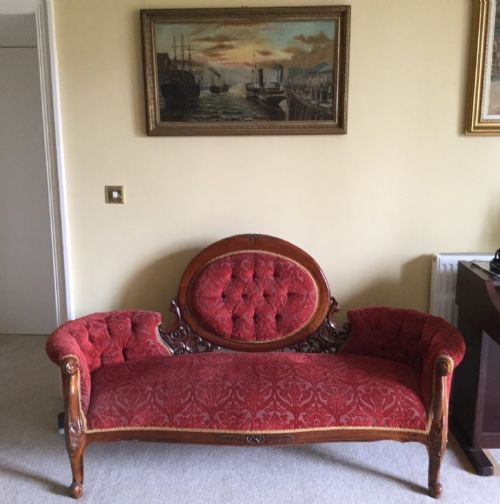
When searching for a velvet lounge sofa, buyers encounter nineteenth-century chaise longues, day beds, and traditional settees framed in mahogany, walnut, rosewood, and beech. These pieces typically feature button backs, deep pile upholstery, and elaborate timber carving reflecting Regency, Victorian, Edwardian, and Art Deco design movements.
The most common forms on this page are nineteenth-century chaise longues and double-ended sofas upholstered in velvet, brocade, damask, or leather. Such seating served reception salons, libraries, and grand country house drawing rooms, offering reclining comfort with architectural wood frames.
How they were made
Cabinetmakers constructed the supportive frames using solid timbers including mahogany, walnut, rosewood, and beech, frequently incorporating brass inlay, ormolu decoration, and ebonised finishes. Turned or carved wooden legs support sprung bases designed for heavy domestic use.
Upholsterers applied deep pile velvet, brocade, damask, and leather over traditional webbing and buttoned padding. Details such as Ionic column legs, inlaid walnut panels, and hand-stitched buttoning required specialist joinery and textile skills.
Velvet Lounge Sofa Retail Price Guide 2026
Typical asking prices for velvet lounge sofa among the pieces listed under this phrase on Sellingantiques today, from the lower quarter to the upper quarter. They describe what is for sale here now, not the wider market.
Listings feature nineteenth-century chaise longues, Victorian rosewood day beds, and Art Deco club armchairs constructed from mahogany, walnut, and velvet.
What varies in quality
Quality rests in the architectural integrity of the timber frame and the precision of decorative elements such as brass inlay, hand-carved mahogany scrollwork, and ormolu mounts. Finer examples display dense, figured rosewood or walnut veneers and robustly joined hardwood chassis rather than softer secondary woods.
The standard of upholstery work and the choice of textile also separate grades. Deep buttoning executed with durable velvet or damask over properly sprung foundations represents superior craftsmanship compared to lighter commercial replacements.
William Birch·Hampton & Sons·Howard and Sons
The Velvet Lounge Sofa Glossary
- Chaise longue
- An upholstered couch shaped like a chair with a long seat for reclining. This French form dominates nineteenth-century seating selections.
- Orpmu
- Gilt-bronze ornamentation applied to furniture frames. This decorative bronze technique appears on ebonised nineteenth-century examples.
- Button back
- An upholstery style where depressions are formed by pulling twine tightly through padding and securing with fabric-covered buttons. This technique provides firm support on Victorian seating.
- Knowle sofa
- A traditional English settee featuring adjustable hinged or drop arms. These upholstered pieces often accompany matching armchairs.
- Simulated rosewood
- Common finishing technique where common timber is painted or grained to imitate exotic rosewood. Regency cabinetmakers utilised this method on brass-inlaid frames.
Velvet Lounge Sofa: Frequently Asked Questions
How do I date a chaise longue?
Examine the timber species, leg profiles, and structural framing methods used beneath the upholstery. Regency pieces often show brass inlay and simulated rosewood, whilst Victorian examples favour heavy rosewood or carved mahogany.
Secondary woods and upholstery techniques also indicate period origins. Early nineteenth-century day beds display different joinery standards compared to later Edwardian or Art Deco iterations.
Were these sofas used in bedrooms?
Chaise longues and day beds primarily furnished formal reception rooms, drawing rooms, and libraries for daytime resting. They provided formal seating alongside large settee suites.
Some lighter day bed forms also appeared in private chambers and dressing rooms. Their primary function remained lounging within principal reception spaces.
How do I care for antique velvet?
Protect antique velvet pile from direct sunlight to prevent fading and fibre degradation. Regular gentle brushing maintains the direction and sheen of the nap.
Avoid moisture and professional steam cleaning unless handled by a specialist textile conservator. Vacuuming with a soft brush attachment removes surface dust safely.