



Upholstered Swivel Seat
An upholstered swivel seat brings movement and comfort to a room, turning on a central screw or pivot to serve musicians, writers and guests.
Upholstered Swivel Seat
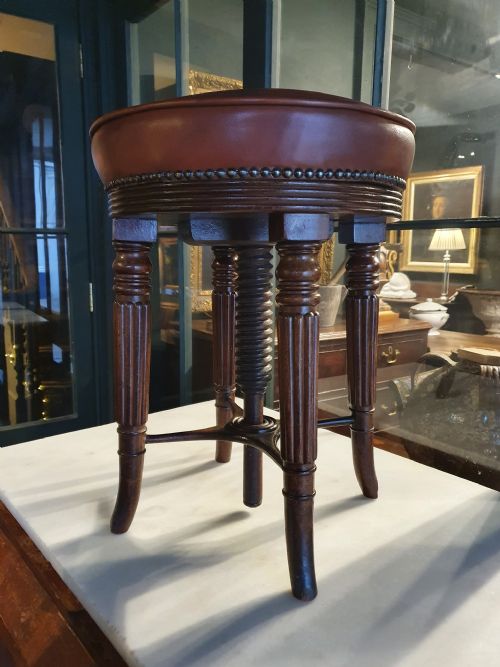
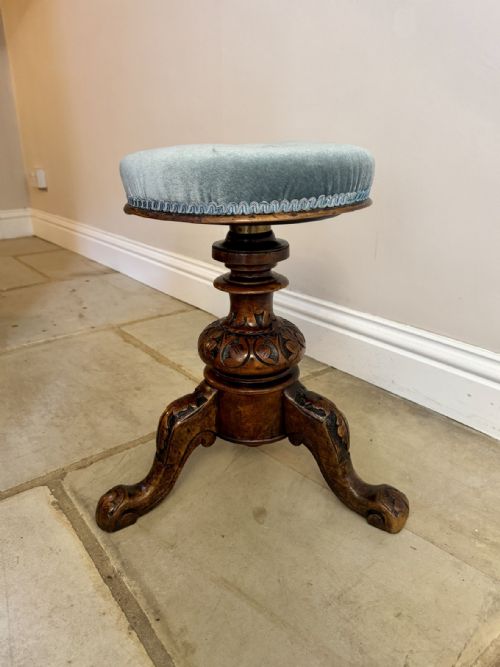
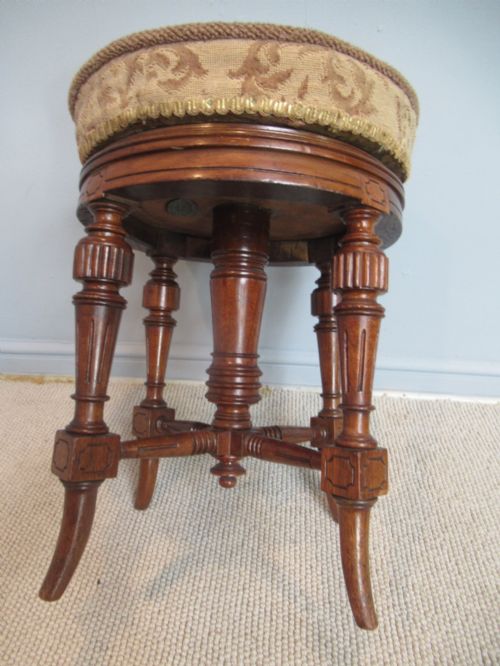
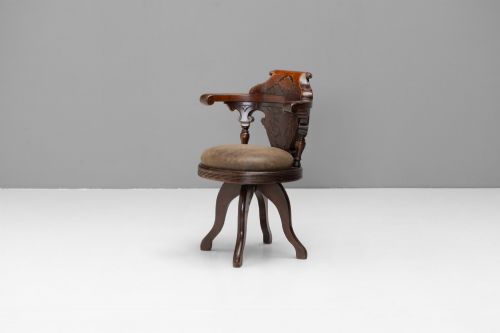
The upholstered swivel seat category encompasses nineteenth century piano stools, music chairs, revolving desk chairs and occasional bar stools. Buyers searching for an upholstered swivel seat encounter diverse forms, from Regency rosewood music stools to Victorian walnut piano seats with adjustable height mechanisms.
Piano stools and music chairs dominate the selection, designed originally for keyboard players who needed to adjust their height or pivot slightly while performing. Alongside these musical pieces, the listings include nineteenth century ships chairs, dressing table stools and Edwardian rise and fall swivel chairs.
Materials and construction
Cabinet makers utilised dense hardwoods including mahogany, walnut, rosewood and satinwood to build the sturdy frames required for a revolving mechanism. Brass components feature heavily in the adjustable screw tops, inlaid details and castors that allow the seats to turn smoothly.
Upholstery relies on traditional textiles such as leather, fabric and simulated rosewood finishes to provide padded comfort on top of the rotating wooden structures. Iron and metal parts occasionally support industrial or later twentieth century bar stool variations.
Upholstered Swivel Seat Retail Price Guide 2026
Typical asking prices for upholstered swivel seat among the pieces listed under this phrase on Sellingantiques today, from the lower quarter to the upper quarter. They describe what is for sale here now, not the wider market.
Musicians have spent centuries spinning in circles while pretending to adjust their sheet music.
Evaluating craftsmanship
Quality in a revolving seat lies in the smoothness and stability of the internal screw mechanism or pivot. Finer examples retain rigid joints and even rotation without excessive play in the central column.
Carved wooden details, quality timber grains such as figured walnut and rosewood, and intact brass inlay separate standard production items from superior pieces. The integration of the upholstery with the timber frame dictates the overall refinement of the object.
James Shoolbred·H Brooks and Co
The Upholstered Swivel Seat Glossary
- Rise and fall
- A mechanical system using a central wooden or metal screw to alter the height of the seat top.
- Revolving
- Describing a top that turns completely around on its central pivot or vertical axis.
- Music stool
- A seat specifically constructed for a piano or other keyboard instrument, often featuring an adjustable mechanism.
- Patent chair
- A piece incorporating a registered mechanical design by a specific nineteenth century maker or inventor.
- Simulated rosewood
- Painted or stained timber mimicking the rich grain and colour of genuine rosewood.
Upholstered Swivel Seat: Frequently Asked Questions
How do I adjust the height on these seats?
Most period examples use a threaded central screw hidden beneath the upholstered top. Turning the seat clockwise or anticlockwise raises or lowers the sitting surface.
Some Edwardian and later variants employ a rise and fall mechanism operated by a lever or internal spring system.
Were these seats only used at pianos?
While the majority originated as piano or music stools, the form adapted easily to other domestic uses. Makers produced similar revolving designs for dressing tables, writing desks and ship cabins.
The ability to turn made them practical wherever a seated person needed to shift direction without moving the entire base.
How can I tell a Victorian stool from a Regency one?
Regency pieces often display classical influence with brass inlay, gilt painted details and rosewood veneers. They favour restrained lines inherited from earlier neoclassical styles.
Victorian examples tend towards heavier carved walnut or mahogany frames, bulkier proportions and more robust rise and fall mechanisms.
What maintenance do the swivel mechanisms need?
The internal screw threads benefit from occasional light cleaning and appropriate lubrication to prevent binding. Keeping the timber upright and avoiding excessive sideways pressure protects the central spindle from bending.
Regularly checking any base screws or castors ensures the seat remains stable during rotation.