



Upholstered Ladderback
These upholstered ladderback chairs and settees bring traditional slatted timber frames paired with soft textile seats into living spaces and dining rooms.
Upholstered Ladderback
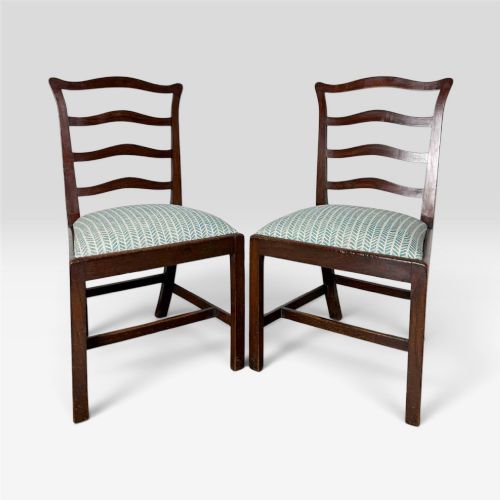
An upholstered ladderback brings together horizontal timber slats across a tall backrest and a padded seat upholstered in fabric or velvet. Buyers searching for an upholstered ladderback encounter forms spanning the eighteenth century, the Georgian era, and the Victorian period, alongside Edwardian revivals and later Arts and Crafts or Art Deco pieces.
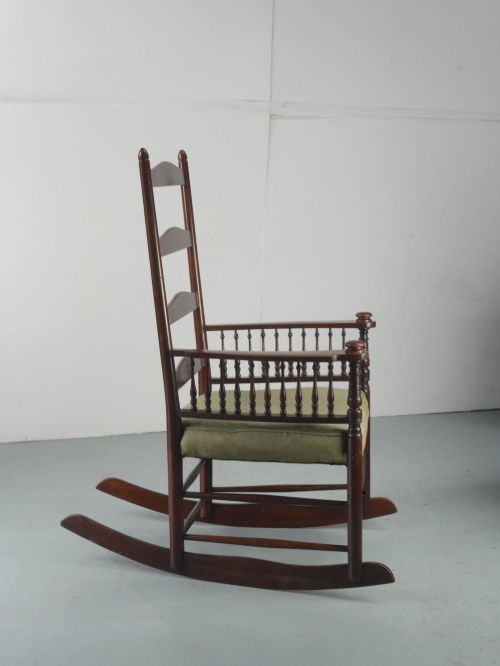
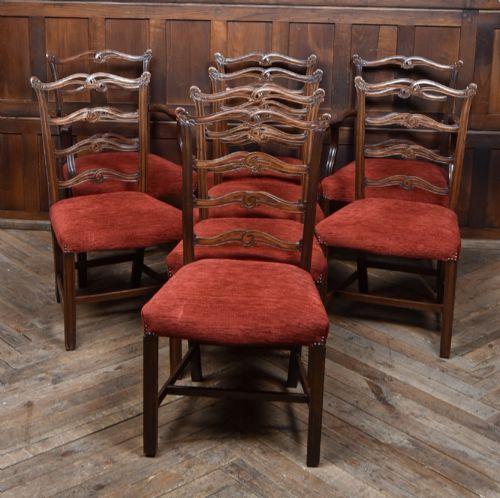
The selection on this page centres primarily upon dining chairs, often found in large sets of eight or eighteen, alongside occasional armchairs, settees, and rocking chairs. These seating forms draw on traditional cabinetmaking traditions, utilising woods such as mahogany, elm, and oak to create sturdy functional furniture for domestic interiors.
How they were made
Makers constructed these frames from solid timbers including mahogany, elm, and oak, frequently shaping the wood into distinct horizontal slats for the backrest. Lacquered finishes or polished surfaces protect the timber while highlighting the natural grain of the wood used across the various regional workshops.
Seats and back components incorporate textile coverings such as standard upholstery fabric, velvet, and occasionally inlaid woodwork details. Traditional joinery secures the ladderback frames, providing the structural integrity required to support daily seating use over centuries.
Upholstered Ladderback Retail Price Guide 2026
Typical asking prices for upholstered ladderback among the pieces listed under this phrase on Sellingantiques today, from the lower quarter to the upper quarter. They describe what is for sale here now, not the wider market.
Listings feature mahogany, elm, and oak timbers alongside fabric, velvet, and lacquered wood finishes across multiple periods.
What varies in quality
The refinement of the timber carving and the consistency across larger sets dictate the standing of an individual piece. Sets comprising eight or more matching chairs demand greater uniformity in timber selection and joinery than isolated single chairs.
The choice of upholstery material and the integrity of the original wood framework influence the overall execution. Pieces reflecting specific stylistic revivals, such as Chippendale or Georgian designs, depend on proportion and fidelity to period construction methods.
The Upholstered Ladderback Glossary
- Ladderback
- A chair style featuring horizontal wooden slats resembling the rungs of a ladder set into the upright posts of the backrest.
- Settee
- A long wooden or upholstered seat with a back and arms, designed to accommodate multiple people.
- Chippendale Revival
- A decorative style popular in the nineteenth and twentieth centuries that imitates the mid-eighteenth-century designs of Thomas Chippendale.
- Elm
- A durable hardwood with an interlocking grain, frequently utilised for country-made seating and structural chair components.
Upholstered Ladderback: Frequently Asked Questions
What periods do these chairs come from?
These pieces date from the eighteenth century through the Georgian and Victorian eras to Edwardian times and the early twentieth century. Later examples often interpret earlier styles through revival movements.
Craftsmen across these periods utilised locally available hardwoods and traditional upholstery methods suited to the domestic interiors of their time.
How were ladderback chairs used historically?
Ladderback seating served primarily around dining tables or as everyday functional chairs within domestic rooms. Sets of dining chairs accommodated large gatherings in formal households.
Armchairs, settees, and rocking chairs provided specialised seating options for parlours, bedrooms, and studies.
What materials are used in these pieces?
Frames are constructed from solid woods including mahogany, elm, and oak, sometimes finished with lacquered wood treatments. Seating surfaces feature various textiles such as standard upholstery fabric and velvet.
Certain Edwardian examples incorporate decorative wood inlays into the mahogany framework to enhance the visual appearance of the chair back.