

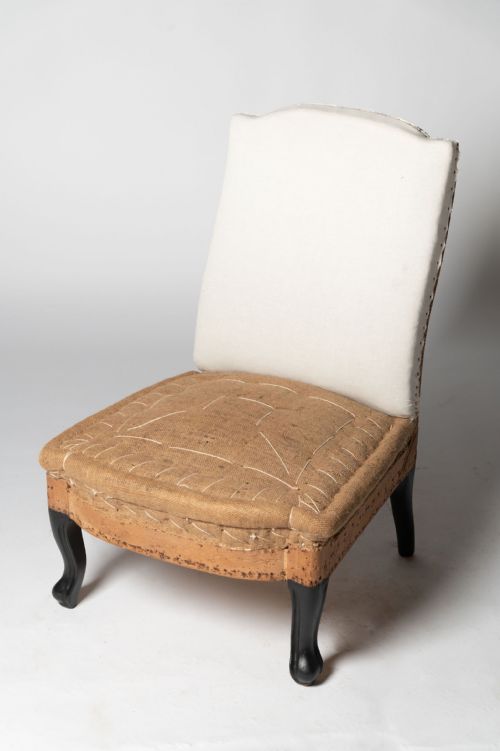
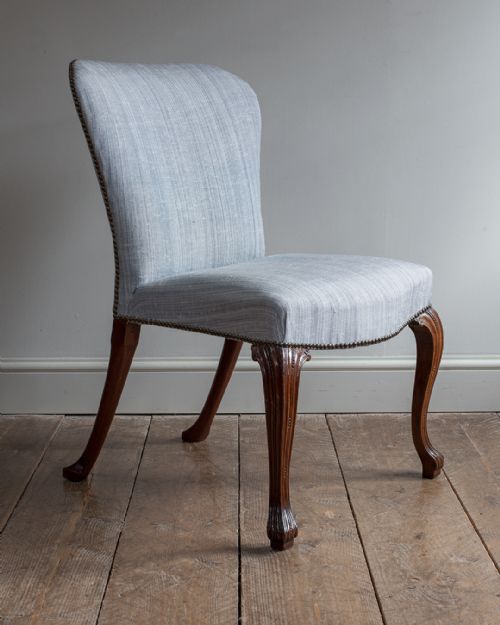
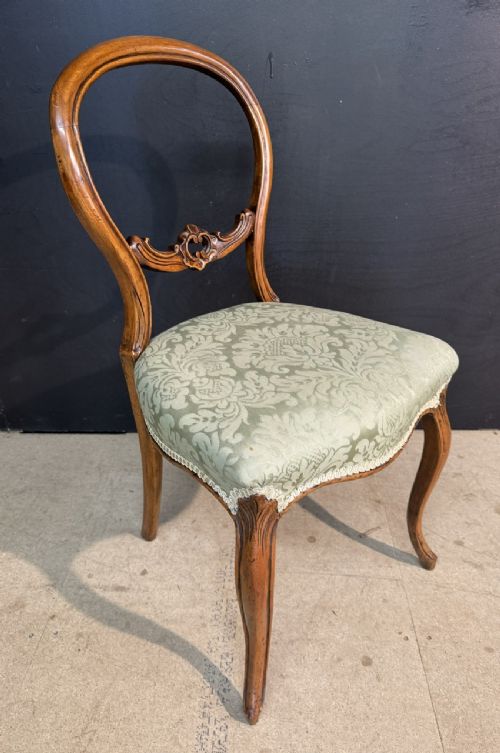


Upholstered Dressing Table Chair
An upholstered dressing table chair is a low-slung seat designed for the vanity, combining period woodwork with soft textiles for the bedroom.
Upholstered Dressing Table Chair
Makers and designers across these periods utilised diverse timbers including walnut, mahogany, oak, and sycamore to build frames that range from plain side chairs to elaborate rise-and-fall music stools and button balloon-back nursing chairs.
The seating surface is typically covered in fabric, velvet, textile, hessian, calico, or tweed linen, often paired with new flowery top covers or needlepoint work following professional restoration.
How they were made
Traditional cabinetmakers constructed these frames using solid hardwoods such as walnut and mahogany, shaping elements like cabriole legs, twisted rope supports, and carved details by hand.
Upholstery techniques combined supportive internal webbing with stuffings of hair or fibre, enclosed beneath outer layers of textile, velvet, calico, or needlepoint.
Later 19th and early 20th-century workshop methods incorporated mechanical adjustments for rise-and-fall actions, brass inlay, and painted surfaces on woods like sycamore and oak.
Upholstered Dressing Table Chair Retail Price Guide 2026
Typical asking prices for upholstered dressing table chair among the pieces listed under this phrase on Sellingantiques today, from the lower quarter to the upper quarter. They describe what is for sale here now, not the wider market.
Listings feature woods such as walnut, mahogany, oak, and sycamore paired with fabrics ranging from needlepoint to modern tweed.
What varies in quality
The grade of timber selection and the sharpness of hand-carving distinguish standard production items from finer regional or metropolitan workshop pieces.
The integrity of the original frame construction, particularly around joints, cabriole legs, and mechanical rising mechanisms, dictates the structural longevity of the seat.
The standard of upholstery materials, whether traditional needlepoint or replacement decorative fabric, reflects the care taken during restoration.
The Upholstered Dressing Table Chair Glossary
- Cabriole leg
- A furniture leg that curves out and then narrows inward, imitating an animal's curving leg. This shape appears frequently on 19th-century and revival-style dressing stools.
- Nursing chair
- A low-seated chair designed for feeding infants or general bedroom use. They often feature buttoned balloon backs and generous upholstery.
- Slipper chair
- An upholstered bedroom chair with short legs that sits low to the floor. These were traditionally used while putting on shoes or sitting at a vanity.
- Rise and fall
- A mechanical feature allowing the seat height to be adjusted by rotating the top. This mechanism is commonly found on piano and dressing table stools.
Upholstered Dressing Table Chair: Frequently Asked Questions
What is a dressing table chair?
A dressing table chair is a compact seat designed specifically for use at a bedroom vanity or dressing table. These pieces range from backless stools to low-backed nursing chairs and small armchairs.
They combine a supportive wooden frame with a cushioned upholstered top, allowing for comfortable daily use during grooming.
How do I date a Victorian dressing chair?
Dating a Victorian chair involves examining the primary timber, such as walnut or mahogany, and the specific joinery methods used in the frame. Stylistic markers like buttoned balloon backs or carved cabriole legs also point directly to mid-to-late 19th-century manufacturing.
Many pieces bear the typical proportions and heavier decorative carving characteristic of the Victorian era.
Can I use a piano stool at a dressing table?
Piano stools and music stools share the same compact proportions and adjustable mechanisms often required for a vanity. Many period examples function equally well in either role due to their similar height and footprint.
Rise-and-fall versions are particularly adaptable for different table heights.
Are these chairs suitable for modern bedrooms?
These period seats offer compact dimensions that fit easily into modern bedroom layouts without overwhelming the available floor space. Their varied upholstery finishes allow them to complement both contemporary and traditional interior schemes.
Many examples feature newly restored covers that blend antique frames with modern soft furnishings.