




Two Tier Tray Table
A two tier tray table provides double the surface area for serving drinks or displaying objects across various historical periods.
Two Tier Tray Table
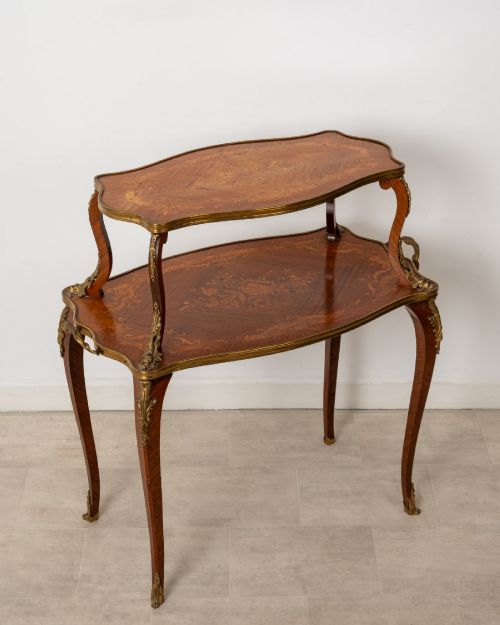
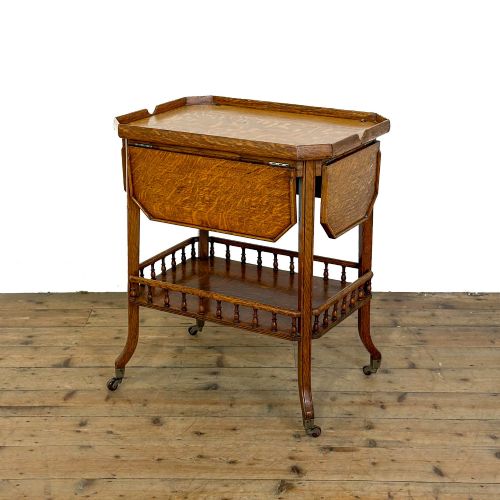
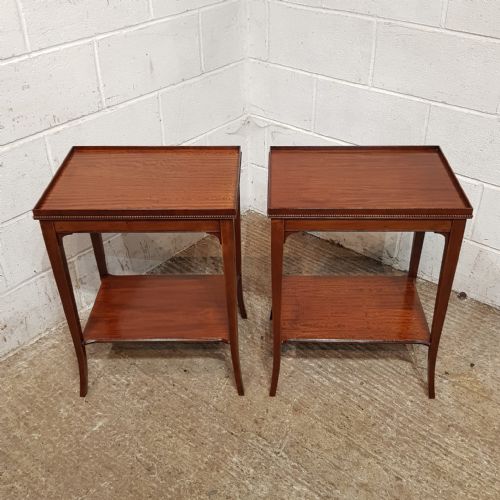
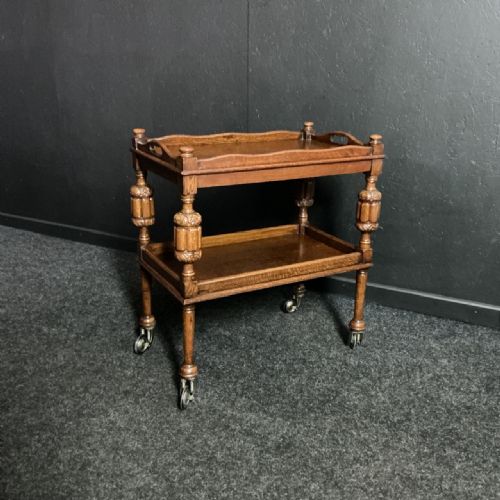
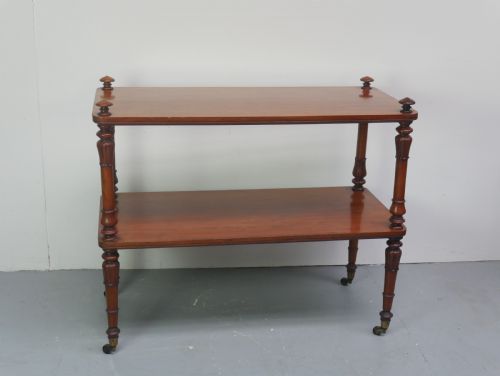
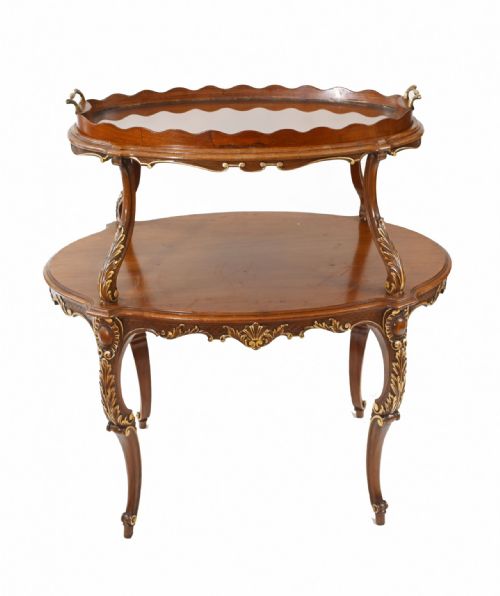
When searching for a two tier tray table, buyers encounter versatile furniture pieces designed for serving or display, spanning the Georgian, Victorian, and Edwardian eras. These objects take the form of occasional tables, tea trolleys, etagères, and dumb waiters.
The most common examples on this page are Edwardian mahogany pieces alongside earlier 19th-century variants. They combine tiered surfaces with raised rims or removable trays to hold items securely.
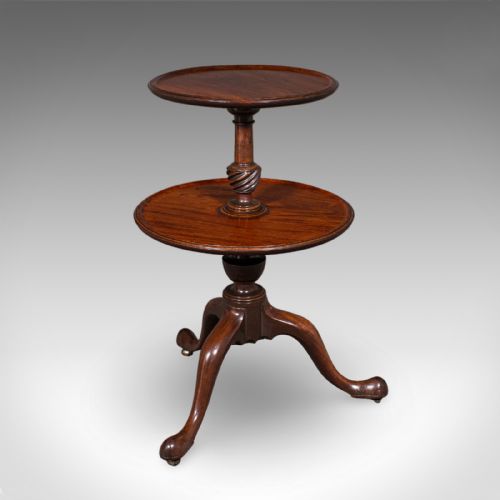
Makers and workshops utilised various forms, from tripod revolving dumb waiters to wheeled trolleys and stationary side tables. Each serves a practical function while reflecting the decorative tastes of its period.
How they were made
Cabinet makers constructed these pieces primarily using solid timbers and veneers such as mahogany, satinwood, oak, and kingwood. These woods provided both structural stability and decorative grain patterns.
Many examples incorporate contrasting inlay work, brass handles, or glass inserts to enhance the upper and lower surfaces. Wheeled models utilise metal castors for mobility, while stationary versions rest on fixed legs or tripod bases.
The inventory spans the 18th, 19th, and early 20th centuries, covering Regency, Victorian, and Edwardian styles.
What varies in quality
The distinction between standard and superior pieces rests on the precision of the joinery and the selection of timber figures. Finer examples display carefully matched veneers and subtle string inlay rather than plain surfaces.
Hardware quality also separates grades, with heavy brass mountings, castors, and gallery rails indicating superior manufacture. The integration of removable trays or revolving mechanisms shows greater mechanical ingenuity in the workshop.
Gillow
The Two Tier Tray Table Glossary
- Étagère
- A set of open shelves or tiers for displaying small objects. French cabinet makers popularized this form during the 19th century.
- Dumb waiter
- A tiered serving table used to hold dishes or drinks without requiring a servant. These often feature revolving circular trays.
- Marquetry
- Decorative veneer work formed by fitting pieces of wood and shell into a design. It creates elaborate geometric or floral patterns across the tabletop.
- Gallery
- A raised wooden or metal rim around a tray or table edge. It prevents items from sliding off during transport or use.
Two Tier Tray Table: Frequently Asked Questions
What is a two tier tray table used for?
These pieces functioned historically as serving stands for afternoon tea, side tables for holding books, or portable bars for drinks.
The lower tier offered additional storage while keeping the top surface clear for active use during social gatherings.
How do I identify an Edwardian two tier tray table?
Edwardian examples often feature light mahogany construction combined with satinwood crossbanding and delicate inlaid details.
They tend to emphasise lighter forms and smaller proportions compared to heavier Victorian and Georgian equivalents.
Are the trays removable on these tables?
Certain models incorporate lift-off wooden or glass trays designed to function independently for serving guests.
Fixed tiers remain permanently attached to the support structure via wooden framing or brass columns.
What is the difference between an etagere and a dumb waiter?
An etagere serves primarily as a decorative display stand with multiple open shelves for ornaments and small items.
A dumb waiter is built for practical dining service, frequently featuring rotating circular tiers supported on a central pillar.