
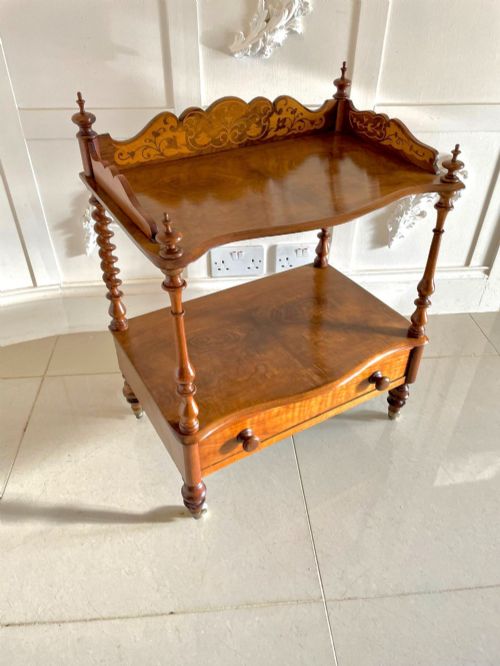
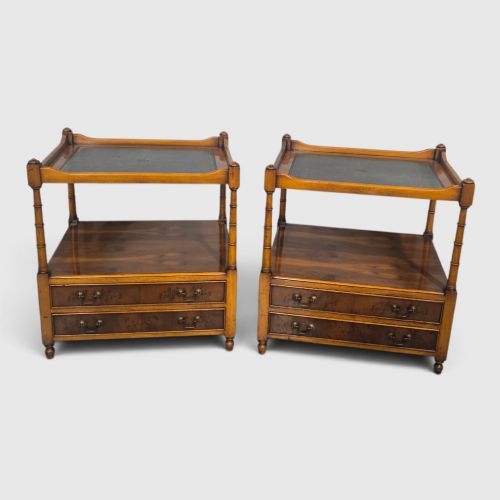
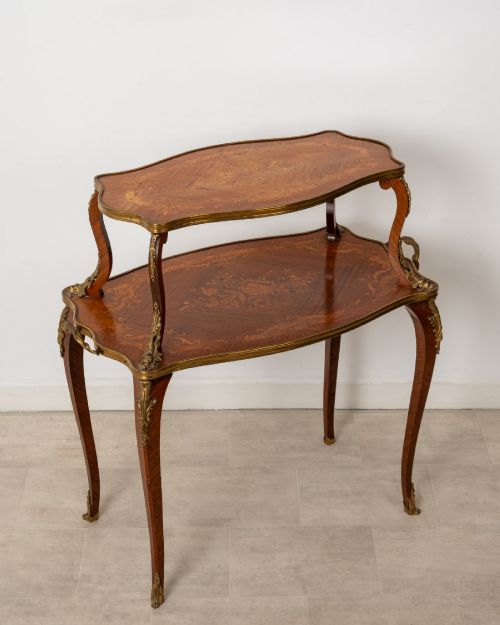
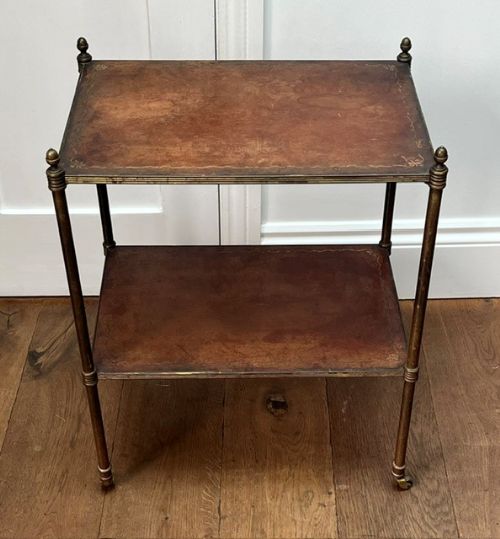
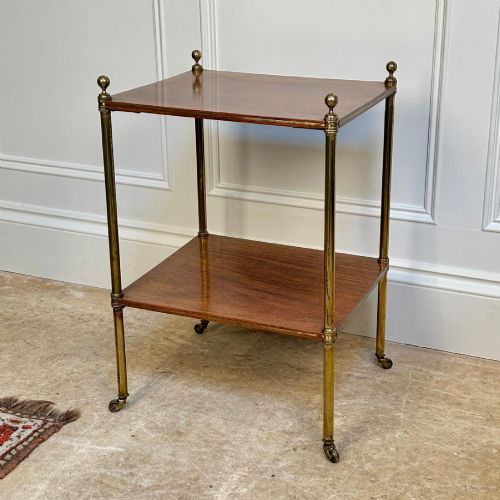
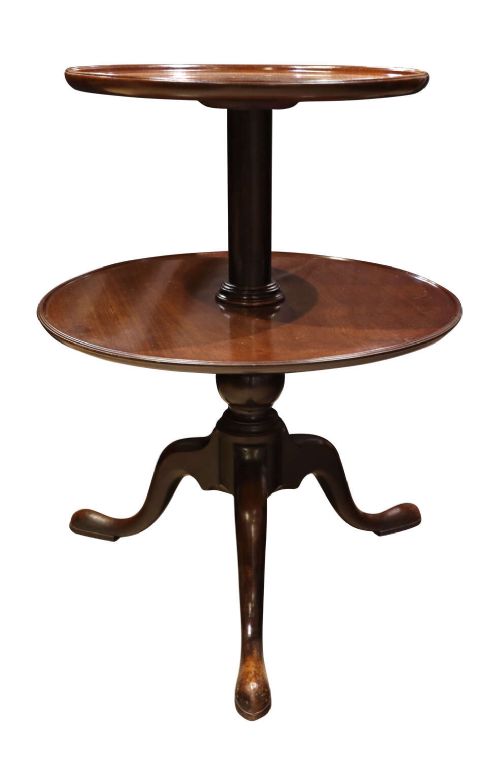
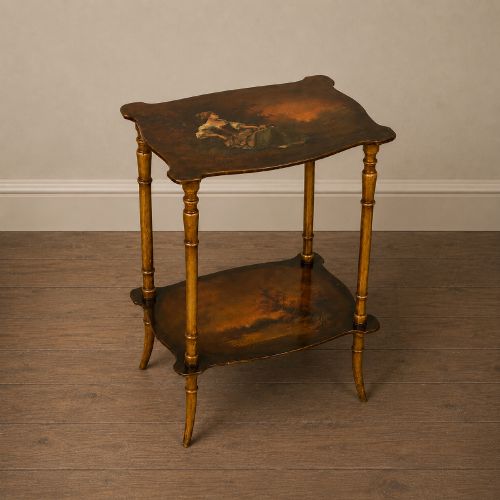
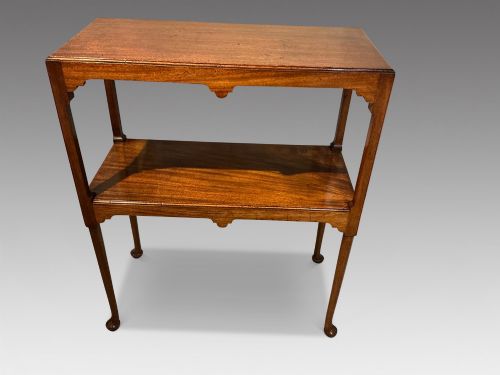
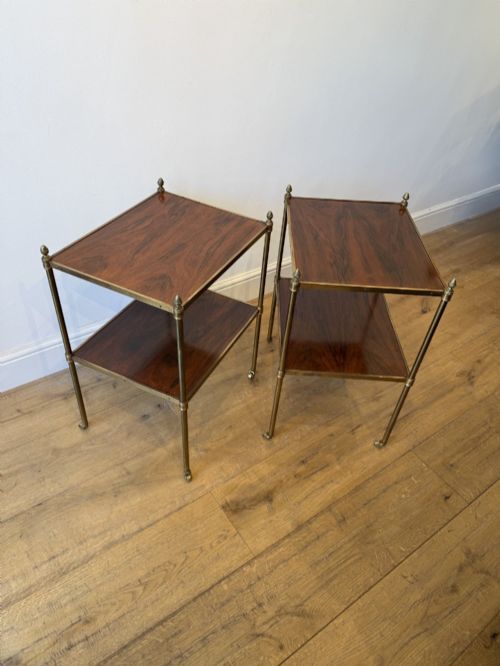
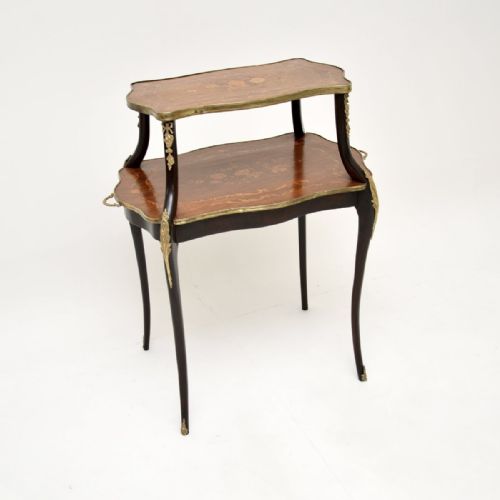
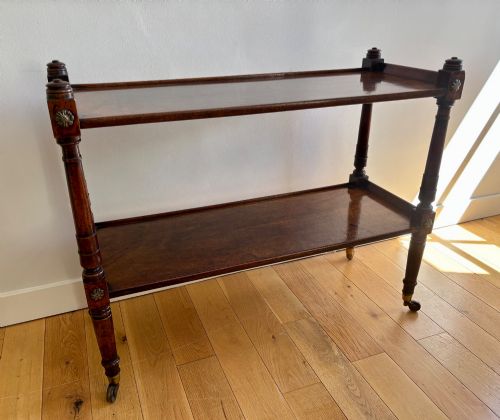
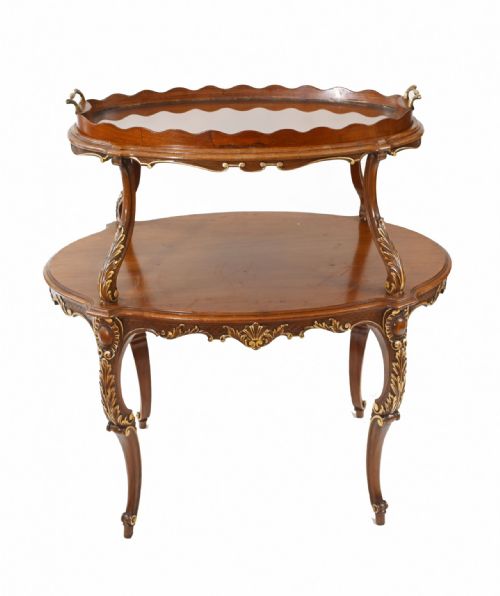
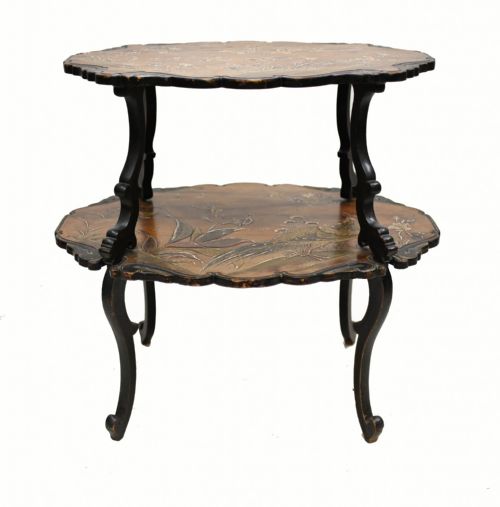
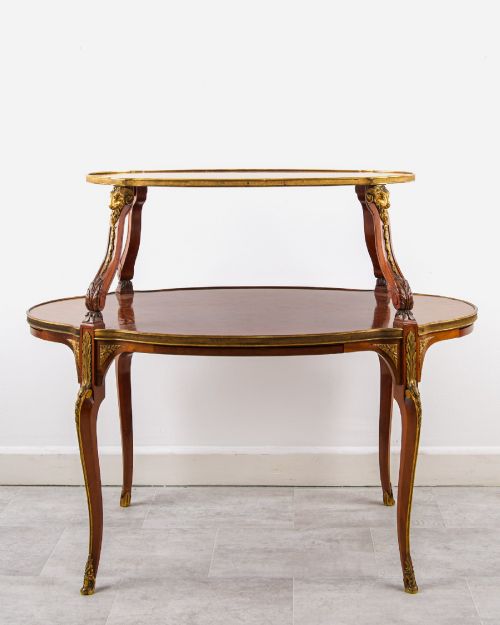


Two Tier Etagere Table
A two tier etagere table offers dual display surfaces with refined proportions, suiting collectors seeking practical elegance.
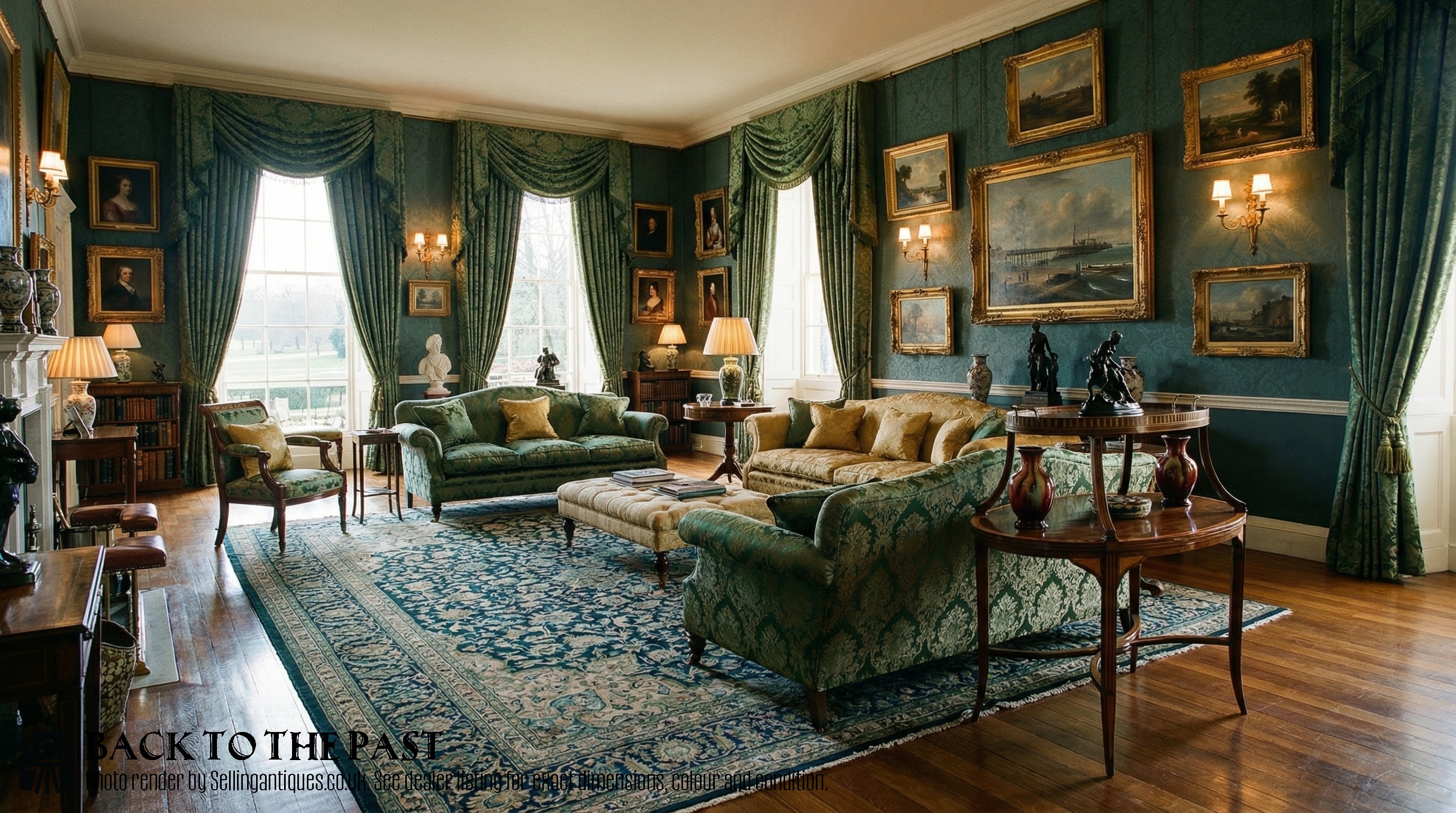
Two Tier Etagere Table
A two tier etagere table provides two distinct display platforms arranged vertically, often functioning as an occasional, lamp, or side table. When exploring a two tier etagere table, you encounter pieces spanning from the late eighteenth century through the Edwardian era and into the early twentieth century.
The form appears frequently in French styles with marquetry and ormolu mounts, alongside English iterations executed in mahogany and satinwood. Makers often configured these as oval, rectangular, or tripod designs to serve as tea tables, lamp stands, or bedside surfaces.
Victorian and Edwardian examples dominate the selection, combining functional shelving with decorative inlay, brass framing, or galleried edges. These tables bridge the gap between utility and display, offering compact footprints with elevated visual presence.
How They Were Made
Cabinetmakers constructed these tables using dense timbers such as mahogany, walnut, and rosewood, frequently embellishing surfaces with satinwood, kingwood, and ebony marquetry. Brass framing and ormolu mounts provide structural definition and decorative contrast to the timber tiers.
French workshops integrated intricate floral marquetry and gilt-bronze mounts, whilst English makers favoured Sheraton Revival satinwood banding and fine mahogany veneers. Lacquered brass and glass trays appear alongside traditional timber construction in later pieces.
The inventory spans the Georgian period through the Edwardian era, with strong representation from nineteenth-century French workshops.
What Varies in Quality
The refinement of the marquetry inlay and the crispness of the ormolu or brass mounts distinguish superior examples from standard production. Cabinetmakers who employed finely figured woods like plum pudding mahogany or burr walnut achieved a greater depth of finish.
Structural joinery, the weight of the brass gallery, and the precision of the veneer matching determine the overall calibre of the piece. Tables bearing attribution to notable makers or exhibiting meticulous hand-cut stringing command stronger visual presence.
Edwards & Roberts·W. Turner Lord & Co
The Two Tier Etagere Table Glossary
- Etagere
- A piece of furniture consisting of a set of open shelves for displaying small objects. The form provides multiple tiers supported by slender columns or legs.
- Marquetry
- Decorative veneer work in which pieces of wood, shell, or ivory are fitted into a ground to form geometric or floral designs. This technique adds pictorial richness to table tops and shelves.
- Ormolu
- Gilt-bronze mounts applied to furniture for decorative enrichment. French cabinetmakers utilised these cast elements to highlight corners, feet, and aprons.
- Whatnot
- A nineteenth-century multi-shelved piece of furniture used for storage or display. It shares close functional similarities with the etagere.
- Gallery
- A raised decorative border of brass or wood edging the top surface of a table. It prevents small items from sliding off the tier.
Two Tier Etagere Table: Frequently Asked Questions
What is a two tier etagere table used for?
These tables served primarily as occasional surfaces for holding lamps, tea services, or decorative ornaments. The dual tiers maximised display space without increasing the footprint in smaller reception rooms.
Today, they function effectively as bedside stands, lamp tables, or accent pieces in drawing rooms. Their open shelving allows for the presentation of books, ceramics, or small collections.
How do I identify an Edwardian etagere?
Edwardian examples typically feature lighter timbers such as satinwood, mahogany, and rosewood with delicate stringing and inlaid motifs. The influence of Sheraton Revival design manifests in graceful tapered legs and refined proportions.
These pieces often incorporate brass galleries or framing, reflecting the lighter aesthetic of the early twentieth century compared to earlier Victorian furniture.
What distinguishes French etageres from English ones?
French tables from the nineteenth century frequently showcase elaborate marquetry, kingwood veneers, and ormolu or bronze mounts. The styling leans towards Louis XV or Napoleon III revivals with curved contours and decorative gilt highlights.
English pieces generally rely on structural mahogany or satinwood, emphasising clean architectural lines and subtle stringing rather than heavy gilt mounts.
Are these tables sturdy enough for daily use?
Despite their slender columns and decorative framing, period etageres were built to hold lamps, books, and tea wares. The tier construction distributes weight across multiple levels while maintaining stability.
Careful placement away from direct heat sources ensures the veneers and timber joints remain secure over time. Normal domestic use suits these tables well.