





Two Light Pendant
A two light pendant brings focused overhead illumination to compact spaces, combining brass, bronze, and glass across periods from the Edwardian era to the mid-twentieth century.
Two Light Pendant
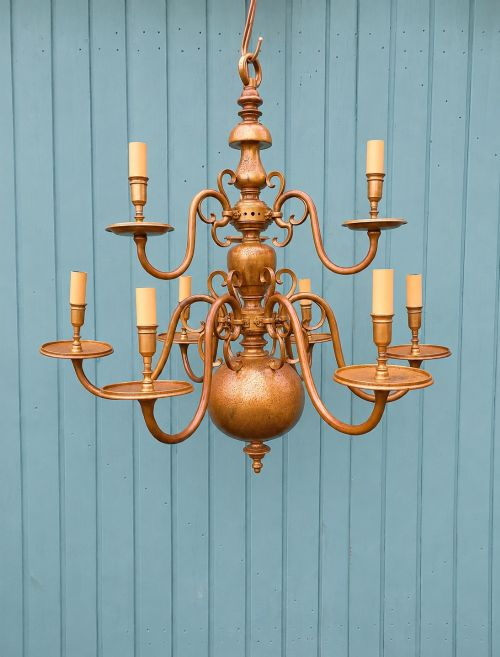
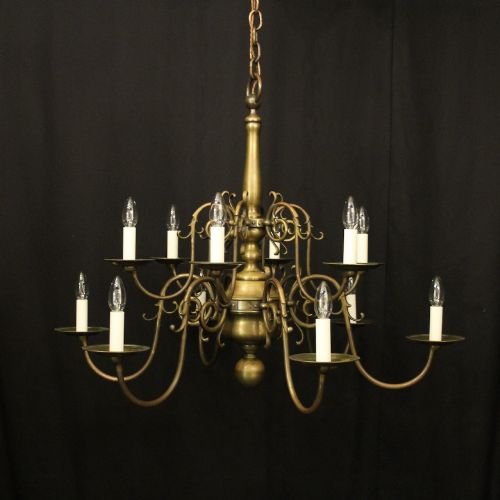
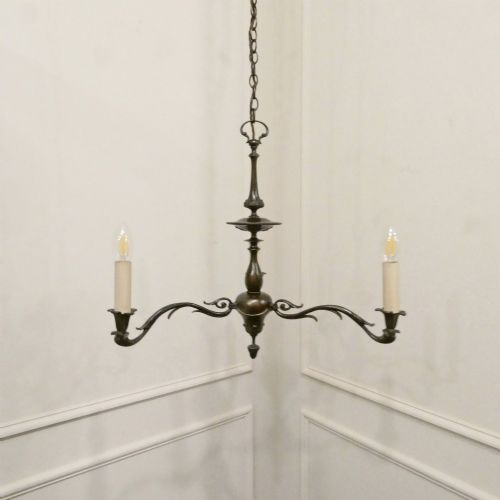
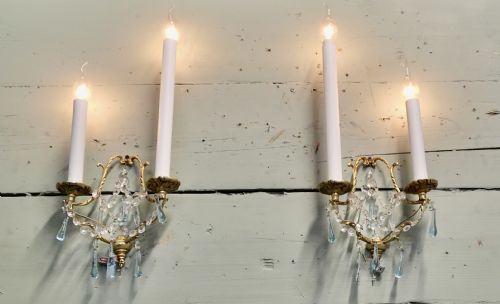
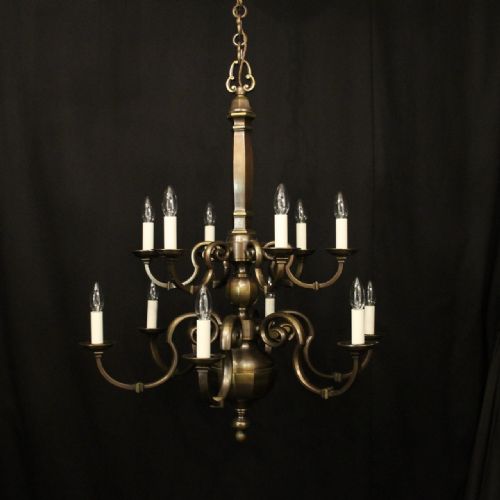
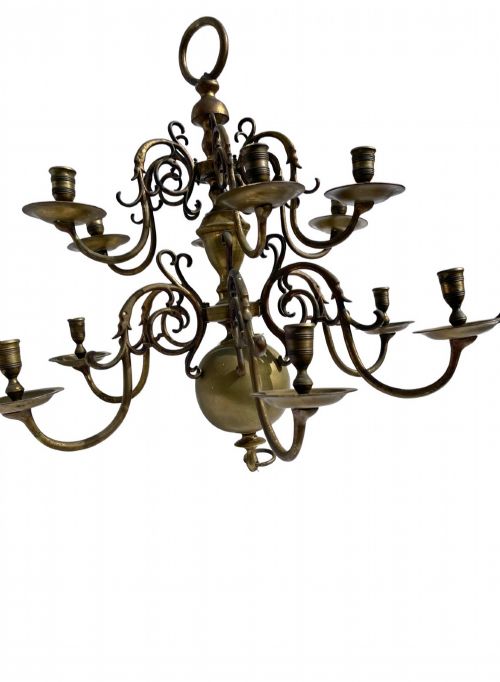
A two light pendant is a ceiling-hung lighting fixture designed to hold two distinct lamps, appearing in forms such as hall lanterns, pendant lights, and smaller chandeliers. When exploring this selection, buyers frequently encounter pieces originating from the Edwardian period, the early twentieth century, and the 1940s.
The objects span diverse stylistic traditions, including French Chateau, Gothic Revival, and Art Nouveau. These variations reflect the aesthetic priorities of their respective eras, utilising specific mounting configurations and drop lengths suited to domestic interiors.
How they were made
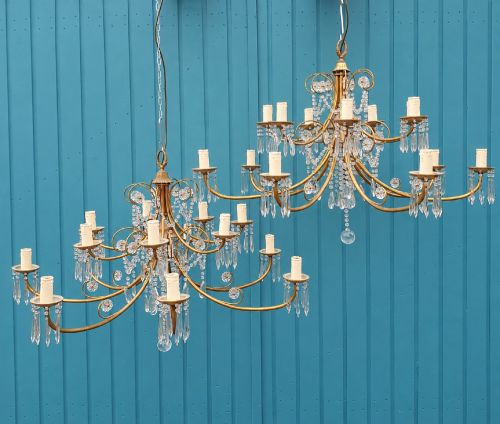
Construction relies heavily on metals such as brass, bronze, gilt brass, and ormolu, often shaped into frames or arms to support the electrical or candle-burning components. Makers integrated glass, crystal, and cut glass elements to diffuse and reflect the light emitted from the twin bulbs.
Techniques range from cast bronze frameworks to spun brass ceiling plates, sometimes paired with moulded glass globes or hanging crystal spikes. The assembly demonstrates period-specific metalworking skills, joining structural metal branches with decorative cast or chased mountings.
Two Light Pendant Retail Price Guide 2026
Typical asking prices for two light pendant among the pieces listed under this phrase on Sellingantiques today, from the lower quarter to the upper quarter. They describe what is for sale here now, not the wider market.
Periods represented span from the 18th century through the 19th century, Edwardian era, 1900, 1910, 1920, 1930, and 1940.
What varies in quality
Quality differences emerge in the weight and substance of the metal components, distinguishing solid cast bronze or heavy brass from lighter pressed alternatives. Finer examples display crisper chasing on ormolu surfaces and superior clarity in the cut glass or crystal elements.
The integrity of the structural joints and the proportion of the hardware relative to the glass shades determine the overall refinement of the pendant. Superior pieces maintain balance across their dual-light framework, ensuring both decorative presence and mechanical stability.
The Two Light Pendant Glossary
- Pendant light
- A hanging lighting fixture suspended from the ceiling by a single cord, chain, or rod. This form directs illumination downward into a specific area of a room.
- Ormolu
- Gilded bronze produced by applying a finely ground high-carat gold-mercury amalgam to a bronze object. The technique creates a durable, rich golden surface finish popular in decorative lighting.
- Spelter
- An alloy of zinc used as a cheaper substitute for bronze or brass in decorative figures and mounts. It takes detail well but possesses less structural strength than copper-based alloys.
- Rise and fall
- A mechanical pulley system integrated into a ceiling light that allows the height of the fixture to be adjusted manually. This mechanism is frequently found on Edwardian and Art Nouveau pieces.
Two Light Pendant: Frequently Asked Questions
Where do I hang a two light pendant?
These fixtures suit smaller spaces such as hallways, landings, or compact dining areas where massive multi-arm chandeliers would overwhelm the room.
The dual-light configuration provides adequate illumination for focused tasks or ambient lighting without requiring a high ceiling clearance.
How do I date a brass pendant?
Dating relies on examining the manufacturing techniques, wiring channels, and stylistic motifs present in the metalwork and glass components.
Edwardian and early twentieth-century examples often exhibit Art Nouveau curves or Gothic Revival geometry that distinguish them from later mid-century designs.
Are these pendants wired for modern use?
Most antique lighting fixtures require inspection and professional rewiring to meet current electrical standards before installation in a home.
Buyers should consult a qualified electrician to ensure the internal components safely accommodate contemporary bulbs and voltages.
What is the difference between brass and ormolu?
Brass is an alloy of copper and zinc used structurally for arms, chains, and frames throughout various historical periods.
Ormolu specifically denotes mercury-gilded bronze, offering a deeper, more lustrous golden surface typically reserved for high-status decorative metalwork.