

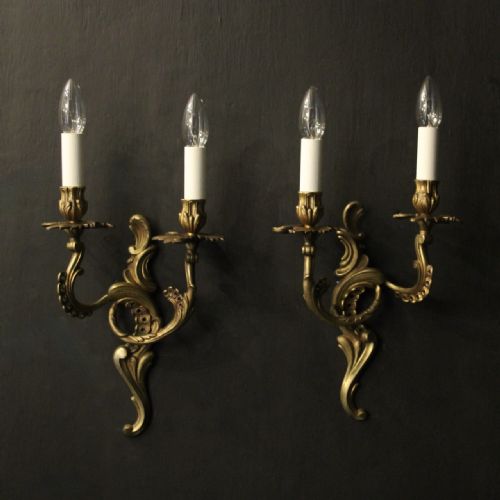


Two Arm Sconces
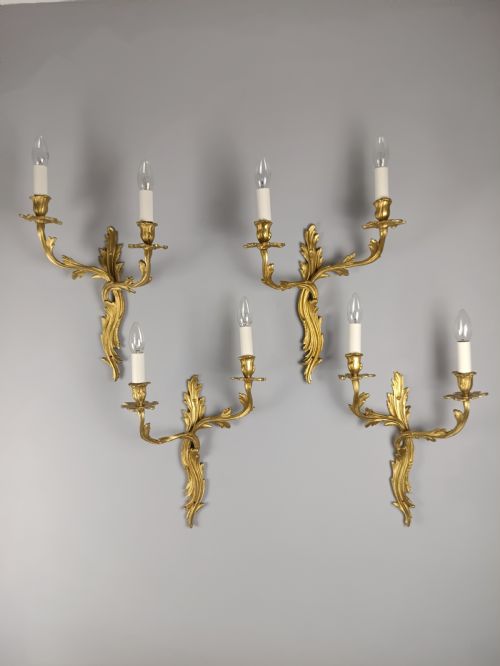
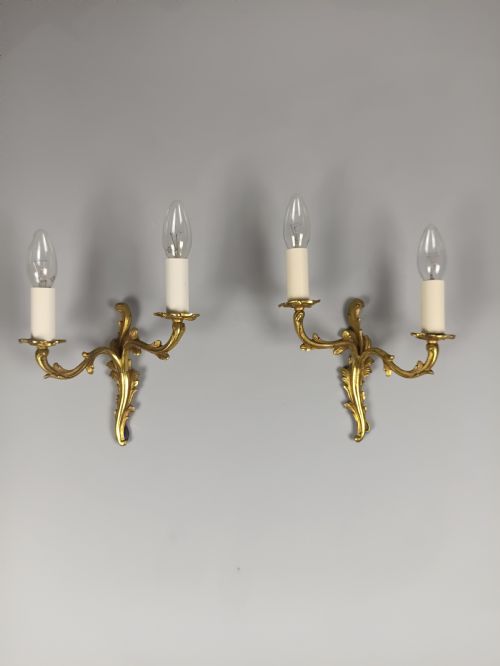
Two arm sconces provide balanced illumination along a wall, combining functional metalwork with decorative candle or bulb holders.
Two Arm Sconces
Two arm sconces direct light from twin branches mounted directly onto vertical surfaces. When searching for two arm sconces, buyers encounter lighting fixtures designed for walls rather than freestanding tables or ceilings.
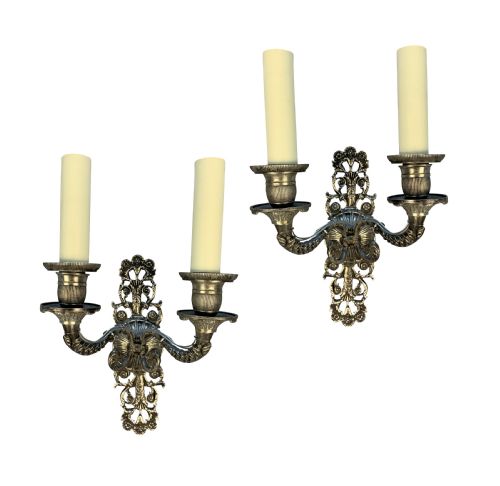
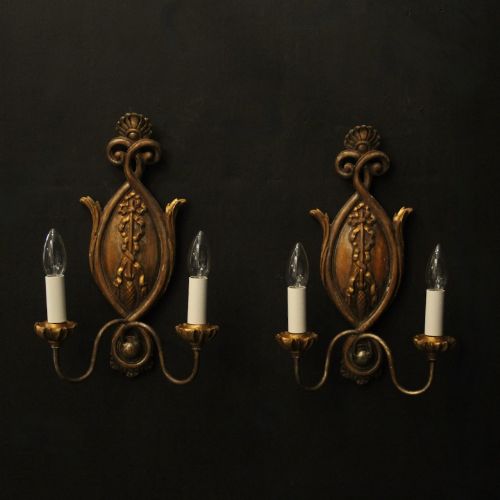
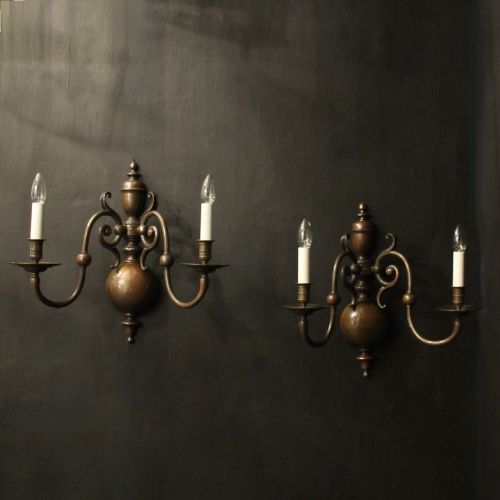
The selections on this page span several periods, reaching from the nineteenth century through the Edwardian era and into the nineteen-thirties. English and French workshops dominate the origins, presenting styles from Empire and Rococo to Neoclassical and Florentine.
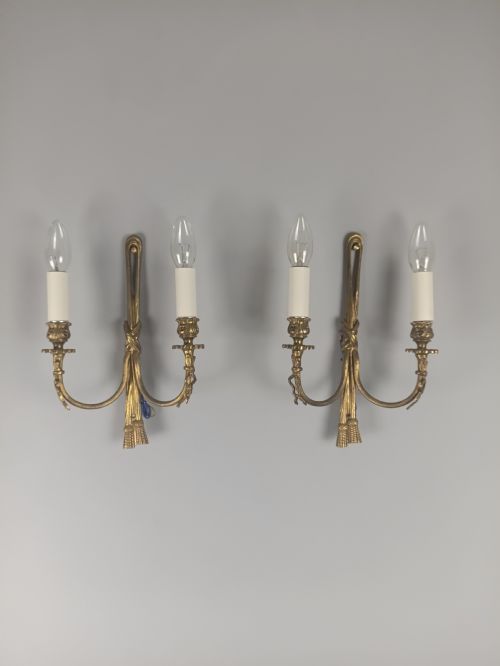
Most examples appear as matched pairs, though individual pieces and larger sets also emerge. The forms range from simple ribbon motifs and leaf carvings to substantial gilded bronze formations.
Materials and construction
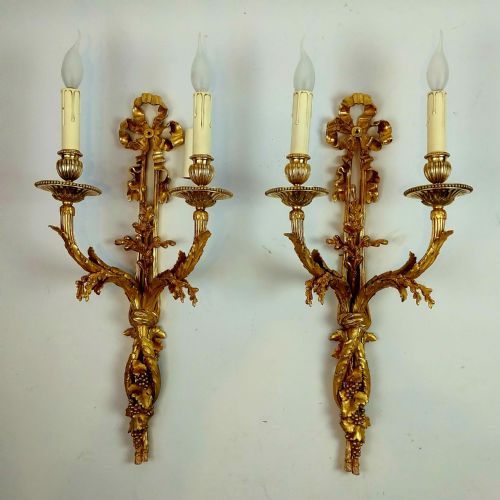
Makers utilised cast and chased brass, bronze, and ormolu as the structural core for these branches. Surface treatments relied heavily on gold leaf, gilt finishes, and silver plating to catch the ambient light.
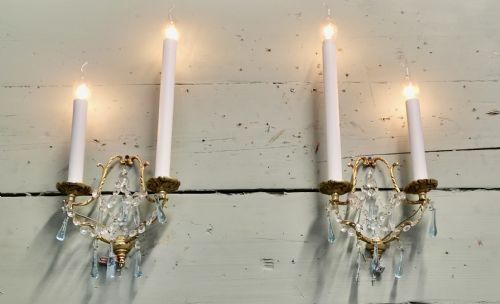
Decorative elements incorporate carved giltwood, polychrome paint, and suspended crystal glass drops. Metal components were joined mechanically or soldered, allowing twin arms to extend securely from a central backplate.
Some nineteenth-century French sconces feature sculpted ribbon motifs tied permanently in bronze bows.
Distinctions in craftsmanship
The fineness of the chased detail on the bronze or brass surface separates standard production from superior work. Crisp leaf motifs, clean casting lines, and depth of relief indicate a higher standard of manufacture.
The application and preservation of the original gilding or silver plating affect the overall visual weight of the fixture. Substantial cast metal plates provide better structural rigidity than thin stamped alternatives.
The Two Arm Sconces Glossary
- Ormolu
- Gilded bronze produced by applying a mercury and gold amalgam to a bronze base and heating it. This technique creates a durable, golden metallic surface seen on finer French lighting.
- Girandole
- An ornamental branched wall light or candelabrum with a mirror or reflective backplate. The reflective surface multiplies the illumination cast by the candles.
- Giltwood
- Timber that has been coated with a thin layer of gold leaf or powder. It frequently appears in Florentine and decorative wall lights.
- Toleware
- Enamelled or lacquered sheet metal items often painted with floral or pastoral scenes. In lighting, it provides colourful, shaped backplates and drip pans.
- Backplate
- The structural section that fastens directly to the wall and supports the projecting arms. It often carries the primary decorative motif of the fixture.
Two Arm Sconces: Frequently Asked Questions
How do I install wall sconces safely?
Wall sconces require secure mounting to wall studs or appropriate plaster anchors to support the weight of the metal arms. Electric wiring must connect securely to a junction box behind the backplate.
Older fixtures often require professional rewiring to meet modern safety standards before installation. Ensuring the bracket aligns solidly with the wall prevents any shifting over time.
Where should I place wall sconces in a room?
Sconces perform well flanking a fireplace, mirror, or doorway to establish symmetrical accent lighting. Positioning them at eye level ensures balanced vertical illumination.
In hallways or staircases, spacing multiple pairs along the length of the wall maintains consistent ambient brightness. The twin arms distribute light broadly across the surface behind them.
How do I clean antique brass and bronze?
Dust the metal surfaces gently with a soft, dry cloth to prevent the accumulation of grime. Avoid aggressive metal polishes that can strip away original gilding or patination.
Preserving the aged finish maintains the historical character of the piece. If moisture is necessary, use a barely damp cloth and dry the metal thoroughly immediately afterward.
What is the difference between ormolu and gilt brass?
Ormolu consists of mercury gilding applied specifically to a cast bronze substrate, typical of French neoclassical and empire pieces. It yields a rich, deep golden tone with high durability.
Gilt brass utilises a brass alloy base with gold leaf or modern plating techniques. Brass tends to be lighter in weight and brighter in initial appearance than heavy bronze.