


Twisted Stem Candlesticks
Twisted stem candlesticks bring sculptural movement to a room, catching the light in brass, crystal glass and wood across Victorian and Edwardian designs.
Twisted Stem Candlesticks
Twisted stem candlesticks are domestic and ecclesiastical lighting accessories defined by their characteristic spiral or helical shafts. When you search for twisted stem candlesticks, you encounter forms ranging from heavy metal desk pieces to tall floor and table models.
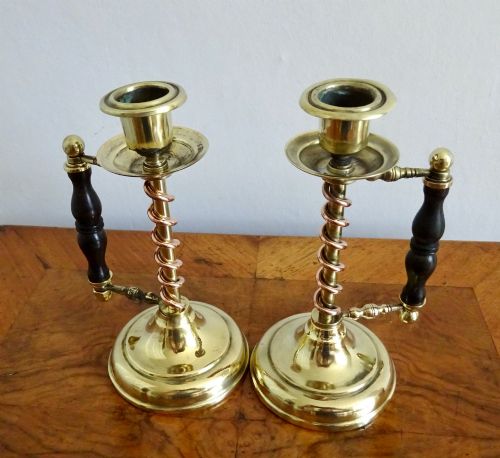
The selections here span the nineteenth century through the early twentieth century, including the Victorian, Edwardian, and Art Deco periods. You are most likely to meet brass examples featuring barley twist columns, alongside crystal glass pairs and occasional combinations of mahogany and copper.
How they were made
Metal versions utilise cast and turned brass or copper, often combining separate components on fitted bases or trays with integral handles. Craftsmen shaped these sturdy pillars to support heavy candles or converted them later into table lamps.
Glass examples rely on mould-blown techniques to achieve the double helix and crystal twists, finished with domed and folded feet. Wood pieces pair turned mahogany shafts with metal mountings to create contrasting textures.
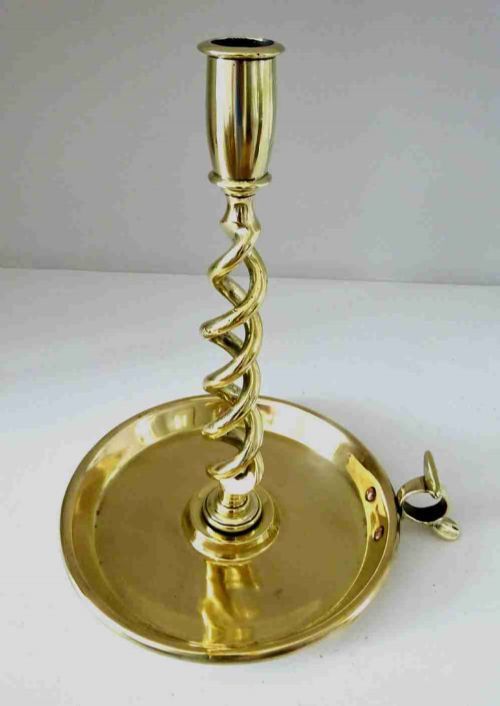
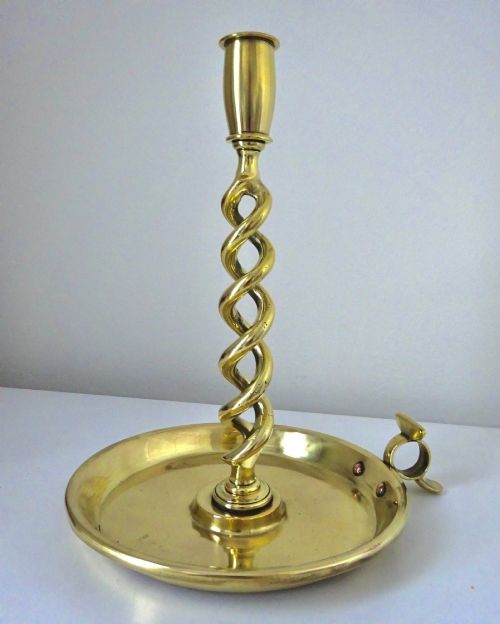
One Victorian brass candlestick comes equipped with its own fitted tray and handle, ready for midnight house-to-house journeys.
What varies in quality
Quality rests in the precision of the twist and the substantial weight of the materials, whether cast brass or blown crystal. Pairs matched from the workshop show greater harmony in height and spiral pitch than assembled sets.
The integration of fitted bases, trays, and period hardware distinguishes finer domestic and ecclesiastical examples from standard production pieces.
T Thomason & Co
The Twisted Stem Candlesticks Glossary
- Barley twist
- A helical column resembling a spiralling rope or carved stalk. This motif appears frequently in wooden and brass shafts.
- Ecclesiastical
- Pertaining to the Christian church, denoting heavy brass candlesticks made for altar use. These pieces often display robust construction and Gothic revival details.
- Double helix
- Two parallel spiral strands winding around a central axis. This formation creates complex visual movement in glass and metal stems.
- Domed and folded foot
- A wide, rounded base with a rolled edge that provides stability for tall stems. It appears commonly on crystal glass designs.
- Fitted tray
- An integrated metal base plate designed to catch dripping wax. Some Victorian examples incorporate a handle for safe carrying.
Twisted Stem Candlesticks: Frequently Asked Questions
How were twisted stem candlesticks used?
They provided illumination on tables and desks in domestic interiors, or served lighting functions in churches.
Some designs included fitted trays and handles so users could carry them safely between rooms.
How do I date a twisted stem candlestick?
Dating relies on identifying period characteristics, material combinations, and manufacturing techniques such as casting or mould-blowing.
Victorian and Edwardian pieces often display distinct decorative revivals, from Gothic elements to Arts and Crafts simplicity.
Are these candlesticks suitable for everyday use?
Sturdy metal and glass constructions allow them to function safely with standard taper candles today.
Care should be taken with delicate crystal glass and antique brass finishes during cleaning.