



Turning Piano Stool
A turning piano stool is a sturdy seat built for the keyboard, combining practical height adjustment with period timber and upholstery.
Turning Piano Stool
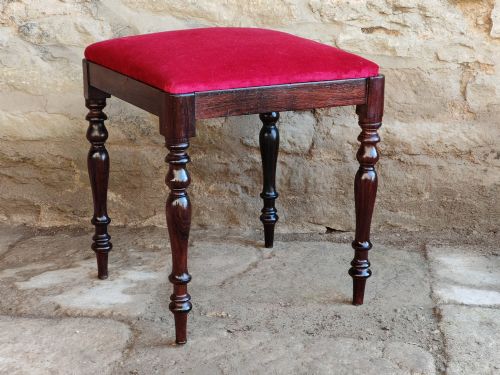
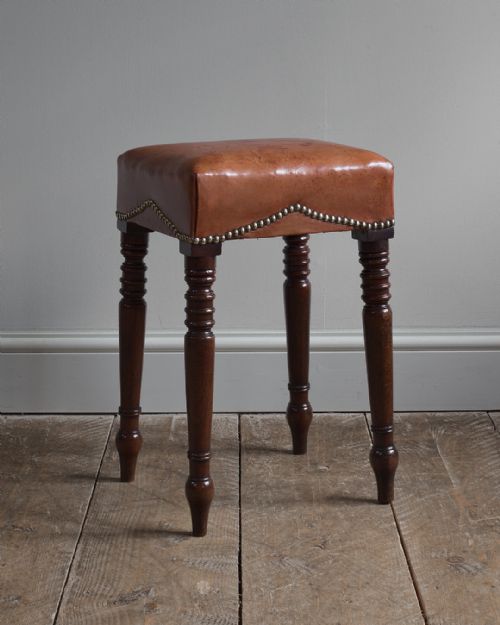
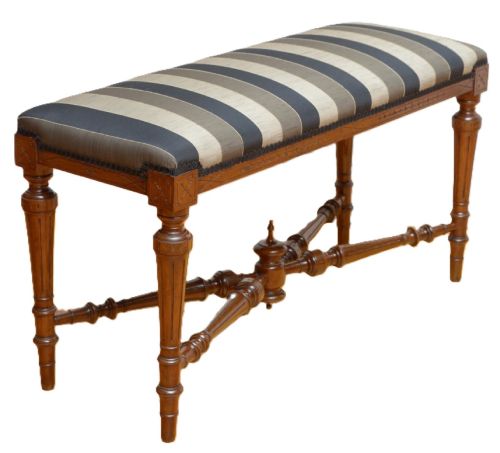
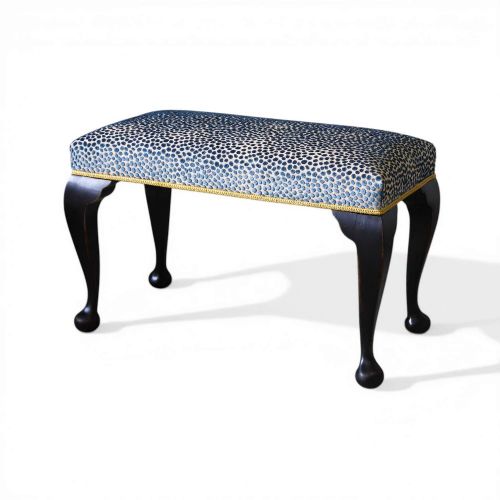
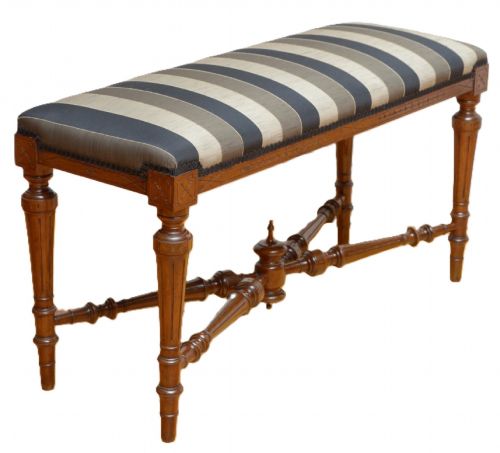
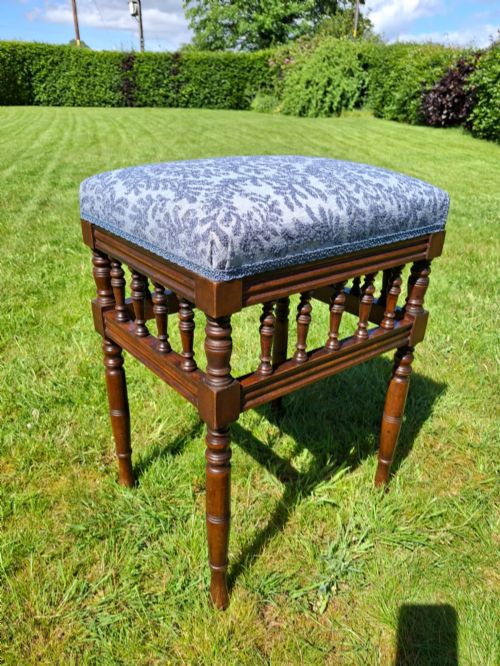
A turning piano stool is designed for the keyboard, providing a stable seat that often revolves or adjusts for the player. The turning piano stool varieties here span the nineteenth century, the Victorian era, and the Edwardian period, appearing alongside related forms like window seats, duet stools, and standard music stools.
The materials shaping a turning piano stool include solid mahogany, walnut, rosewood, and ebonised wood, often fitted with fabric, textile, leather, or buttoned upholstery. Makers such as Gillows, James Shoolbred, and H Brooks and Co. produced examples that survive with swivel bases, revolving tops, and turned legs.
Materials and construction
Makers built a turning piano stool predominantly from dense hardwoods like mahogany, walnut, and rosewood, ensuring the frame could support the stresses of a revolving or adjustable mechanism. Ebonised finishes and oak also appear among the structural timbers used across the nineteenth and early twentieth centuries.
Upholstery completed the seat, utilising textiles, fabrics, leather, and tweed linen, frequently finished with deep buttoning or supported by brass details and castors. Turning work formed the legs and central columns, pairing straightforward turned supports with functional swivel mechanisms.
Turning Piano Stool Retail Price Guide 2026
Typical asking prices for turning piano stool among the pieces listed under this phrase on Sellingantiques today, from the lower quarter to the upper quarter. They describe what is for sale here now, not the wider market.
Musicians relied on these revolving seats to hit the right high note without sliding off the bench.
Judging the range
Quality in a turning piano stool rests on the precision of the timber framing and the smooth operation of the revolving or adjustable mechanism. Maker attribution, such as pieces bearing the mark of Gillows or James Shoolbred, separates standard workshop production from notable cabinet work.
Gillows·James Shoolbred·H Brooks and Co
The Turning Piano Stool Glossary
- Swivel base
- A mechanical arrangement allowing the upper section of the stool to rotate freely. This allows the player to adjust position without moving the heavy timber base.
- Revolving piano stool
- A seat designed to turn on a central screw or spindle to alter the seating height. It provides practical adjustment for musicians at the keyboard.
- Duet stool
- An extended seating form built to accommodate two people side by side. These often feature matching upholstery and shared timber frames.
- Ebonised wood
- Timber treated with a dark finish to imitate expensive ebony. This technique was popular in Victorian and Aesthetic Movement furniture.
- Window seat
- A long, narrow form intended for placement beneath a window, sharing construction methods with period piano stools.
Turning Piano Stool: Frequently Asked Questions
How do you adjust the height on these stools?
Many examples feature a revolving top or screw mechanism that alters the seating position when turned. Others rely on fixed heights with turned legs.
The mechanism operates through a central threaded spindle or swivel joint concealed beneath the upholstered seat.
What is the difference between a piano stool and a duet stool?
A standard turning piano stool is built for a single player, often incorporating a revolving mechanism. A duet stool provides a wider seat for two.
Duet versions appear in Victorian and Aesthetic Movement styles alongside single-seat revolving designs.
Are these stools suitable for modern pianos?
These period pieces function well at modern keyboards, provided the height range matches the player's needs. The adjustable swivel mechanism allows for practical positioning.
Solid timber construction and upholstered seats ensure they remain durable for daily use.
How do I identify a Victorian turning stool?
Victorian examples frequently utilise solid mahogany or walnut, featuring turned legs, brass castors, and buttoned upholstery. Swivel bases and revolving tops appear commonly in this era.
Construction details and timber choice help distinguish nineteenth-century production from later Edwardian pieces.