




Turned Wood Wall Shelf
These turned wood wall shelf pieces bring warm timbers and tiers to a room, offering practical display space with simple charm.
Turned Wood Wall Shelf
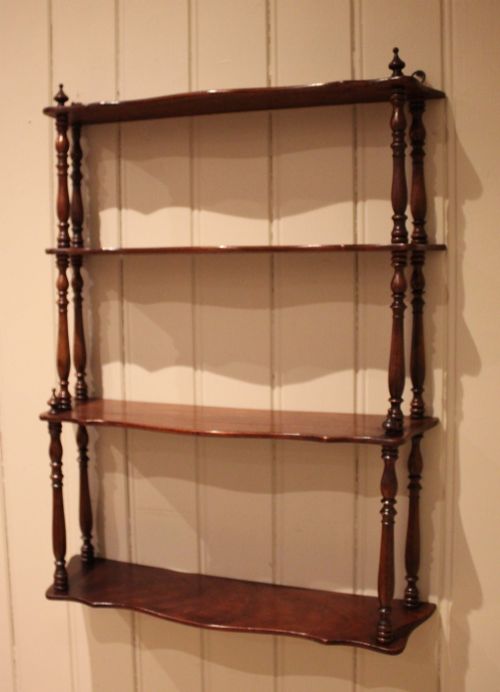
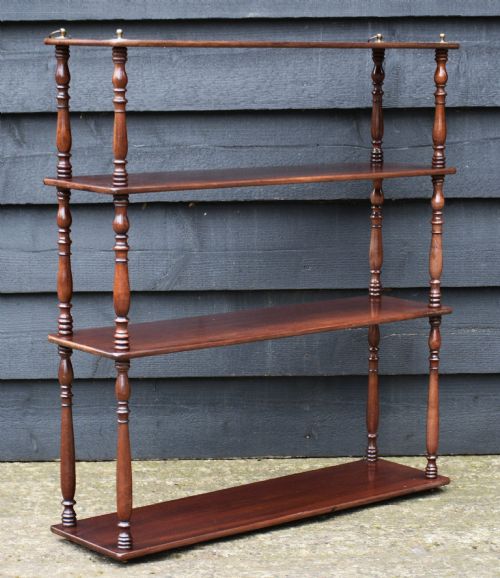
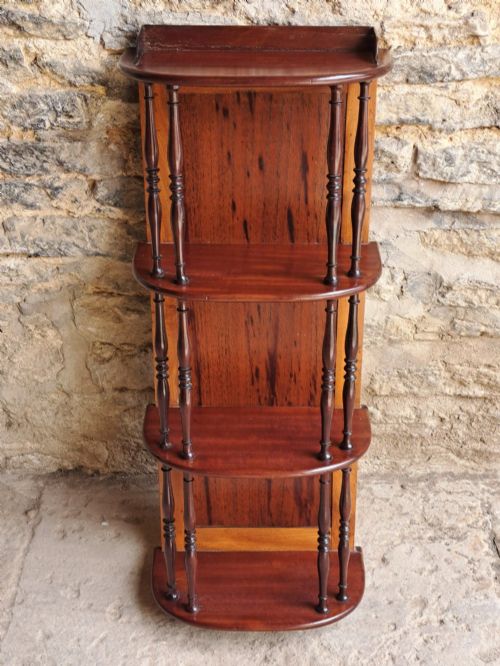
A turned wood wall shelf provides multi-tiered display space fixed directly to a wall, keeping surfaces clear while holding books or small objects. When searching for a turned wood wall shelf, buyers encounter formats primarily designed for hanging, spanning several distinct historic periods from Georgian times through to the Victorian era and the turn of the twentieth century.
The construction typically relies on upright supports and horizontal boards, often arranged as sets of hanging shelves or waterfall configurations. English country house and French chateau styles appear frequently alongside Victorian Gothic Revival pieces, reflecting diverse domestic tastes across different regions.
How they were made
Cabinet makers utilised dense hardwoods such as mahogany, walnut, cherry wood, and satin birch to construct these shelves. These durable timbers were often turned on a lathe to create decorative bobbin details and spindle supports along the uprights.
Metal fittings, brass accents, and occasional ebonised wood elements provided structural support and contrast against the warm grain of the primary timbers. Joinery was executed by hand to ensure the tiers could bear the weight of books and decorative items mounted on the wall.
Turned Wood Wall Shelf Retail Price Guide 2026
Typical asking prices for turned wood wall shelf among the pieces listed under this phrase on Sellingantiques today, from the lower quarter to the upper quarter. They describe what is for sale here now, not the wider market.
Bobbin-turned supports give some Victorian shelves the charming appearance of being held up by rows of tiny wooden spinning spools.
What varies in quality
The refinement of the timber selection dictates the visual appeal, with richly figured mahogany and carefully matched satin birch standing apart from plain variants. Finer examples display crisp turning on the bobbin supports and well-proportioned tiered shelves rather than heavy, unbalanced construction.
Original brass fittings and uncompromised structural joints distinguish superior pieces from those with later replacements or heavy restoration. The precision of the joinery where shelves meet the vertical supports reveals the skill of the original maker.
The Turned Wood Wall Shelf Glossary
- Bobbin shelves
- Shelving units featuring turned wooden elements resembling spools or bobbins stacked vertically. This decorative turning style became particularly popular during the nineteenth century.
- Waterfall shelves
- Tiers of shelving that graduate in depth from top to bottom, resembling a descending cascade. This form maximises wall space whilst allowing items on each tier to remain visible.
- Whatnot
- An open piece of furniture with multiple shelves used for displaying ornaments and small collectibles. Mounted versions hang directly on walls to save floor space.
- Satin birch
- A pale, lustrous timber with a characteristic golden sheen used for decorative furniture and shelving. It offers a bright contrast to darker woods like mahogany.
Turned Wood Wall Shelf: Frequently Asked Questions
How do I hang a wall shelf safely?
These shelves mount directly to walls using built-in hanging brackets or secured fixing points behind the uprights. Ensure the fixings match the specific wall construction to support the weight of the timber and displayed objects.
Distribute heavier books on the lower tiers to maintain stability once the unit hangs in place.
What periods do these shelves come from?
The available pieces span the Georgian, Regency, and Victorian periods, extending into the late nineteenth and early twentieth centuries. Design characteristics shift from formal Georgian proportions to ornate Victorian Gothic Revival and French chateau styles.
Mid-nineteenth-century examples frequently showcase turned bobbin supports and rich mahogany or satin birch timbers.
Which woods were used for these shelves?
Cabinet makers predominantly selected mahogany, walnut, cherry wood, and satin birch for their durability and attractive grain patterns. Ebonised wood and brass details sometimes appear as accents on nineteenth-century pieces.
Each timber brings a distinct colour and weight to the finished hanging shelf.
Are these shelves suitable for books?
Many of these hanging shelves were built to hold books alongside decorative collectibles and small display items. The depth of the tier and the strength of the timber determine how many volumes a specific shelf can support.
Checking the clearance between tiers helps confirm whether larger books will fit comfortably.