





Turned Wood Shelving
Turned wood shelving brings practical display space and sculptural form together through slender supports and tiered tiers.
Turned Wood Shelving
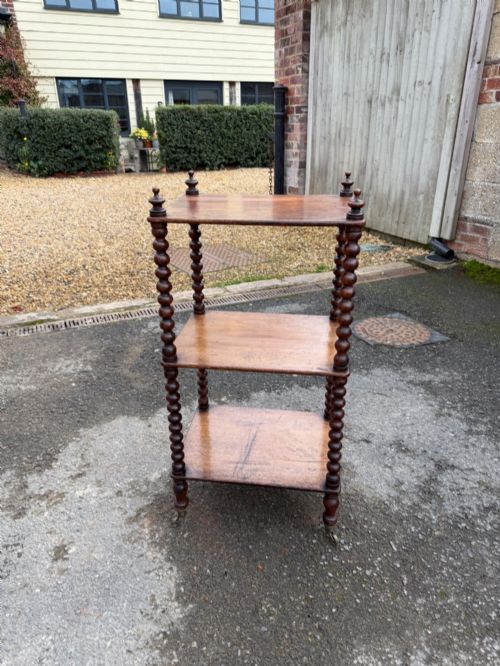
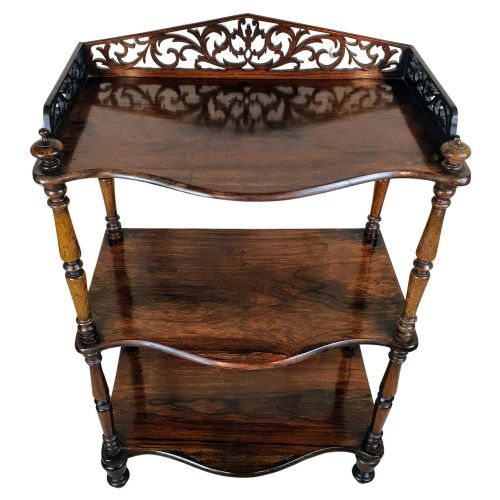
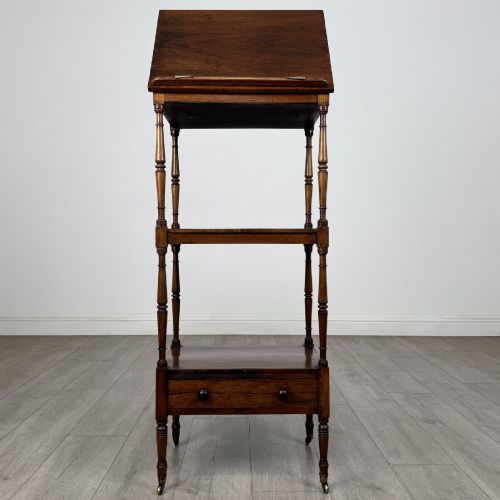
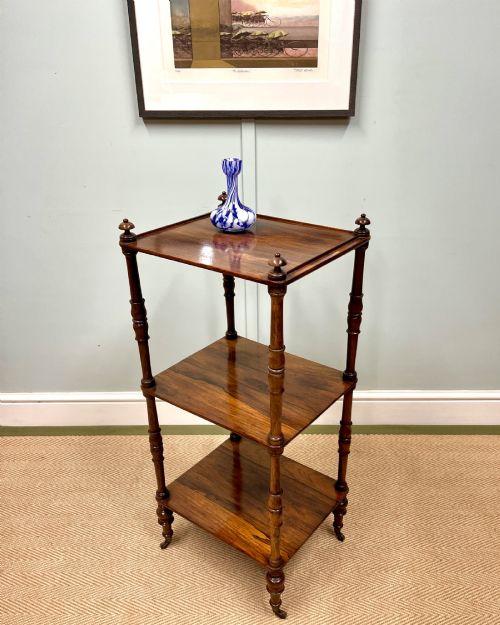
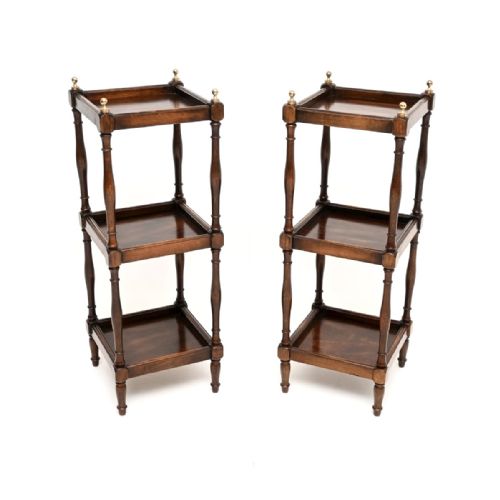
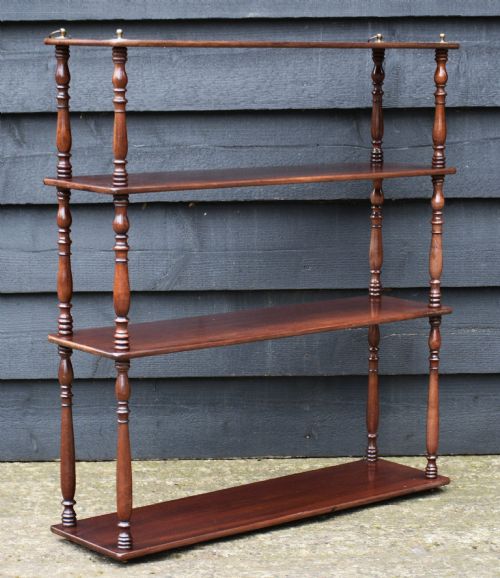
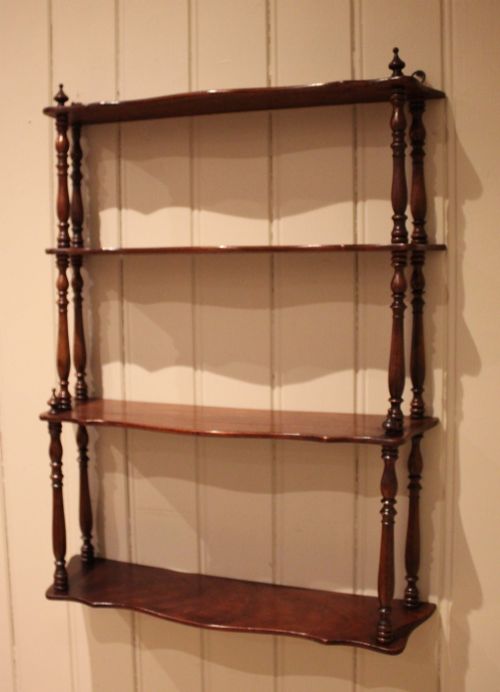
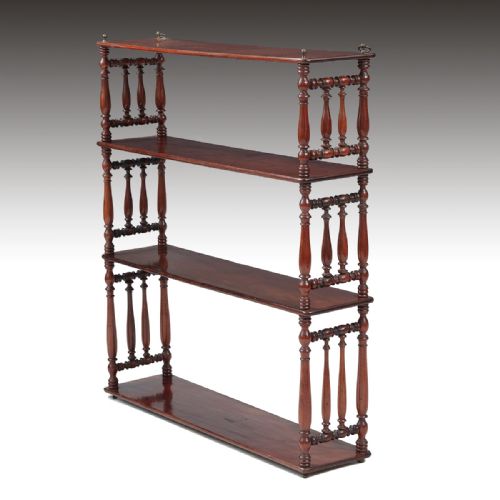
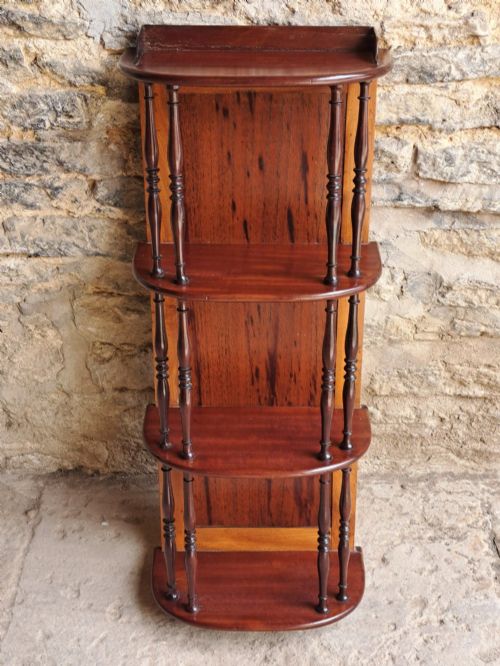
Turned wood shelving encompasses tiered wall units, corner shelves, and freestanding whatnots designed to hold books, ceramics, and small objects. Pieces frequently employ turned uprights or spindles to divide multiple open tiers.
The selections span from Georgian and Regency designs to Victorian and later nineteenth-century French variants. Mahogany appears alongside walnut, satin birch, rosewood, and cherry wood across wall-mounted and floor-standing formats.
Construction and Materials
Cabinetmakers utilised hardwoods such as mahogany, walnut, and rosewood, shaping upright supports on a lathe to create distinctive bobbin and turned profiles. Shelves are typically joined to these vertical members using traditional wood joints to support tiered weight.
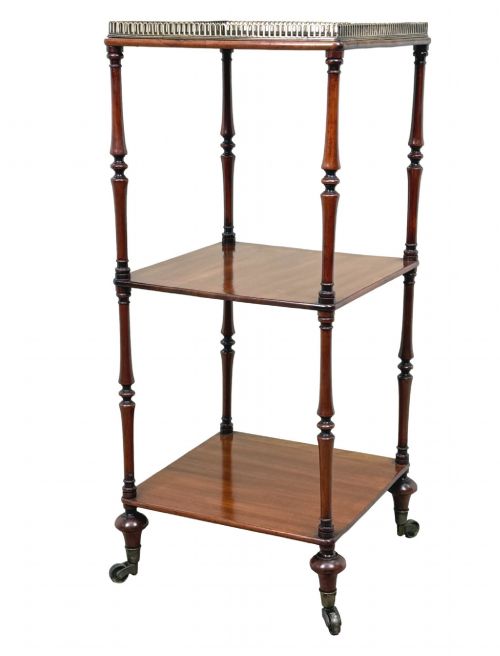
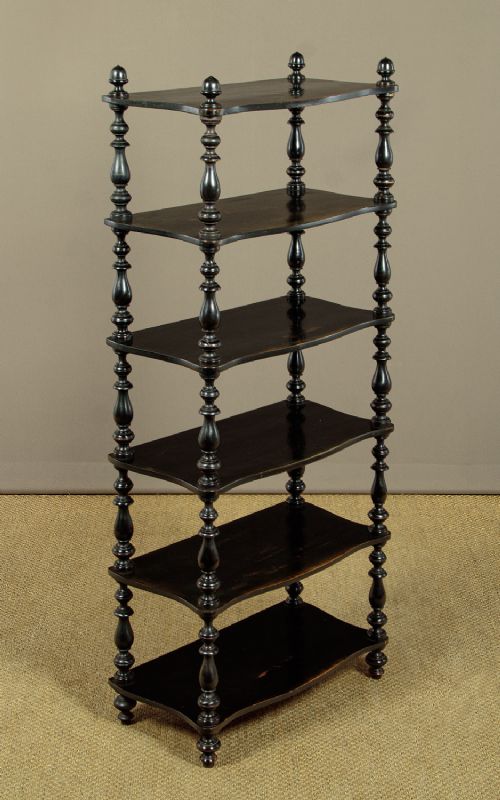
Detailing often incorporates brass fittings, metal mounts, and occasionally ebonised finishes to accentuate the turned woodwork. Freestanding versions occasionally feature original castors beneath turned feet for mobility.
Turned Wood Shelving Retail Price Guide 2026
Typical asking prices for turned wood shelving among the pieces listed under this phrase on Sellingantiques today, from the lower quarter to the upper quarter. They describe what is for sale here now, not the wider market.
Listings feature woods including mahogany, satin birch, walnut, rosewood, and cherry wood across the nineteenth century.
Quality and Construction
Quality rests in the precision of the turning work, the selection of timber grain, and the rigidity of the tiered framework. Crisp detailing along the turned spindles separates standard utilitarian units from finer cabinetwork.
Proportion and timber matching across multiple tiers dictate the visual balance of each piece. Superior examples maintain structural integrity across high stacking without relying on excessive reinforcement.
The Turned Wood Shelving Glossary
- Whatnot
- An open tiered piece of furniture designed for displaying ornaments, books, or collectibles. These stands commonly feature three to six levels supported by turned uprights.
- Étagère
- A French term for a piece of furniture consisting of a set of open shelves for displaying small objects. They appear in both wall-mounted and freestanding formats.
- Bobbin
- A style of turned woodwork shaped to resemble a string of spools or bobbins. This decorative turning technique defines specific nineteenth-century pieces.
- Dumb waiter
- A tiered freestanding stand traditionally used to hold serving dishes or utensils. Examples on this page provide multiple open circular or square shelves on a central turned column.
- Corner unit
- Shelving specifically engineered to fit into ninety-degree room angles. These utilise space efficiently while maintaining the tiered layout of standard units.
Turned Wood Shelving: Frequently Asked Questions
What is the difference between a whatnot and wall shelves?
Whatnots are freestanding tiered stands supported by legs or feet, whereas wall shelves mount directly onto vertical surfaces to save floor space.
Both formats utilise turned wooden supports, but floor-standing versions frequently incorporate castors or larger tiers for heavier objects.
How do I identify a Regency period piece?
Regency items generally display restrained classical proportions, clean lines, and dark timbers such as mahogany.
They rely on subtle turned columns rather than heavy Victorian ornamentation to create visual interest.
Where should I place a corner shelving unit?
Corner units fit neatly into unused room junctions to maximise display capacity without crowding walkways.
Their curved or angled tiers hold books and ceramics securely while drawing the eye upward.
What woods were commonly used for these shelves?
Mahogany forms the majority of the surviving pieces, accompanied by walnut, rosewood, satin birch, and cherry wood.
Some items feature ebonised wood to mimic more expensive dark materials.