


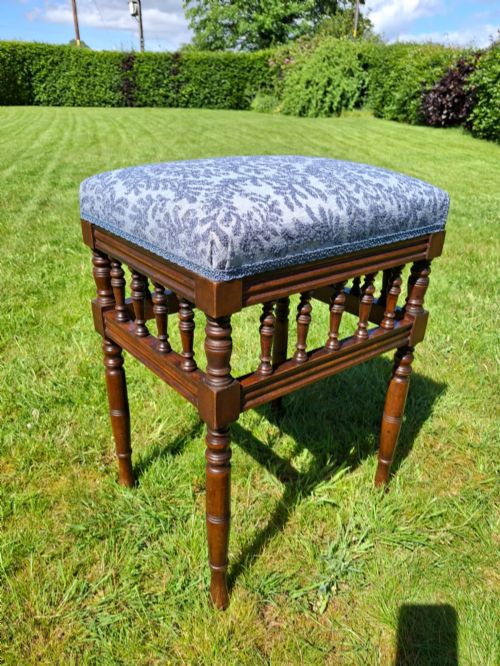
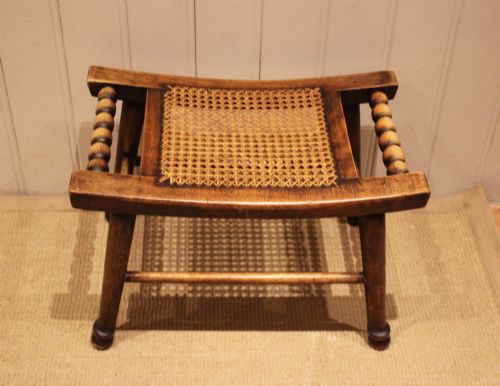


Turned Wood Footstool
A turned wood footstool brings warmth and practical seating to any room, offering solid construction and period character.
Turned Wood Footstool
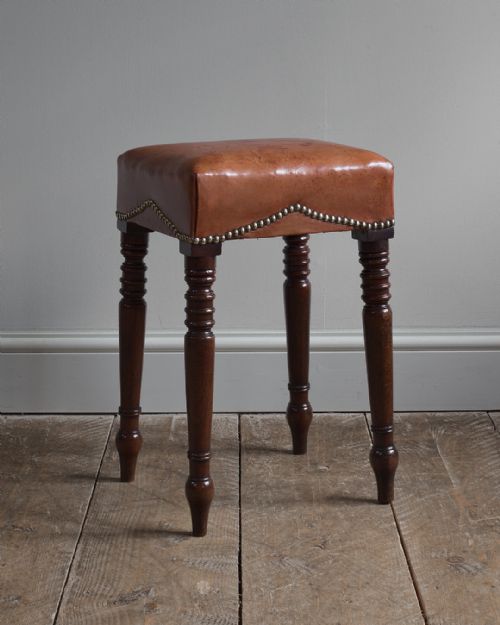
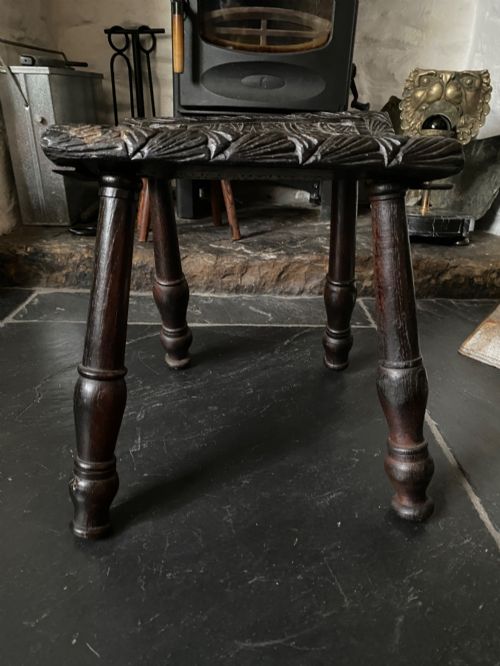
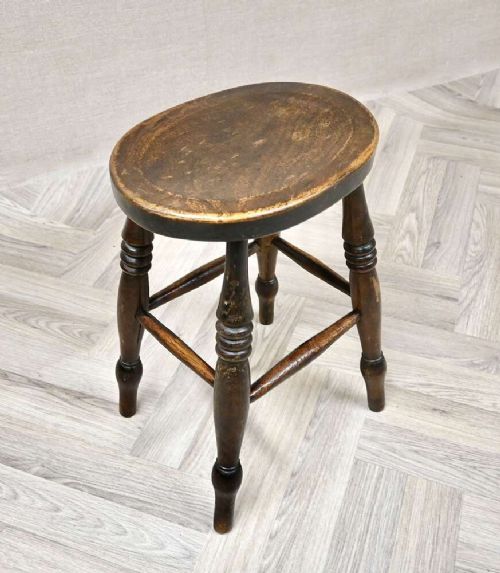
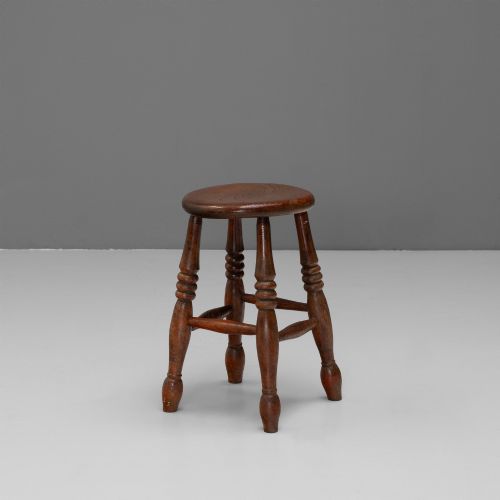
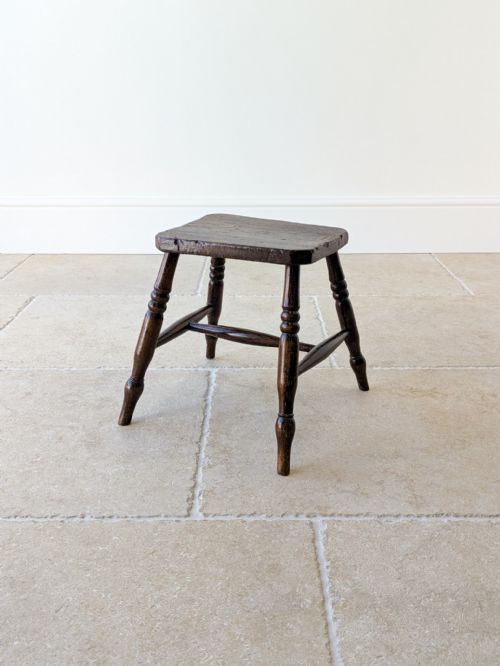
A turned wood footstool is a low seating piece featuring legs or supports shaped on a lathe, ranging from simple country forms to formal period examples. These pieces serve as functional footrests or compact seats, appearing frequently in Victorian, Edwardian, and Regency guises.
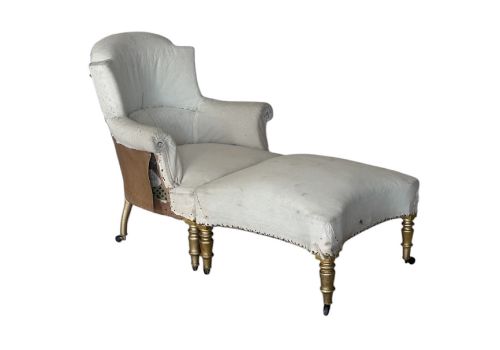
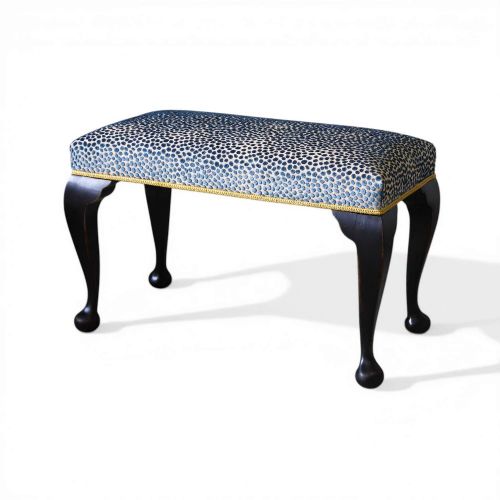
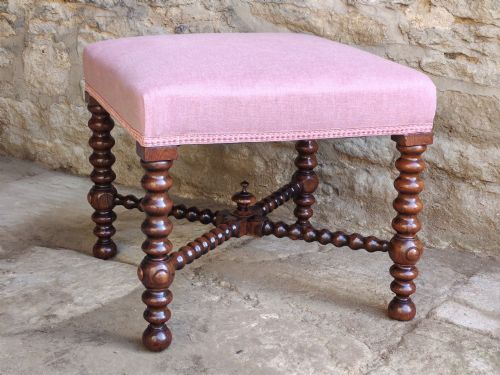
The selection on this page demonstrates considerable variety in timber and form, spanning rectangular, square, and circular seats. Elm, beech, mahogany, and rosewood feature prominently alongside upholstered, cane, and solid wood tops.
Buyers encounter country kitchen stools, piano stools, and elegant parlor pieces alike. Each turned wood footstool reflects the domestic habits and woodworking skills of its specific nineteenth or early twentieth-century era.
How they were made
Cabinet makers and country joiners turned dense hardwoods like beech, elm, mahogany, and rosewood on lathes to shape slender legs, bobbin structures, and tapering supports. These turned components were then joined to solid timber seats using traditional framing methods.
Upholstered versions incorporate textile, fabric, or brass details, while others rely on cane seating or polished wood surfaces. The integration of durable joints ensures these low stools retain their structural integrity over generations.
Turned Wood Footstool Retail Price Guide 2026
Typical asking prices for turned wood footstool among the pieces listed under this phrase on Sellingantiques today, from the lower quarter to the upper quarter. They describe what is for sale here now, not the wider market.
Design styles span Victorian country, Arts and Crafts, Regency, and French nineteenth-century influences.
What varies in quality
Quality in these pieces rests upon the choice of timber, the crispness of the lathe turning, and the original integrity of the construction. Dense woods like rosewood, burr maple, and yew command attention for their distinct grain and finish.
The sophistication of the design sets finer examples apart, whether through refined bobbin legs, sophisticated upholstery, or distinctive regional country forms. Better pieces maintain their original surfaces and unaltered structural frames.
James Shoolbred
The Turned Wood Footstool Glossary
- Bobbin leg
- A support turned on a lathe to resemble a string of beads or bobbins. This decorative profile appears frequently on mid-nineteenth-century seating.
- Joint stool
- A sturdy wooden stool constructed with mortise and tenon joints rather than turned components. These early forms provide stable, low platforms.
- Caning
- Woven plant material used to create resilient, light seating panels. It adds texture and breathability to wooden frames.
- Turned leg
- A wooden support shaped by rotating it against cutting tools on a lathe. This technique creates cylindrical, tapered, or patterned profiles.
- Upholstery
- The padded and fabric-covered portion of a seat. It transforms a rigid wooden frame into a comfortable resting place.
Turned Wood Footstool: Frequently Asked Questions
How do I style a turned wood footstool?
Place a turned wood footstool beside a fireside armchair or at the end of a long bench to add practical surface space and texture to a room. Their compact size allows them to tuck easily beneath tables or sit unobtrusively in hallways.
Mixing different timber tones and upholstery fabrics creates visual interest without cluttering the floor space. These pieces blend naturally into both traditional and contemporary interiors.
Were these stools used purely as footrests?
While many served to elevate tired feet during the nineteenth century, smaller forms also functioned as piano seats, tavern seating, or children's chairs. Their sturdy construction made them versatile additions to busy households.
Upholstered versions often doubled as music stools or low parlour seating. Their portability ensured they moved easily from room to room as daily needs dictated.
How do I identify the period of a wooden stool?
Examine the timber species, turning style, and construction methods to determine age. Regency and Victorian examples often feature mahogany or rosewood with precise tapering, while earlier country pieces favour elm and beech.
Subtle details like tool marks, joint types, and upholstery tacks provide further clues to manufacture dates. Comparing leg profiles against documented regional styles helps narrow down the decade.
How do I care for antique turned wood?
Maintain the finish of your turned wood footstool by applying a quality beeswax and buffing gently with a soft cloth. Avoid placing wooden furniture near direct heat sources or in strong sunlight to prevent timber shrinkage and cracking.
Keep upholstered surfaces clean by regular light vacuuming with a brush attachment. Treating the wood with care preserves its natural lustre and historic patina.