


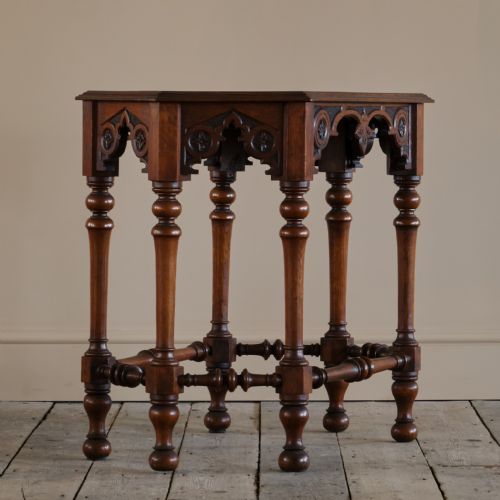
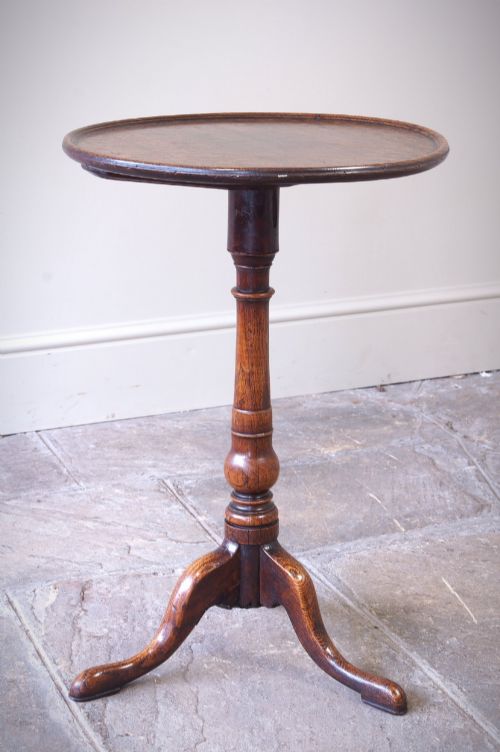


Turned Oak Pedestal Table
A turned oak pedestal table brings sturdy timber and compact tripod proportions into a room, offering a practical surface with centuries of character.
Turned Oak Pedestal Table
When you search for a turned oak pedestal table, you encounter a variety of compact forms including wine tables, occasional tables, candle stands, and jardiniere stands rooted in centuries of British furniture making. These pieces span periods from the 18th century through the Victorian, Edwardian, and Arts & Crafts eras, reflecting changing domestic needs for movable surfaces.
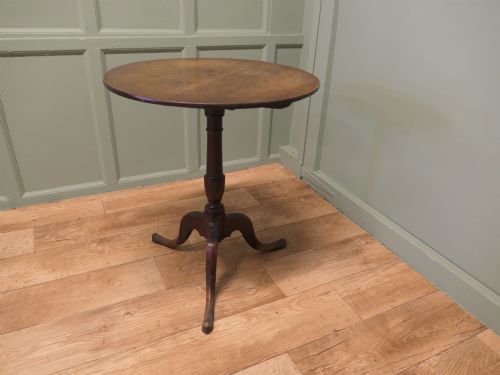
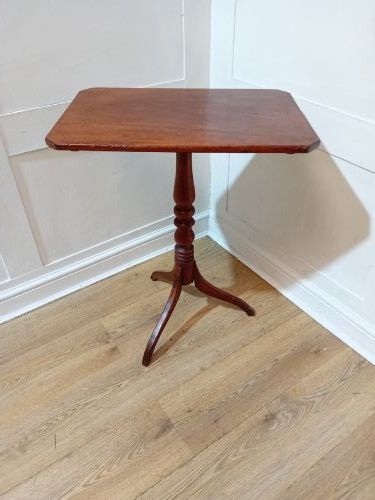
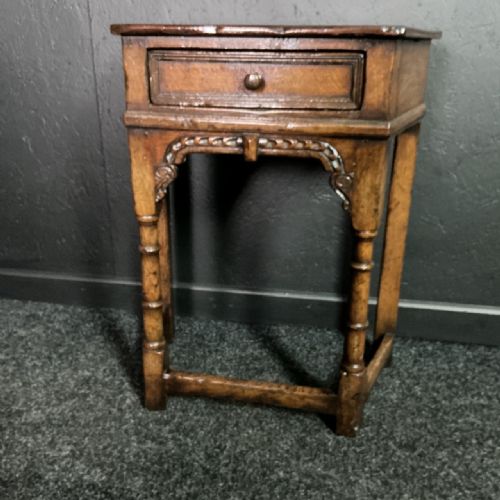
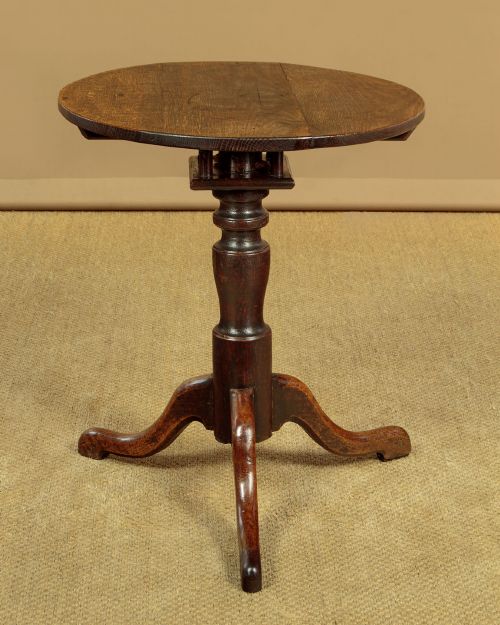
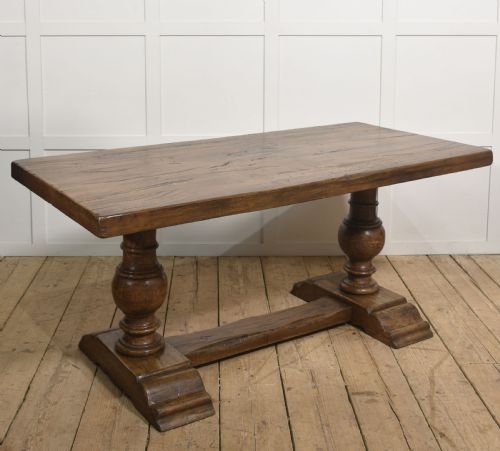
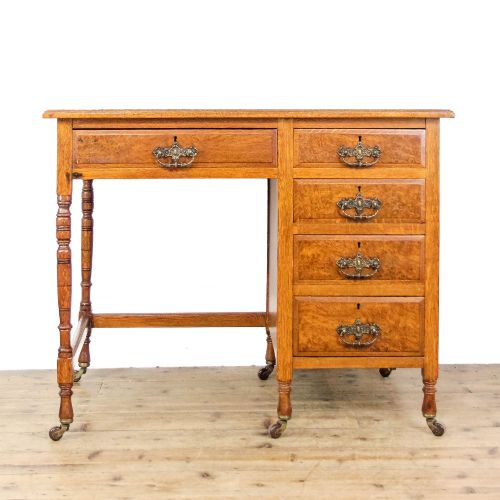
The version you are most likely to meet on this page is the tripod table, often featuring a circular or tilt-top supported by a turned pillar and three splayed legs. Alongside these stand larger desks, occasional tables, and occasional dining pieces, all constructed predominantly in oak with occasional secondary woods.
The origins of these tables range from vernacular country workshop pieces to distinct revival styles like the Jacobean Revival and Arts & Crafts movement. Each piece demonstrates how makers adapted sturdy timber into functional furniture for holding lamps, plants, and wine.
How they were made
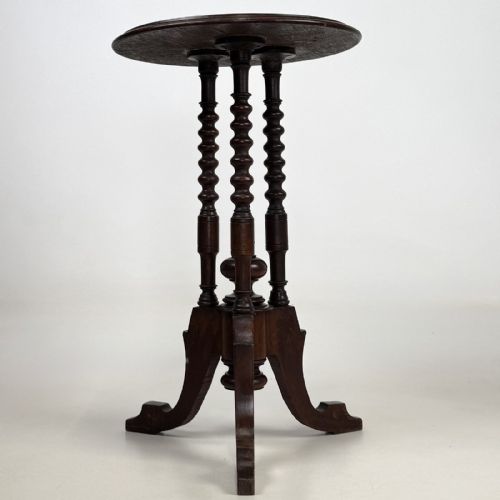
Construction relies heavily on solid oak, supplemented by elm, yew wood, burr oak veneer, and timber frameworks shaped by traditional joinery methods. Turnery forms the central pedestal columns, utilising lathe work to create baluster, pillar, or column supports.
Tops are joined to pedestals using fixed methods or tilt-top mechanisms, sometimes including birdcage snaptop fittings that allow the surface to pivot and fold flat. Tripod bases employ three splayed legs tenoned or dovetailed directly into the central shaft for stability.
Turned Oak Pedestal Table Retail Price Guide 2026
Typical asking prices for turned oak pedestal table among the pieces listed under this phrase on Sellingantiques today, from the lower quarter to the upper quarter. They describe what is for sale here now, not the wider market.
Some tables tilt so the top folds flat against the pedestal, hiding like a polite wooden shield until tea time.
What varies in quality
The standard of timber selection and figuring dictates much of the distinction between pieces, with burr oak veneer and well-figured solid oak sitting at the upper end of visual appeal. Grain matching, the crispness of the turned pedestal, and the finesse of the leg profile separate utilitarian workshop items from finer examples.
Structural integrity of the pedestal block and the smoothness of any tilt-top or birdcage mechanism determine everyday utility. Original surface patination and minimal timber replacement preserve the historical character valued in older pieces.
Baillie Scott
The Turned Oak Pedestal Table Glossary
- Tripod table
- A small occasional table supported by a central turned pedestal resting on three legs. This form gained widespread popularity during the Georgian period for domestic use.
- Tilt-top table
- A table with a hinged top that pivots to a vertical position when not in use. This mechanism saved valuable floor space in smaller rooms.
- Birdcage
- A timber framework beneath a table top that allows the surface to both rotate and tilt. It is typically found on finer 18th-century examples.
- Vernacular furniture
- Items made by local craftsmen for everyday domestic use rather than for elite urban markets. These pieces often display regional characteristics and practical construction.
- Jardiniere stand
- A tall pedestal table designed specifically to hold a plant pot or flower bowl. They frequently appear in Arts & Crafts and Victorian interiors.
Turned Oak Pedestal Table: Frequently Asked Questions
What is a birdcage tilt-top table?
A birdcage mechanism incorporates a small wooden frame beneath the table top, connected to the central turned pedestal by a pivot system. This construction allows the surface to rotate horizontally and tilt vertically.
Craftsmen used this feature on mid-18th-century tables to save floor space when the furniture stood against a wall.
How do I tell an 18th-century table from a Victorian revival piece?
Eighteenth-century examples often exhibit vernacular construction marks, hand-turned pedestals with slight irregularities, and deep natural patination built up over generations of use. Timber choice and joinery methods reflect the working practices of country workshops.
Victorian and Edwardian revival pieces tend to feature more uniform machine turning, standardised fittings, and cleaner internal joinery associated with later industrial production.
Where should I place a tripod table in my home?
These compact tables function well beside armchairs, in narrow hallways, or as bedside stands holding a small lamp or book. Their small footprint allows them to fit into corners where larger furniture cannot go.
Avoid placing them directly next to heat sources or in strong direct sunlight, which can dry out the oak timber and split the surface.
What materials were used besides oak?
While solid oak forms the primary material for these pedestal tables, makers frequently incorporated elm and yew wood for specific components like table tops or secondary framing. Burr oak veneer also appears on later surfaces to provide decorative grain patterns.
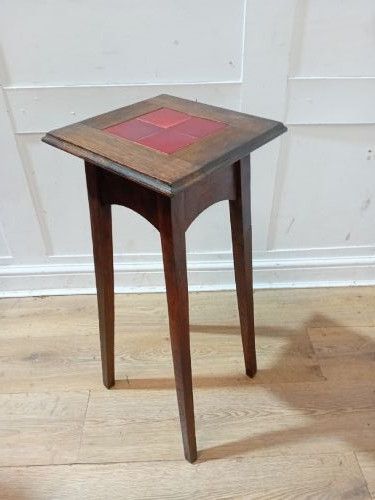
Metal brass fittings, ceramic elements, and tile inserts occasionally feature on specific Victorian and Arts & Crafts designs.