


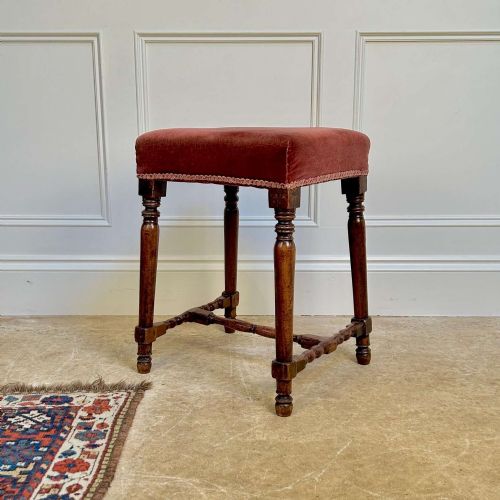


Turned Mahogany Stool
A turned mahogany stool brings solid timber and functional seating together, offering tactile grain and sturdy support for daily use.
Turned Mahogany Stool
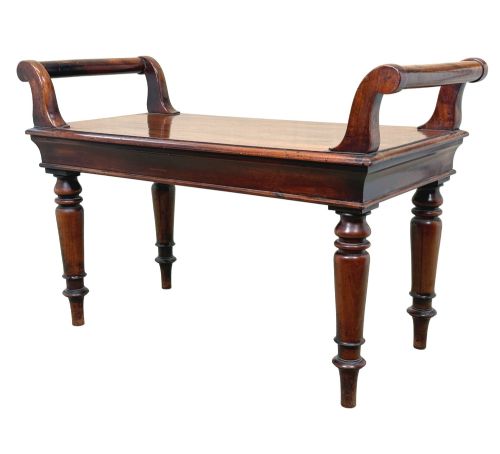
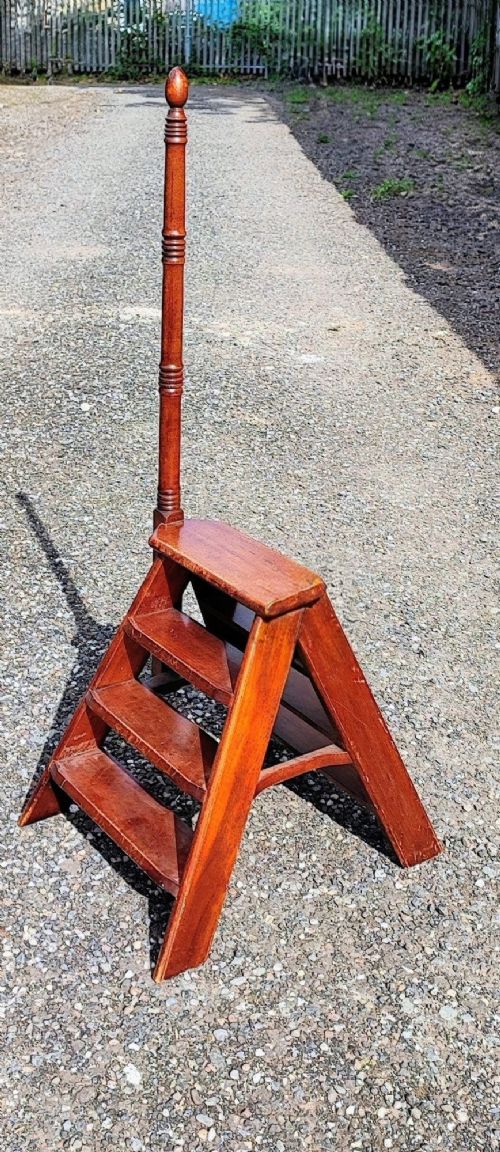
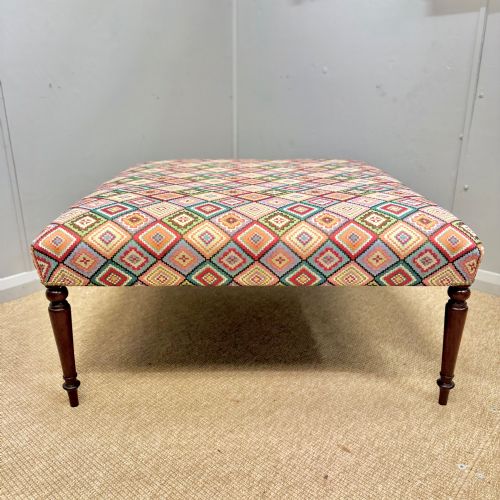
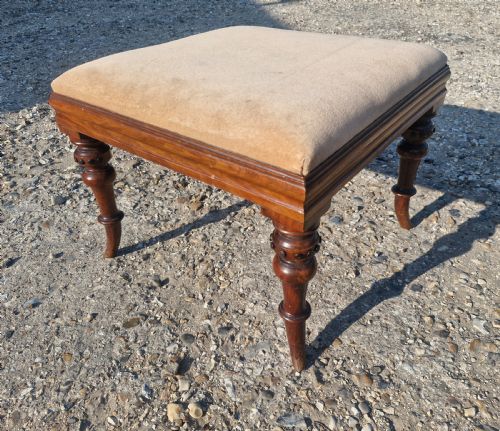
A turned mahogany stool is a practical seat shaped by the lathe and fashioned from dense tropical hardwood, appearing across Georgian, Regency, Victorian, and Edwardian periods. Buyers searching this phrase encounter various domestic forms designed for specific rooms, including piano stools, footstools, window seats, and library steps.
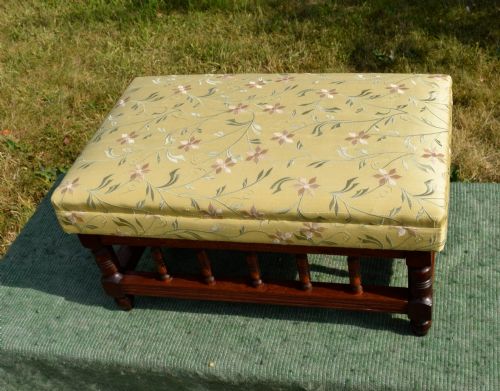
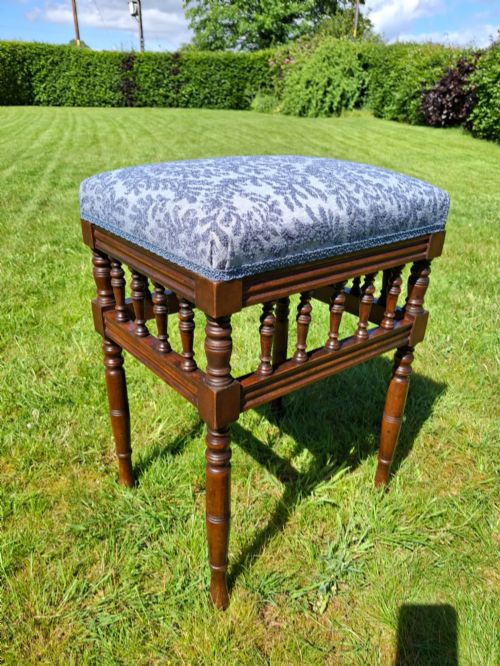
The nineteenth century yields the highest volume of surviving examples, spanning early Victorian designs through Arts and Crafts interpretations. These pieces range from simple domestic footstools on bobbin-turned legs to revolving piano seats and long upholstered window benches suited to country houses.
Makers utilised dense mahogany to create robust frames that withstood regular household service while displaying rich reddish-brown timber tones. Many survivors retain their original upholstery, fabric, leather, or textile coverings, though subsequent reupholstery remains common.
Materials and turning techniques
Cabinetmakers constructed the primary frames using solid mahogany, shaping legs and supports on a lathe to produce bobbin, spiral, and tapered turned profiles. These turned components were joined to seat rails using traditional mortise and tenon joints.
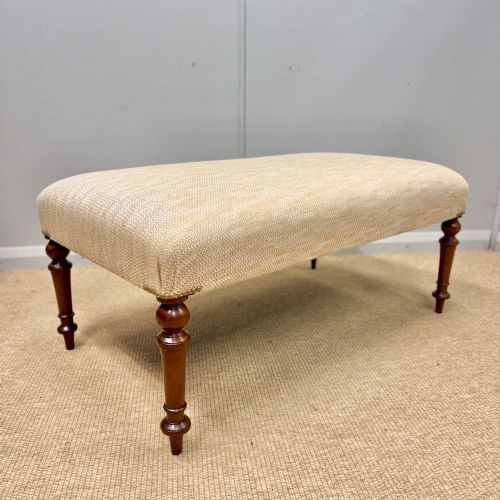
Upholstered versions incorporate webbing, stuffing, and textile coverings secured with tacks, utilising fabrics such as wool, velvet, kilim, ticking, and buttoned leather. Some variants feature caned seats or brass castors to aid movement across flooring.
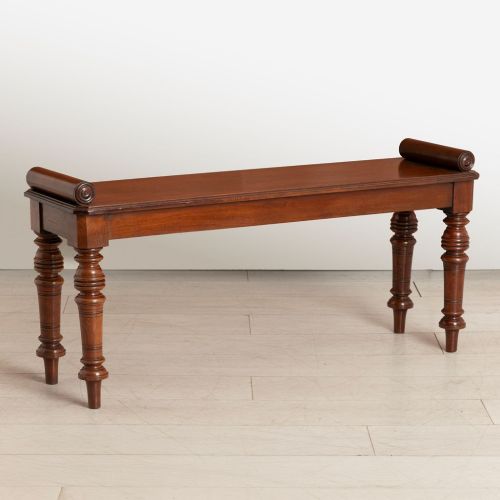
Common functional forms on this page include adjustable piano stools, long window seats, library steps, and domestic footstools on turned legs.
Craftsmanship and structural integrity
Quality rests upon the crispness of the lathe turning, the joinery of the mahogany frame, and the weight of the timber itself. Finer examples display well-proportioned legs with deep, clean details and tight joints that require no modern bracing.
Functional complexity separates standard domestic seating from mechanical variants, such as adjustable swivel tops on piano stools or brass castors fitted securely to heavy frames. The integrity of the underlying upholstery webbing and timber condition dictate the lasting utility of each piece.
Gillows·J. Shoolbred·Liberty & Co
The Turned Mahogany Stool Glossary
- Bobbin turning
- A lathe-working technique producing a series of rounded spheres resembling spools or bobbins along the length of a leg or stretcher. This decorative profile appears frequently on nineteenth-century frames.
- Caning
- Woven rattan material used to form light, flexible seat panels within a solid mahogany frame. It requires careful maintenance to prevent splitting.
- Kilim
- A flatwoven textile originating from the Middle East or Eastern Europe, occasionally utilised as a durable and decorative upholstery covering on nineteenth-century footstools.
- Swivel top
- A mechanical arrangement allowing the seat of a piano stool to rotate freely on a threaded central screw or spindle. This mechanism permits height adjustment during seating.
- Window seat
- An elongated stool or bench designed to fit within a bay window recess, often featuring upholstered padding and turned mahogany supports.
Turned Mahogany Stool: Frequently Asked Questions
How do I date a turned mahogany stool?
Dating relies on combining stylistic clues with construction methods, such as the sharpness of the lathe work and the type of wood finish. Regency and Georgian pieces often display slender, elegant proportions, whereas Victorian examples tend to be heavier with buttoned upholstery.
Examine the underside of the frame for tool marks, screw types, and timber oxidation. Hand-cut joints and secondary woods inside the structure help confirm whether a piece belongs to the nineteenth century or later.
What is a revolving piano stool used for?
A revolving piano stool allowed musicians to adjust their seating height easily while sitting at an upright or grand piano. The central screw mechanism raised or lowered the upholstered top with a simple twist.
These pieces were standard fixtures in nineteenth-century music rooms and parlours. Their swivel function makes them versatile seating options for modern desks or dressing tables.
Are original fabrics common on antique stools?
Original textiles survive infrequently because heavy daily use wears out velvet, leather, and wool coverings over decades. When original fabric or needlework does survive, it provides valuable clues regarding the period of the piece.
Many stools have been recovered during their lifetime to match changing interior schemes. Upholstery style alone should not determine the age of the underlying mahogany frame.
How should I clean a mahogany frame?
Maintenance involves dusting with a soft, dry cloth to remove surface particles without scratching the polished wood. Avoid modern chemical sprays that can build up a residue and dull the natural patina.
Occasional application of microcrystalline wax feeds the timber and protects the finish from moisture. Keep turned stools away from direct heat sources to prevent the mahogany from drying and splitting.