


Turned Leg Salon Chairs
Turned leg salon chairs bring nineteenth century seating into domestic rooms with sturdy timber frames and patterned upholstery.
Turned Leg Salon Chairs
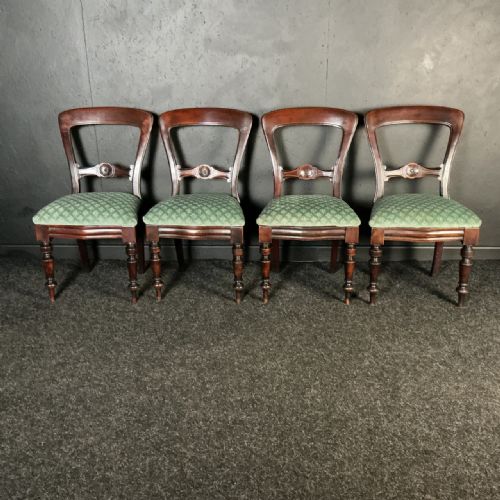
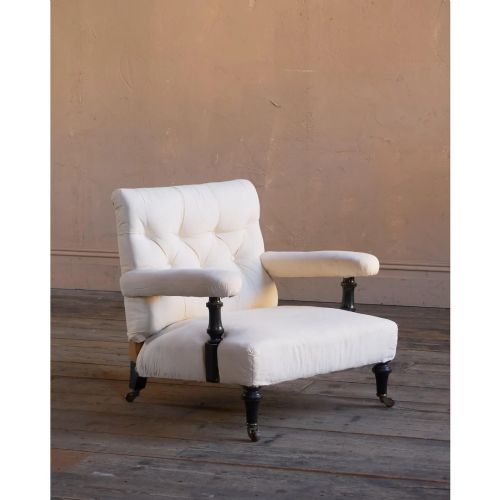
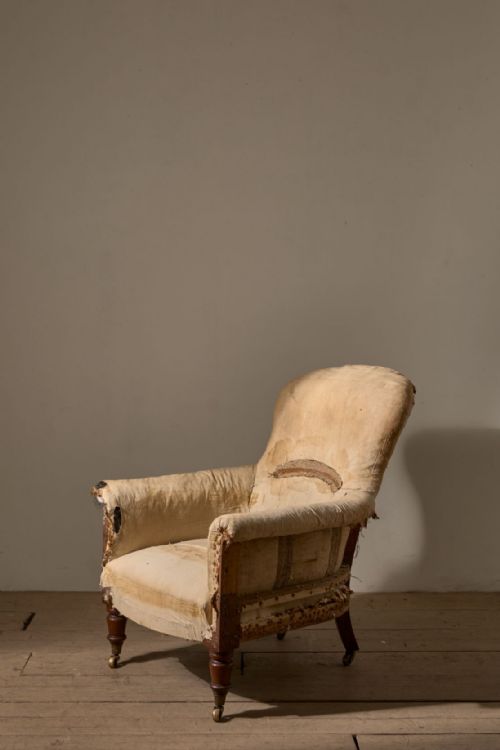
Turned leg salon chairs comprise nineteenth century seating forms shaped from dense timbers, appearing across this selection in Victorian and Edwardian variations. Buyers encountering these listings meet dining chairs, side chairs, and open armchairs designed for formal reception rooms and parlours.
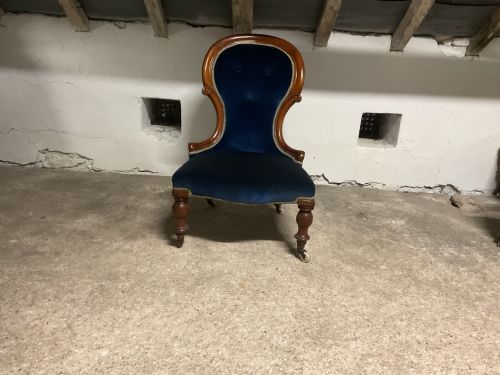
The primary examples originate from the Victorian era, utilising mahogany, walnut, and rosewood alongside upholstered pads in velvet, fabric, and textile. These pieces range from single occasional chairs to large matching sets intended for dining and drawing room display.
Construction and Materials
Maker workshops constructed these chairs using hardwoods such as mahogany, walnut, rosewood, and maple, shaped on lathes to form distinct turned uprights and legs. Brass castors frequently support the base of larger armchairs and dining suites.
Upholstery techniques applied during the period involved stuffing seats and backs with horsehair or wool, secured beneath velvet, textile, and fabric covers finished with deep buttoning where specified.
Some nineteenth century sets feature removable wooden chair backs, allowing owners to easily alter the profile of the room.
Evaluating Quality
The standard of carving and turning distinguishes finer workshop output from simpler utilitarian furniture, with crisper chisel work on balloon backs and crown motifs indicating superior labour. Timber selection also dictates grade, where richly figured mahogany and burr walnut command higher regard.
Frame integrity relies upon tight joinery at the stress points where legs meet the seat rails. Original upholstery schemes and intact brass fittings preserve the historical character of the piece more effectively than later modern replacements.
Mellier & Co·C. Hindley & Sons·Gillows
The Turned Leg Salon Chairs Glossary
- Balloon back
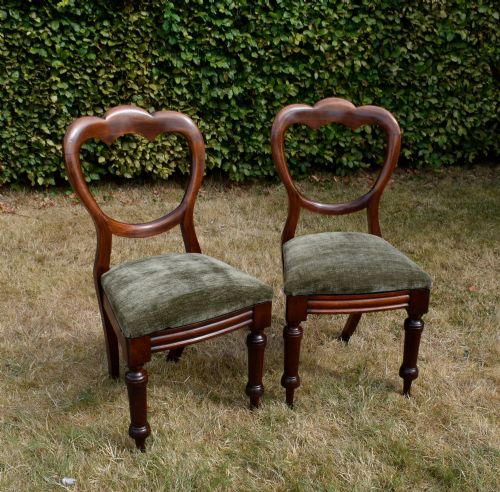
- A rounded, oval-shaped chair back resembling a balloon, popular in Victorian seating design. This curved profile provides ergonomic back support.
- Turned leg
- A wooden leg shaped on a lathe to create cylindrical, fluted, or spiral decorative patterns. Such legs provide both structural strength and visual detail.
- Spoon back
- An upholstered chair back hollowed into a concave shape resembling the bowl of a spoon. This form hugs the sitter's spine.
- Button back
- An upholstery style where depressions are created across the fabric by pulling tensioned threads through to the wooden frame, secured with cloth-covered buttons. This secures the internal stuffing against shifting.
- Open armchair
- A wooden armchair featuring un-upholstered open sides and armrests. These chairs were intended for parlour and drawing room use.
Turned Leg Salon Chairs: Frequently Asked Questions
What is a turned leg salon chair?
A turned leg salon chair is a nineteenth century seating piece featuring cylindrical or spiral-carved wooden legs produced on a lathe.
These chairs appear in mahogany, walnut, and rosewood forms, often paired with upholstered seats and backs for parlour or drawing room use.
How do I identify a Victorian chair?
Victorian chairs display characteristics such as dense mahogany or walnut frames, balloon backs, and carved walnut or rosewood details.
Many examples incorporate turned legs and deep buttoned velvet or textile upholstery typical of nineteenth century production.
Were these chairs used for dining?
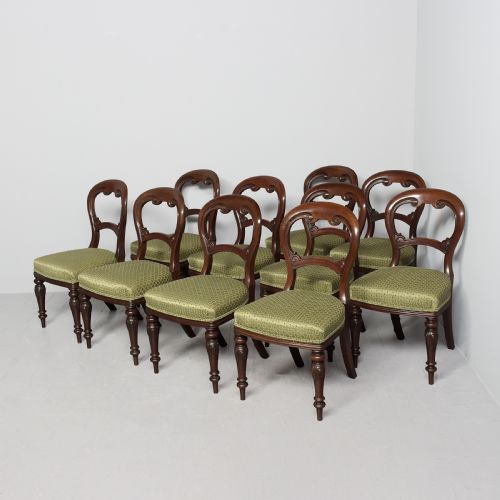
Dining chairs formed a major part of nineteenth century production, often supplied in matching sets of four, six, eight, or ten.
These pieces feature sturdy timber frames and upholstered seats designed to accommodate guests around a formal dining table.
What materials are used for the upholstery?
Original upholstery materials on these chairs typically include velvet, patterned textiles, and woven fabrics stretched over sprung or stuffed pads.
Makers utilised traditional stuffing methods beneath the visible outer cover to create firm, supportive seating surfaces.