



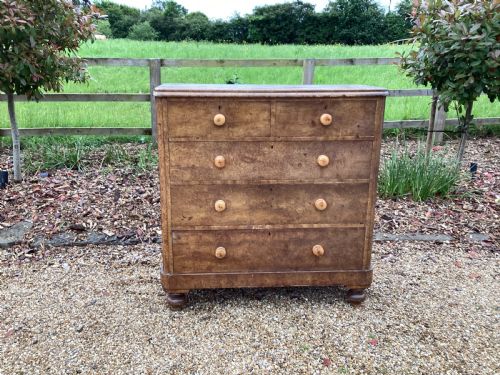
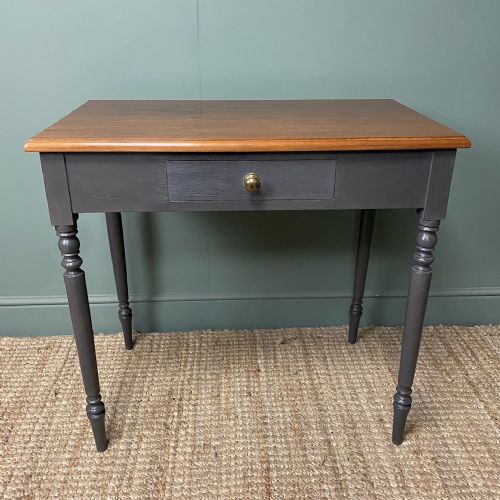

Turned Knob Pine Drawers
Turned knob pine drawers bring honest utility and simple grain to a room, formed mostly as Victorian chests.
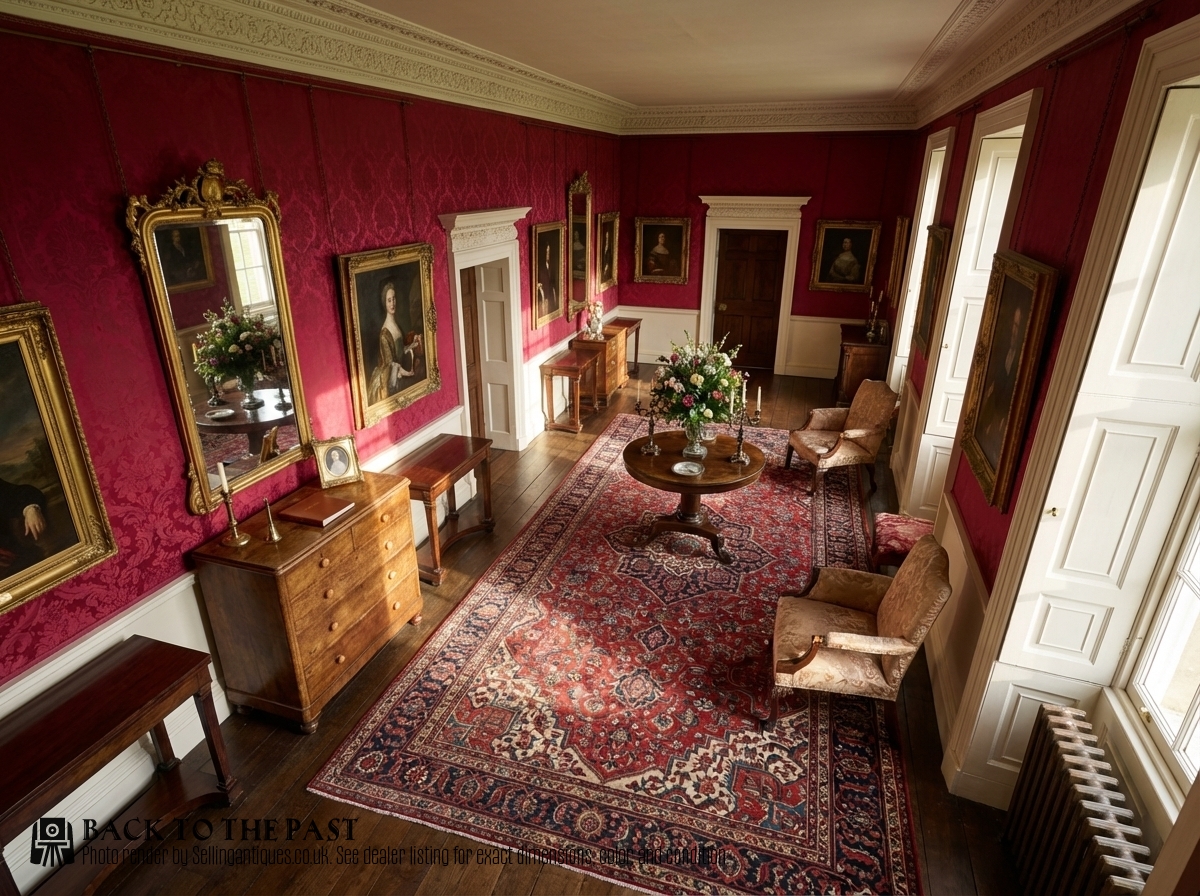
Turned Knob Pine Drawers
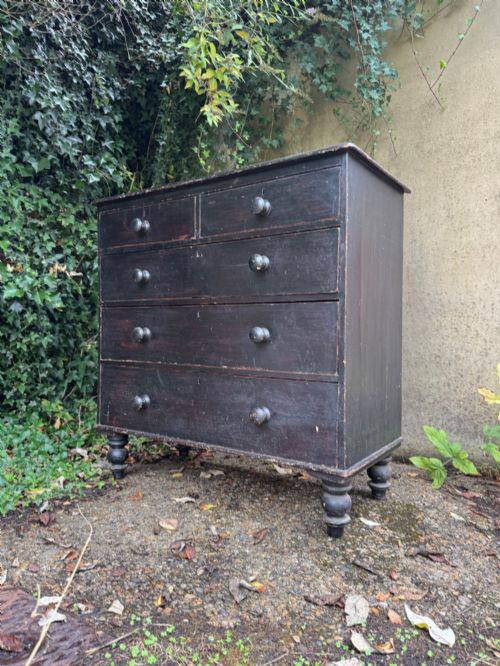
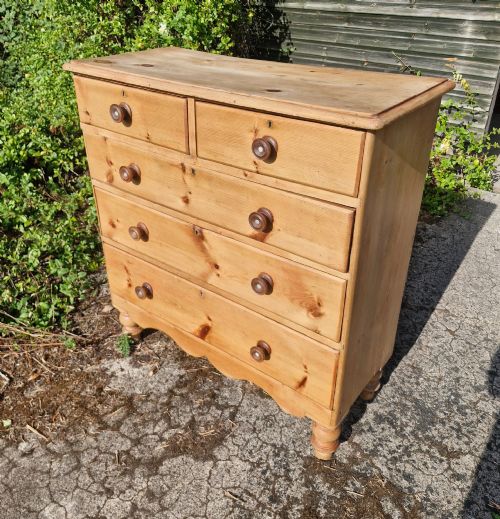
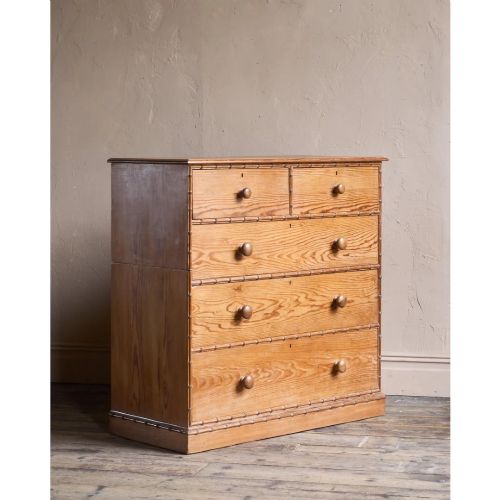
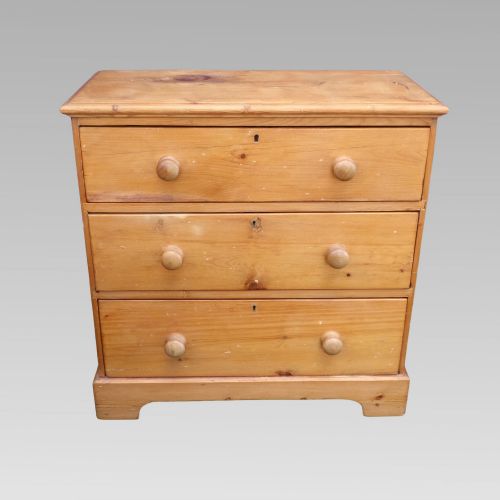
Turned knob pine drawers typically appear as Victorian chests of drawers and occasional side tables, built for everyday domestic storage. You will most often meet pieces dating from the nineteenth century, including specific years like 1850, 1870, and 1910.
The form relies on straightforward stacked drawer configurations, ranging from three-drawer to five-drawer formats. Alongside standard chests, the selection includes painted timber variants and writing desk combinations.
Originating largely from the Victorian era and the Arts and Crafts period, these items serve as practical storage while showing the honest construction methods of their time.
How turned knob pine drawers were made
Makers built these pieces primarily from solid pine, utilising wood that was either waxed, dry scraped, or finished with original paint. Iron and brass components appear in the fixings and internal mechanisms.
Turners shaped the characteristic wooden knobs and feet on a lathe, attaching them to drawer fronts and base corners. Bone and painted finishes also occur across the recorded materials.
Listings span the Victorian period, 1850, 1870, and 1910, featuring pine, brass, iron, bone, and painted timber.
What varies in quality
Quality rests in the preservation of original surfaces, such as dry scraped finishes or untouched painted timber, rather than later interventions. Retaining the original turned knobs and feet distinguishes superior examples from altered pieces.
Construction standards appear in the crispness of the timber turning and the clean alignment of the five-drawer or three-drawer arrangements.
Howard and Sons
The Turned Knob Pine Drawers Glossary
- Pine
- A softwood commonly used for nineteenth-century furniture construction, prized for its pale grain and utility. It takes wax and paint finishes readily.
- Turned knob
- A circular wooden handle shaped on a lathe. These handles form a defining feature of the drawer fronts.
- Dry scraped
- A conservation method that removes later paint layers to reveal original colour beneath. This process preserves the early surface history.
- Arts and Crafts
- A design movement spanning the late nineteenth and early twentieth centuries. It prioritised traditional craftsmanship and honest materials.
Turned Knob Pine Drawers: Frequently Asked Questions
Are these drawers strictly Victorian?
The majority of pieces date from the Victorian era and the nineteenth century, though Arts and Crafts examples extend into the twentieth century around nineteen ten.
Construction styles remain consistent across these periods, focusing on functional pine storage.
What finishes do these pieces feature?
Surfaces include waxed pine, original paint, and dry scraped timber that reveals the early colour. Some examples incorporate brass or iron details.
Each finish alters the visual weight of the pine grain in a room.
How do I identify original knobs?
Original turned knobs match the timber, wear, and patina of the drawer fronts they accompany. Replacements often show mismatched wood or modern fixings.
Look for consistent turning marks that align with the feet and frame.
Where were these pieces used?
Households utilised these chests of drawers and side tables in bedrooms and living spaces for general storage. Writing desks also integrated drawer compartments for stationery.
Their domestic scale suits modern rooms as practical storage.