
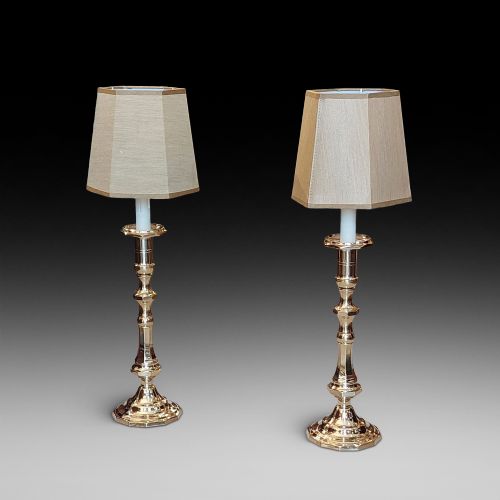
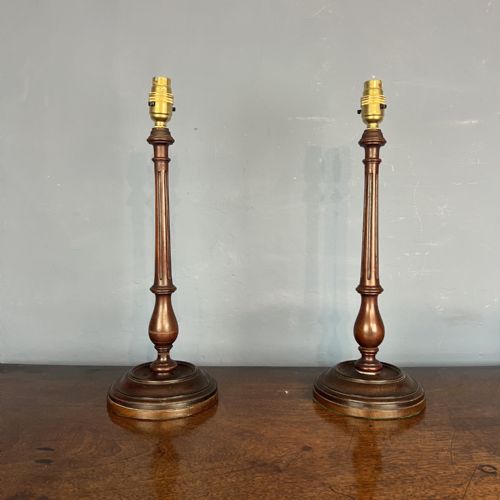
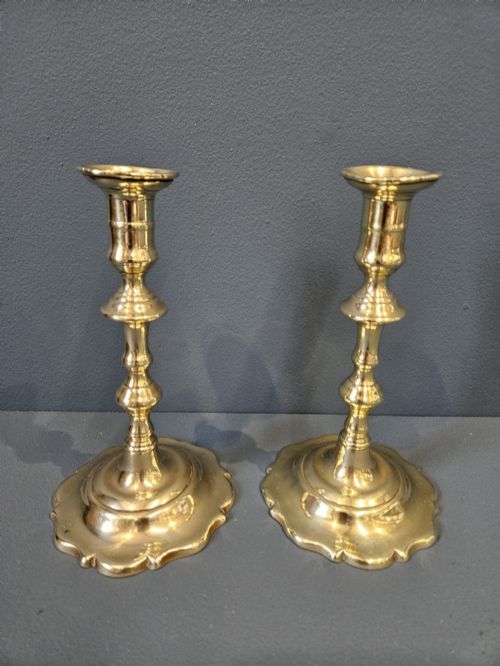
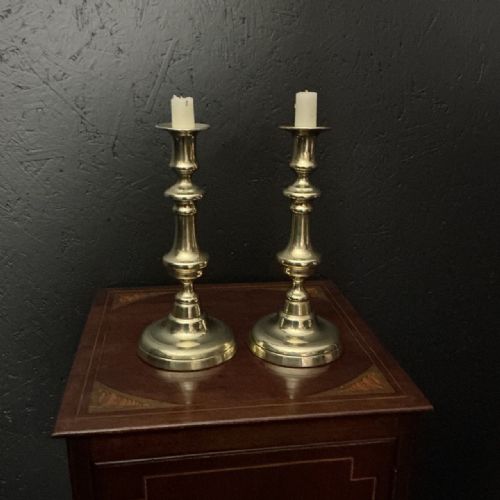
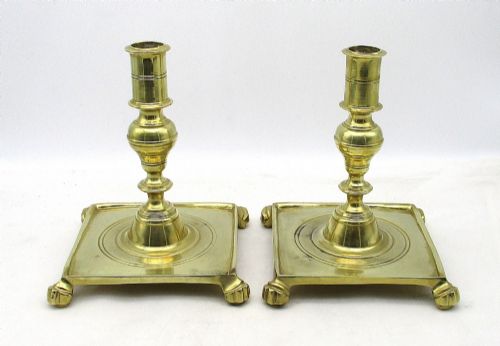
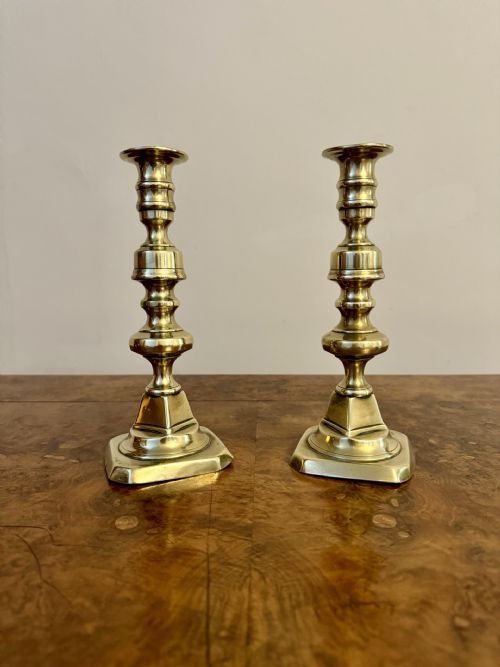
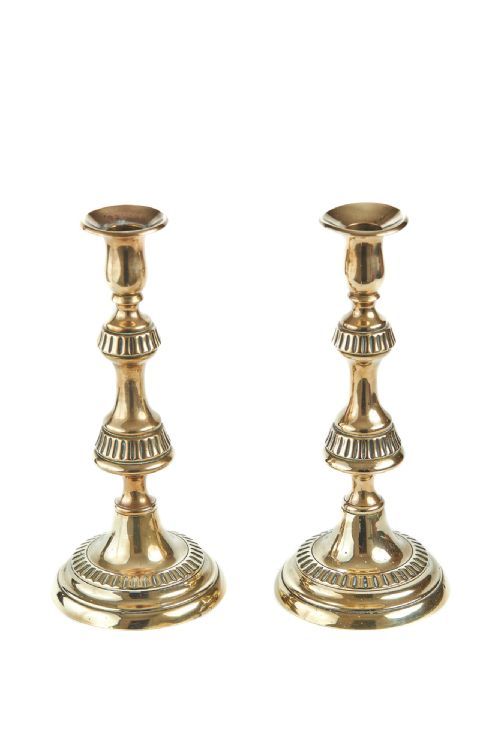
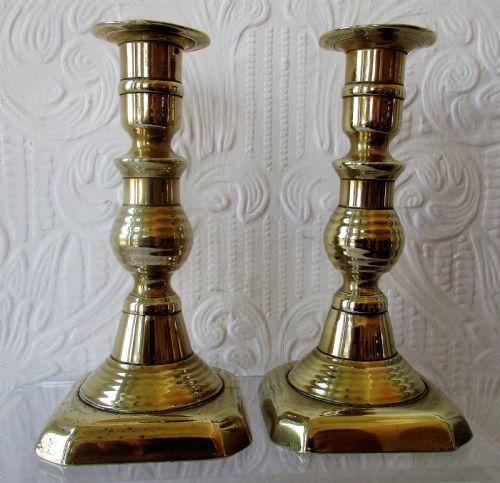
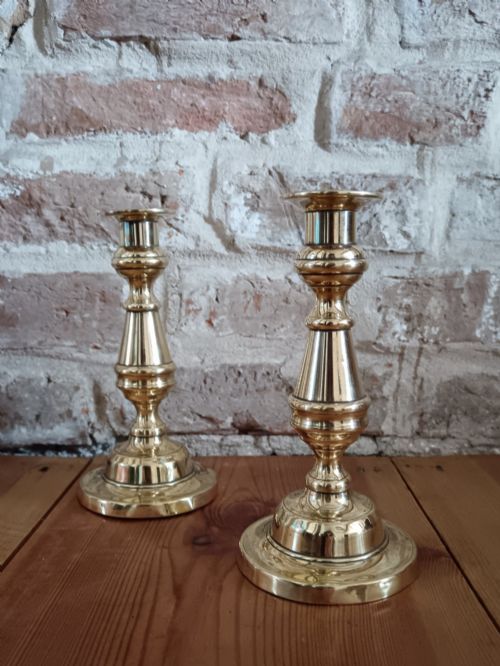
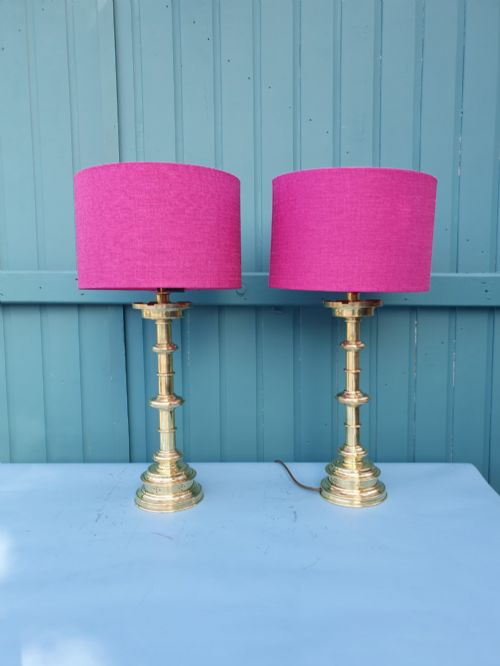


Turned Brass Candlestick Pair
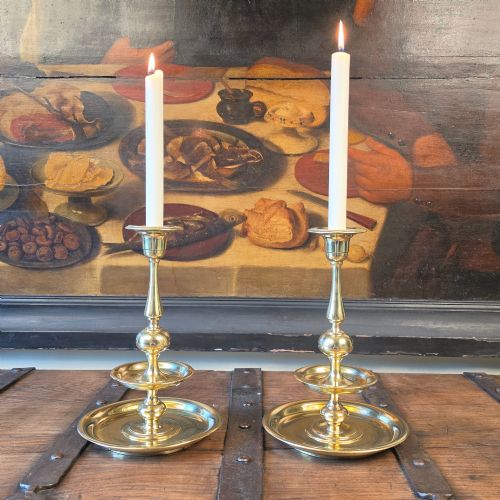
A turned brass candlestick pair brings bright metal and satisfying geometry to a mantelpiece or table.
Turned Brass Candlestick Pair
A turned brass candlestick pair comprises matched metal supports shaped on a lathe, appearing frequently in Victorian, Georgian and Edwardian designs across this selection.
Buyers encounter examples ranging from plain nineteenth-century household forms to elaborate revival pieces and combinations incorporating mahogany or oak.
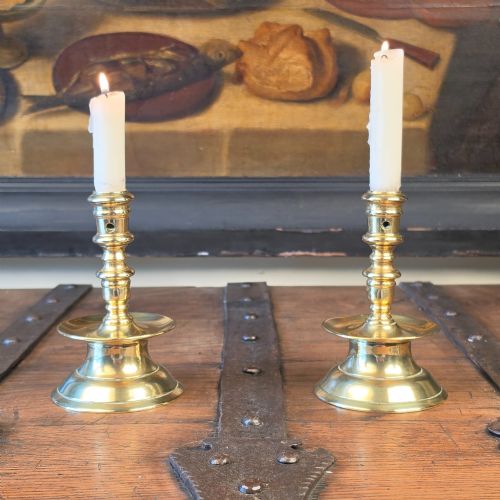
Many pairs show utilitarian origins with ejector mechanisms, while others adopt decorative petal bases or seventeenth-century stylistic revivals.
How they were made
Turned components take shape on a lathe from brass, often paired with dense timbers such as mahogany, oak, walnut or teak.
Cast brass sections join turned shafts, while individual elements show the marks of finishing work and threading typical of period metal-working techniques.
Materials across these listings extend beyond pure brass to include oak, mahogany, walnut, teak, glass and bronze.
What varies in quality
Substance separates the heavier cast and turned pairs from lighter alternatives, dictating how firmly the object stands.
The crispness of the turning on both metal and wood defines the visual success of the pair, alongside the integrity of any fitted components.
Frederick J Smith And Co·Wm Tonks And Sons·Abel Landry
The Turned Brass Candlestick Pair Glossary
- Ejector candlestick
- A type containing an internal mechanism to push out the remaining candle stump. This device uses a small sliding button set into the stem.
- Pricket candlestick
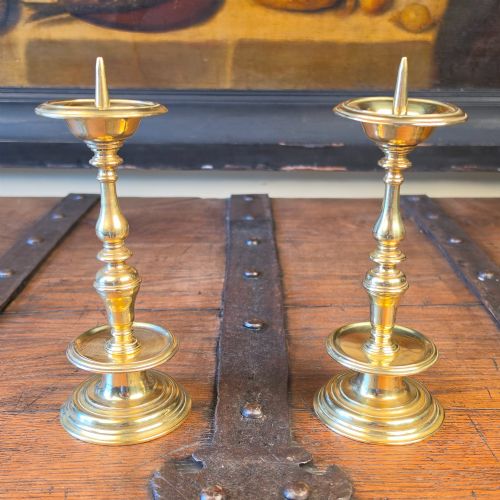
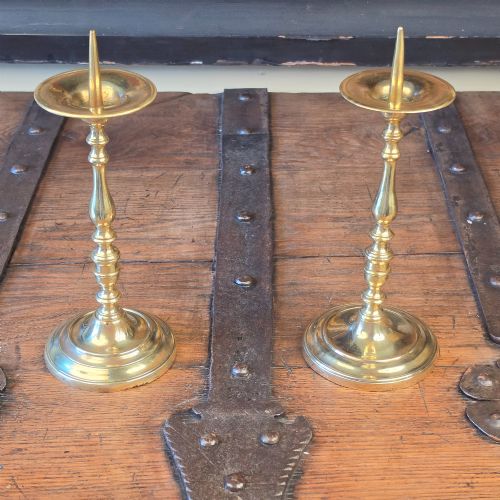
- A style featuring a sharp metal spike at the top to impale the candle rather than a socket to hold it. These often reference earlier ecclesiastical designs.
- Petal base
- A foot shaped to resemble overlapping flower petals, frequently seen on Georgian and Victorian brass examples. This form adds stability and decorative weight.
- Barley twist
- A spiral turning resembling a twisted barley sugar stick, popular in wood on Edwardian table pieces. It creates dynamic shadow and movement along the shaft.
- Engine turned
- A method of mechanical decoration producing precise geometric patterns across metal surfaces. This technique adds texture to otherwise plain cylindrical columns.
Turned Brass Candlestick Pair: Frequently Asked Questions
How do I clean brass candlesticks safely?
Warm soapy water and a soft cloth remove dust and surface grime without disturbing the underlying metal.
Avoid harsh chemical polishes that strip away the aged patination collected over decades.
What is an ejector candlestick?
An ejector mechanism uses an internal sliding rod operated by a small side thumbpiece to lift out spent candle stamps.
This practical addition dates many examples to the late Georgian and Victorian periods.
Are wooden and brass candlesticks period correct?
Turned timber columns mounted with brass sockets and bases appear frequently in Victorian and Edwardian catalogued items.
Makeshift or married components sometimes occur, so examine the joinery where metal meets wood.
How do I identify a pricket candlestick?
Pricket forms use an upright spike to secure the candle instead of the standard hollow cup socket found on domestic table items.
Most surviving examples draw stylistic inspiration from seventeenth-century church metalwork.