

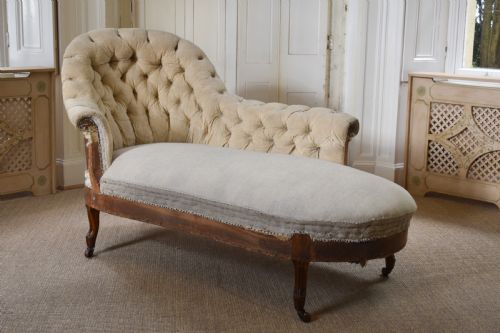
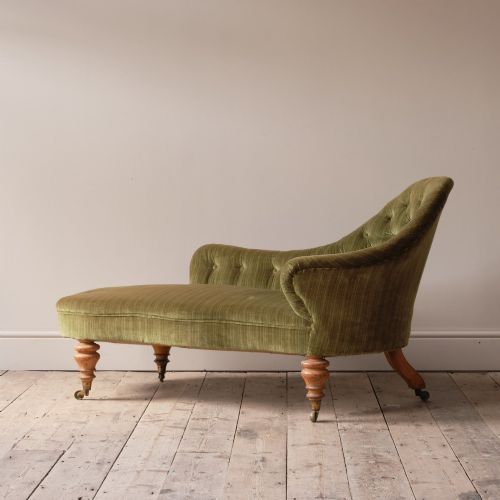
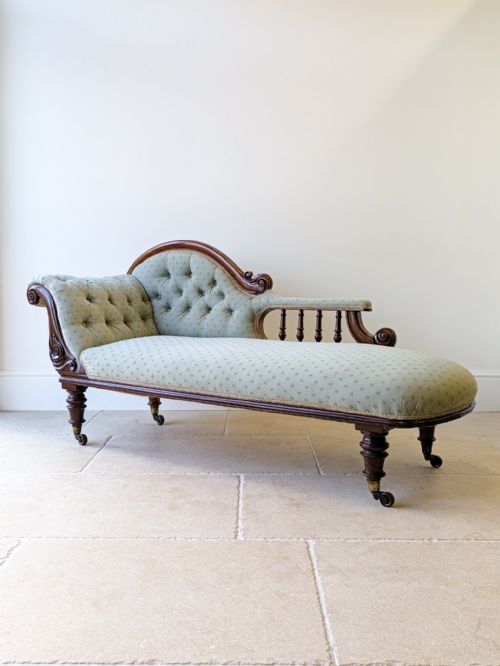
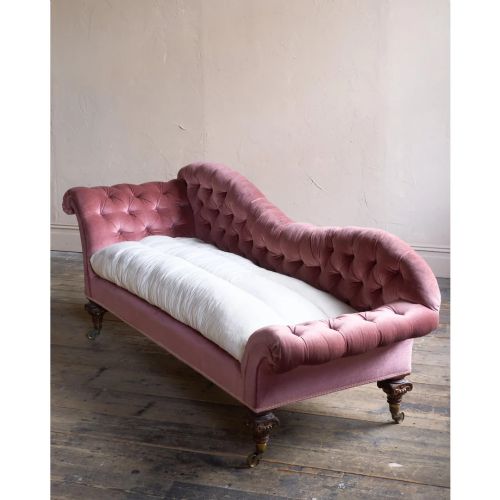
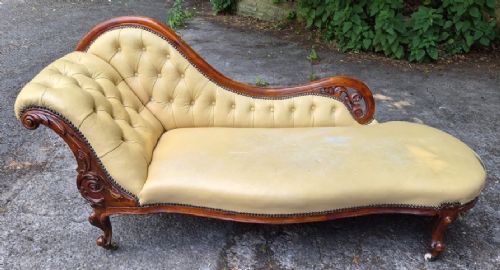


Tufted Fainting Sofa
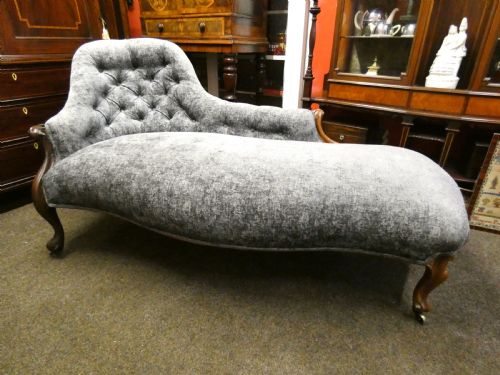
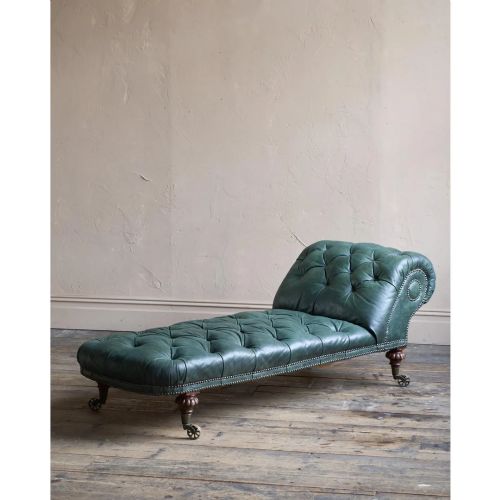
A tufted fainting sofa offers a reclining seat designed for elegance and rest, combining deep buttoning with an elongated frame.
Tufted Fainting Sofa
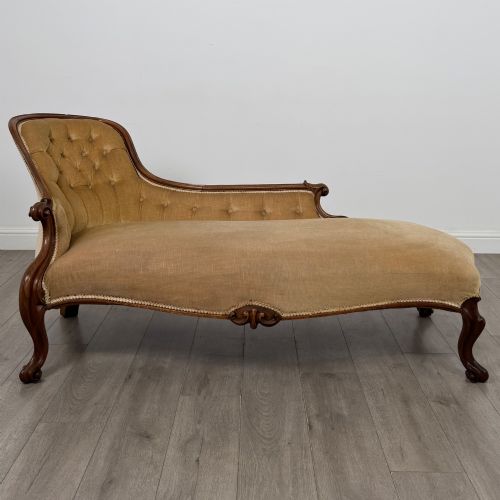
A tufted fainting sofa provides a graceful silhouette intended for partial recline, emerging primarily from nineteenth century and Victorian periods. These pieces appear in forms such as chaise longues and daybeds, designed with single raised headrests.
Makers from the nineteenth century constructed these daybeds to serve as formal living room seating. Examples on this page span from Regency models to later Victorian creations, showcasing carved woodwork and upholstered contours.
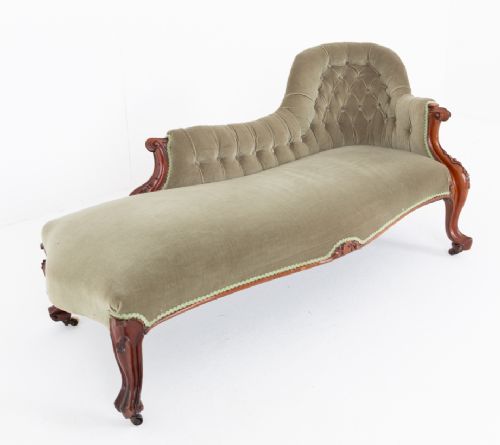
The layout of a tufted fainting sofa typically incorporates an asymmetric backrest that flows down to a low foot end. Buyers encounter variations including kidney sofas and double spoonback designs among the nineteenth century offerings.
Materials and construction
Makers built the structural frames using dense hardwoods like mahogany and rosewood, often enriching them with carved details. Brass components and Ionic column legs also support specific nineteenth century examples.
Upholstery techniques involved deep buttoning, known as button back work, secured across velvet, leather, and fabric surfaces. This padding provided the characteristic tufted texture seen on Victorian daybeds.
Tufted Fainting Sofa Retail Price Guide 2026
Typical asking prices for tufted fainting sofa among the pieces listed under this phrase on Sellingantiques today, from the lower quarter to the upper quarter. They describe what is for sale here now, not the wider market.
Listings span from Regency pieces to the late Victorian era, utilising mahogany, rosewood, leather, and velvet.
Evaluating craftsmanship
The distinction in quality lies in the depth of the wood carving and the precision of the frame joinery. Superior nineteenth century pieces display crisp detailing on mahogany or rosewood frames without loose joints.
Upholstery execution dictates the finish of a tufted fainting sofa, with even buttoning and quality fabric or leather selection defining better workshops. Maker attribution to established firms like Howard and Sons or Holland and Sons elevates the standing of a piece.
Howard & Sons·H. Goodall & Sons of Newcastle·Holland & Sons·Jas Shoolbred·Miles & Edwards
The Tufted Fainting Sofa Glossary
- Chaise Longue
- An upholstered long chair for reclining, combining the characteristics of a chair and a daybed. These items form the primary category for this search phrase.
- Button Back
- A method of upholstery where buttons are pulled deep into the padding in a diamond pattern. This creates the tufted texture central to Victorian seating.
- Day Bed
- A long seating item used for resting during the day without a full bed enclosure. Such pieces date across nineteenth century periods.
- Double Spoonback
- A backrest shape resembling two spoons placed side by side, carved into the wooden frame of Victorian furniture. This style provides ergonomic support for the sitter.
- Regency
- An English design period spanning the early nineteenth century known for classical revival forms and mahogany construction. Pieces from this era often feature restrained classical ornamentation.
Tufted Fainting Sofa: Frequently Asked Questions
How do I use a fainting sofa today?
A tufted fainting sofa fits well in a living room, study, or bedroom as a statement piece for reading and relaxing.
Its elongated shape allows for comfortable lounging while maintaining a formal aesthetic suitable for period and contemporary interiors alike.
How can I date a Victorian sofa?
Dating relies on observing wood choices such as rosewood and mahogany alongside specific design motifs like carved spoonbacks or buttoned velvet upholstery.
Nineteenth century pieces often bear stylistic markers from the 1850s and 1860s, including turned legs and substantial carved frames.
Are these sofas comfortable for resting?
The upholstered pad and deep buttoning provide firm support suited for daytime reclining rather than overnight sleeping.
The angled backrest supports the upper body while the long seat accommodates the legs.