

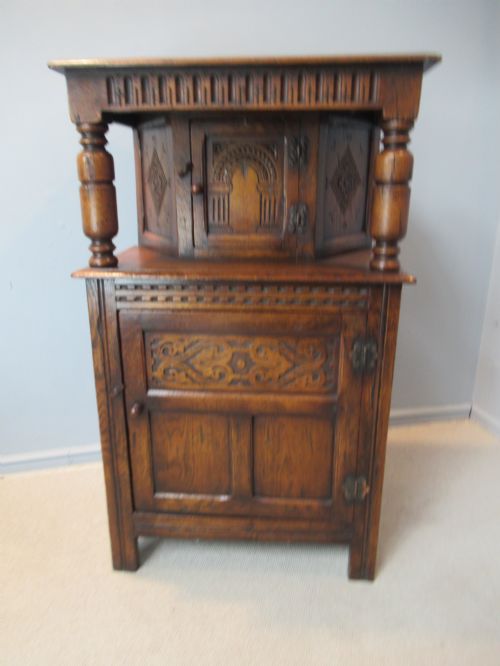


Tudor Style Court Cupboard
These pieces known as a tudor style court cupboard are robust oak storage items that bring a heavy historical presence to a room.
Tudor Style Court Cupboard
A tudor style court cupboard is a substantial wooden storage piece designed to hold household goods and display plate in traditional interiors. These items appear in formats ranging from dedicated court cupboards and side cabinets to carved sideboards and dressers.
Most examples seen here date to the twentieth century, including Edwardian and nineteen-twenties revivals, alongside nineteenth-century and pre-sixteenth-century pieces. Buyers commonly encounter carved oak double-door cupboards and smaller variants constructed with linenfold panels.
The aesthetic draws heavily on Jacobean and Tudor revival styles, utilising heavy timbers and traditional joinery to mimic earlier centuries. They function as focal storage units in dining rooms and halls, offering both enclosed cabinet space and open display tiers.
How they were made
These items rely entirely on solid oak timber, chosen for its strength and ability to take deep hand-carved ornamentation. Artisans shaped the heavy wood using traditional framing and panel construction methods to ensure structural stability.
Metal hardware plays an essential functional role, incorporating iron and brass for hinges, handles, and locking mechanisms. Carving is applied directly to the oak surfaces, featuring motifs such as linenfold patterns and geometric relief work.
Tudor Style Court Cupboard Retail Price Guide 2026
Typical asking prices for tudor style court cupboard among the pieces listed under this phrase on Sellingantiques today, from the lower quarter to the upper quarter. They describe what is for sale here now, not the wider market.
The listings show periods ranging from pre-sixteenth century to the nineteen-thirties, with Edwardian examples appearing frequently.
What varies in quality
The depth and crispness of the hand-carving separate standard revival items from exceptional examples of a tudor style court cupboard. Superior pieces show precise chisel work on the oak panels and well-executed joinery that remains tight across the frame.
The quality of the timber selection also defines the tier of the piece, with dense, well-figured golden oak marking the better items. Originality of iron and brass fittings adds further distinction, distinguishing mass-produced revivals from finer bespoke workshop output.
The Tudor Style Court Cupboard Glossary
- Court cupboard
- A traditional English sideboard or cabinet featuring an enclosed upper or lower section, originally used for displaying plate. These pieces form the core of this furniture category.
- Linenfold
- A style of wood carving that imitates folded linen, commonly seen on Tudor and Jacobean paneling. This technique adds texture to the flat wooden surfaces.
- Jacobean revival
- A nineteenth and twentieth-century style that copies the heavy, dark furniture of the early seventeenth century. It heavily influences the decorative motifs found on these cupboards.
- Oak
- A hard, durable timber native to Britain, prized for its strength and prominent grain. It serves as the primary material for every piece listed here.
- Side cabinet
- A low storage unit designed to stand against a wall in a dining room or hall. These items offer enclosed shelving behind wooden doors.
Tudor Style Court Cupboard: Frequently Asked Questions
What is a court cupboard used for?
These cabinets provide enclosed storage for tableware, linens, and household provisions while serving as a decorative sideboard surface. Historically, the open or tiered sections were used to display fine plate and ceremonial vessels.
Today, they function well in dining rooms or large hallways as a primary storage focal point. Their heavy wooden construction allows them to support substantial items on top.
How do I date an oak court cupboard?
Dating relies on examining the tool marks, timber shrinkage, and style of the carving. Twentieth-century revival pieces often feature machine assistance alongside hand-carving, while older examples show entirely hand-wrought joinery.
Revival pieces from the Edwardian era and the nineteen-twenties frequently imitate earlier Tudor and Jacobean aesthetics. Comparing the hardware style and the type of oak grain helps confirm the era of manufacture.
Are these cupboards made of solid oak?
The listings here consist of solid oak construction, utilising heavy timber throughout the panels and frames. This sturdy material provides the weight and durability characteristic of traditional cabinet making.
Secondary woods are rarely employed in these robust revival and antique pieces. The heavy oak structure requires careful placement in the home due to its considerable weight.
How do I style a court cupboard at home?
These imposing wooden pieces suit traditional interiors, period properties, or rooms requiring a strong historical anchor. Placing them against a plain wall allows the carved oak details and linenfold panels to stand out.
Keep surface decor simple, perhaps adding metal candlesticks or ceramic bowls that complement the iron and brass hardware. Ensure the room has adequate space, as these cabinets possess a commanding visual presence.